
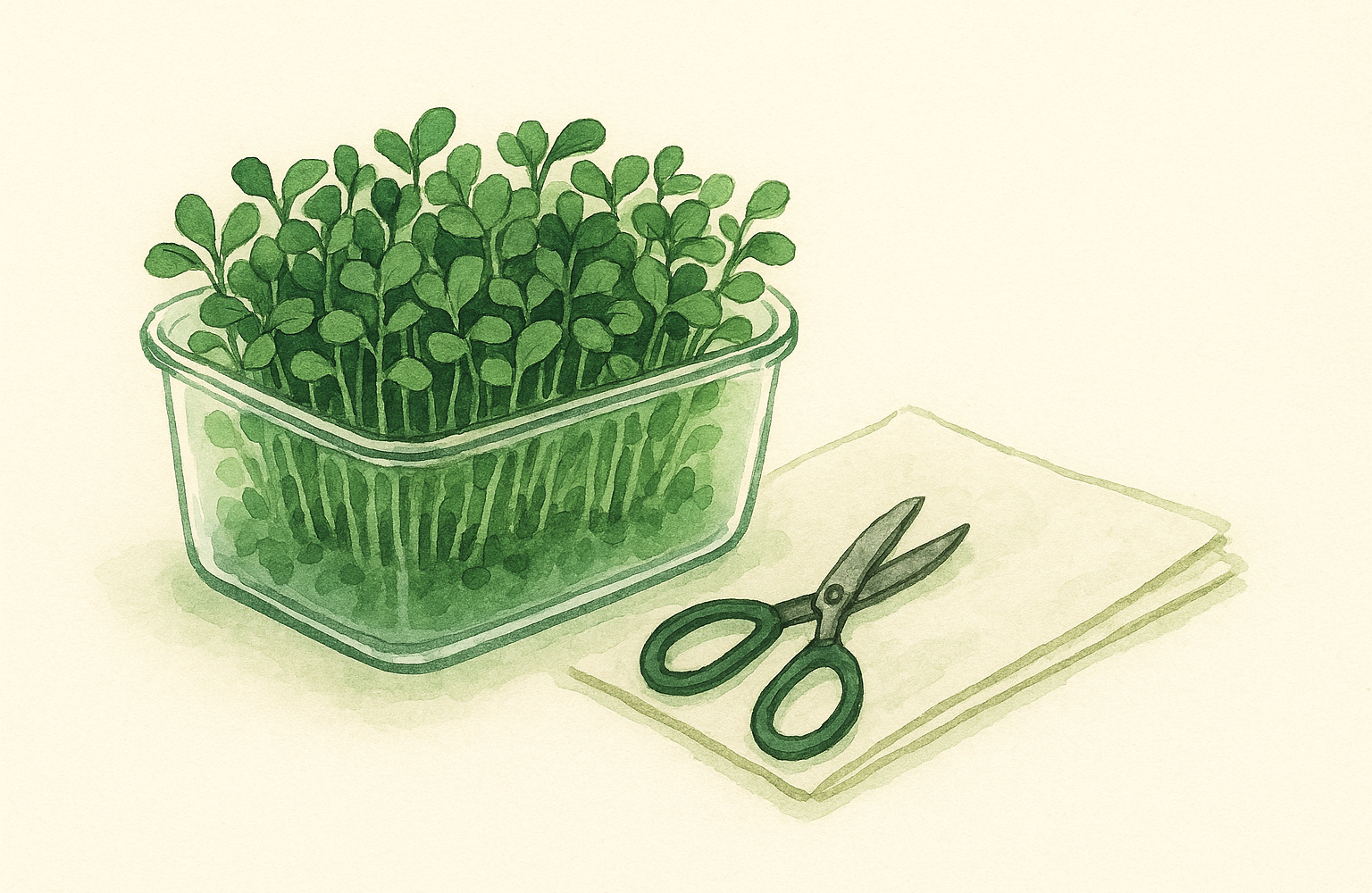
You did everything right. You grew a lush tray of microgreens on the windowsill, snipped a big handful for lunch, and tucked the rest in the fridge. Two days later you pull out the container and find a sad, slimy clump that smells a little off. It happens to almost everyone who grows their own.
The good news is that keeping them fresh isn’t complicated. Most of the time, spoiled microgreens come down to one thing: moisture. Get the water under control and a batch that used to last two days can easily last a week or more.
Here’s what actually keeps them alive. Cut them dry, store them dry in an airtight container with a paper towel, keep them cold, and only rinse the amount you’re about to eat. That’s the whole method. The rest is just detail. If you’re brand new to these tiny greens, our beginner’s guide to microgreens is a good place to start.
How to store microgreens the simple way
If you remember nothing else, remember this. The enemy is trapped moisture. Wet leaves in a closed container turn to mush fast, so every good habit below is really about staying dry.
The basic routine looks like this. Harvest with clean, dry scissors or a sharp knife. Skip the rinse for now. Line an airtight container with a dry paper towel, add the greens loosely, and pop the lid on. Set it on a cold shelf in the fridge. When you want some, take out a handful and wash just that.
Do that, and most varieties will hold for 7 to 14 days. Hardy ones like broccoli, cabbage, and kale can push toward two full weeks. Tender ones like sunflower or pea shoots tend to fade a little sooner.
Harvest dry, because it starts before the fridge
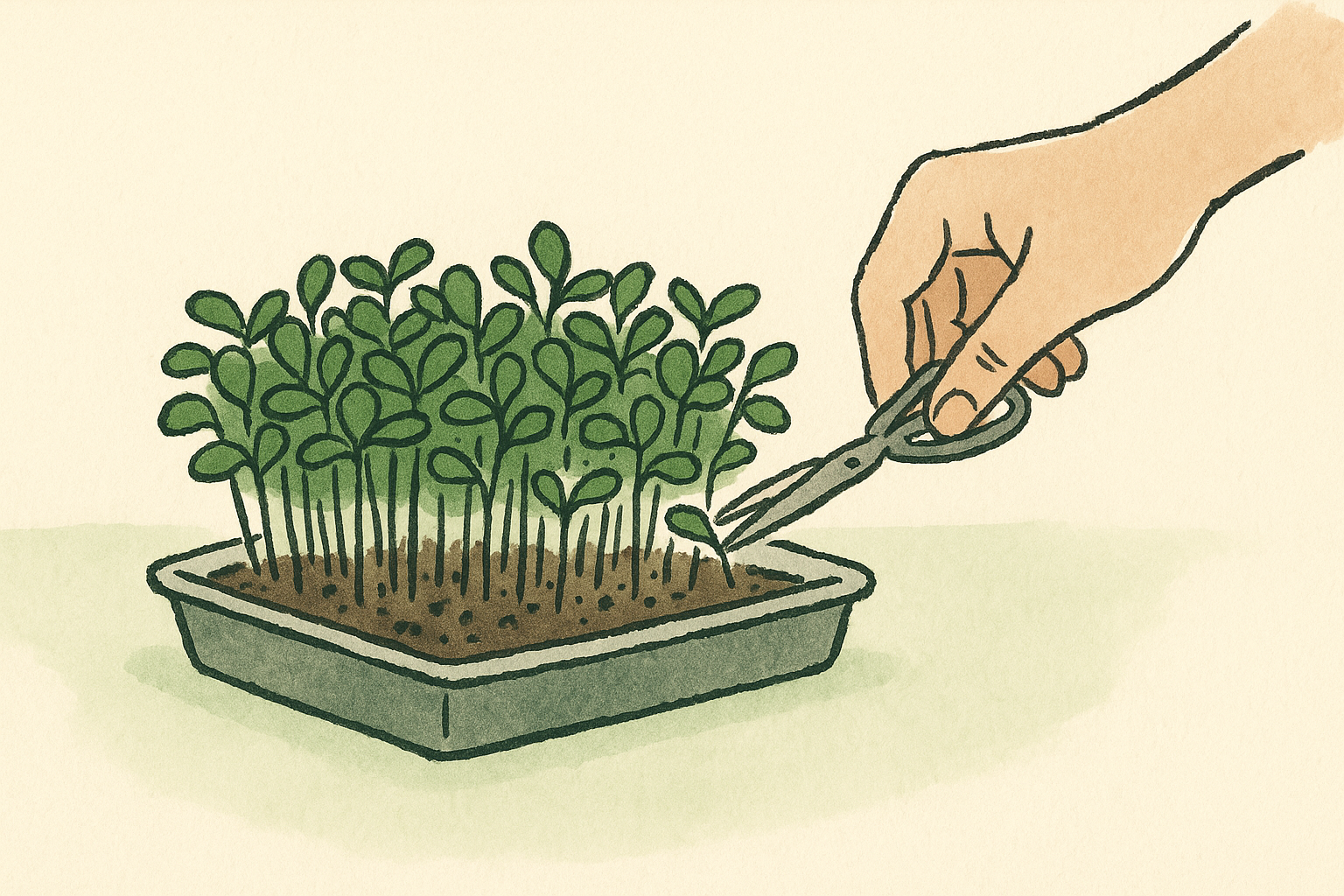
The single biggest factor in shelf life is how wet the greens are when they go in. If you water your tray from the top right before cutting, the leaves stay damp, and that water follows them straight into the container.
So in the day or two before you harvest, water the soil, not the greens. Let the leaves dry off. Then cut in the morning if you can, when the greens are firm and cool.
Use something sharp. A clean, sharp blade bruises the stems less, and less bruising means slower spoiling. Snip just above the soil line so you leave the roots and dirt behind. If a few seed hulls come along, that’s fine, you can pick those out later. Try to get the cut greens into the fridge within about half an hour, since the longer they sit warm on the counter, the faster the clock runs.
The container and the paper towel trick
You have two solid options, and both work well.
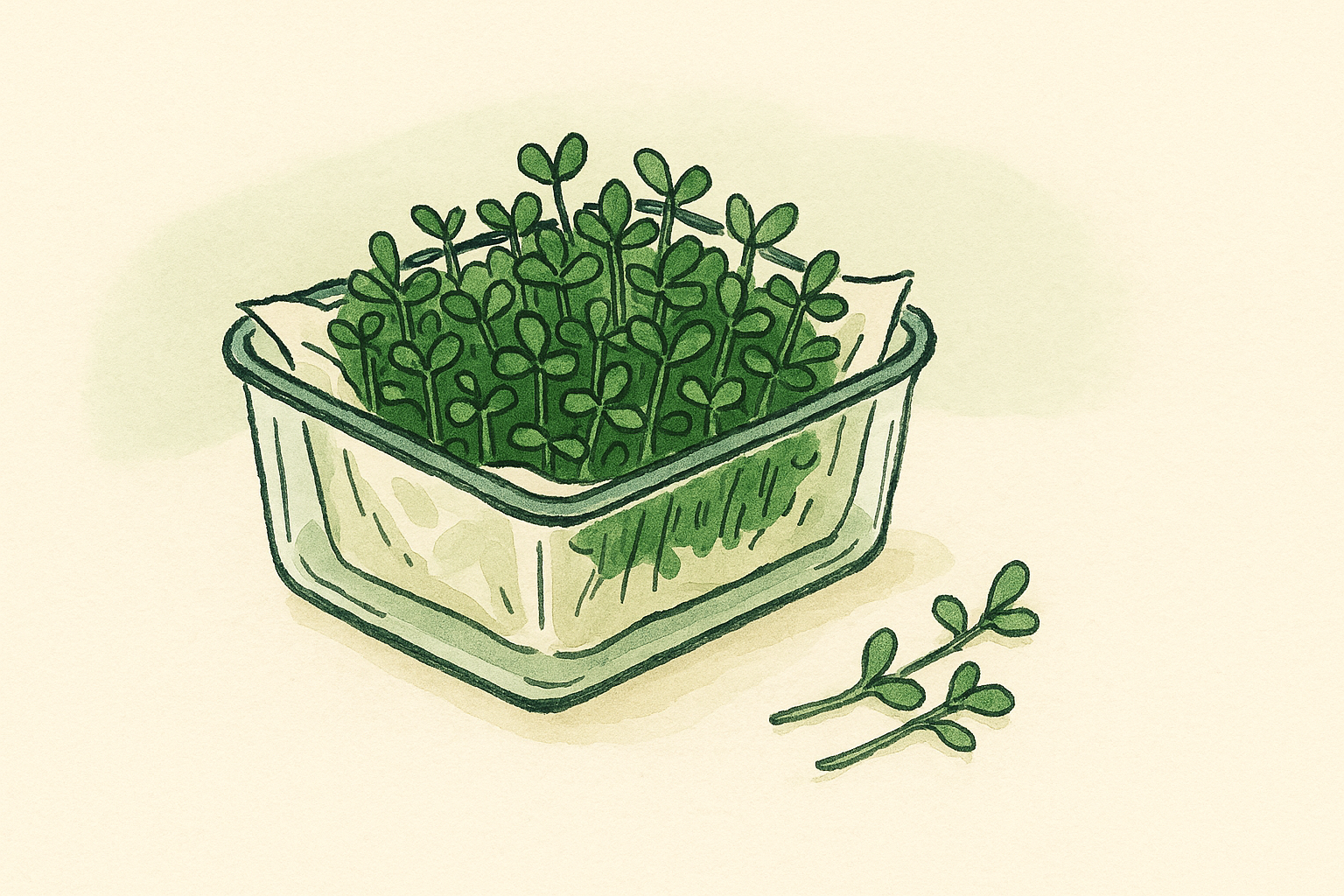
The first is an airtight container. A glass or hard plastic tub with a good lid keeps the greens from getting crushed and blocks the dry fridge air from wilting them. Lay a dry paper towel along the bottom and, if you like, a second one loosely on top. The towel wicks up any stray moisture so it never pools around the leaves.
The second is a resealable bag or a clamshell, again with a paper towel tucked inside. This takes up less space, though it gives the greens a little less protection from getting squished.
Whichever you choose, don’t pack the greens down tight. They like a little air around them. And if you notice the paper towel is damp a couple of days in, swap it for a fresh dry one. That one small habit can add days.
Keep them cold, and mind where they sit
Temperature matters more than people expect. Microgreens last longest at a steady, cold fridge temperature, right around 35 to 40 degrees Fahrenheit. Warmer than that and shelf life drops quickly. Even a jump of a few degrees can cut it roughly in half.
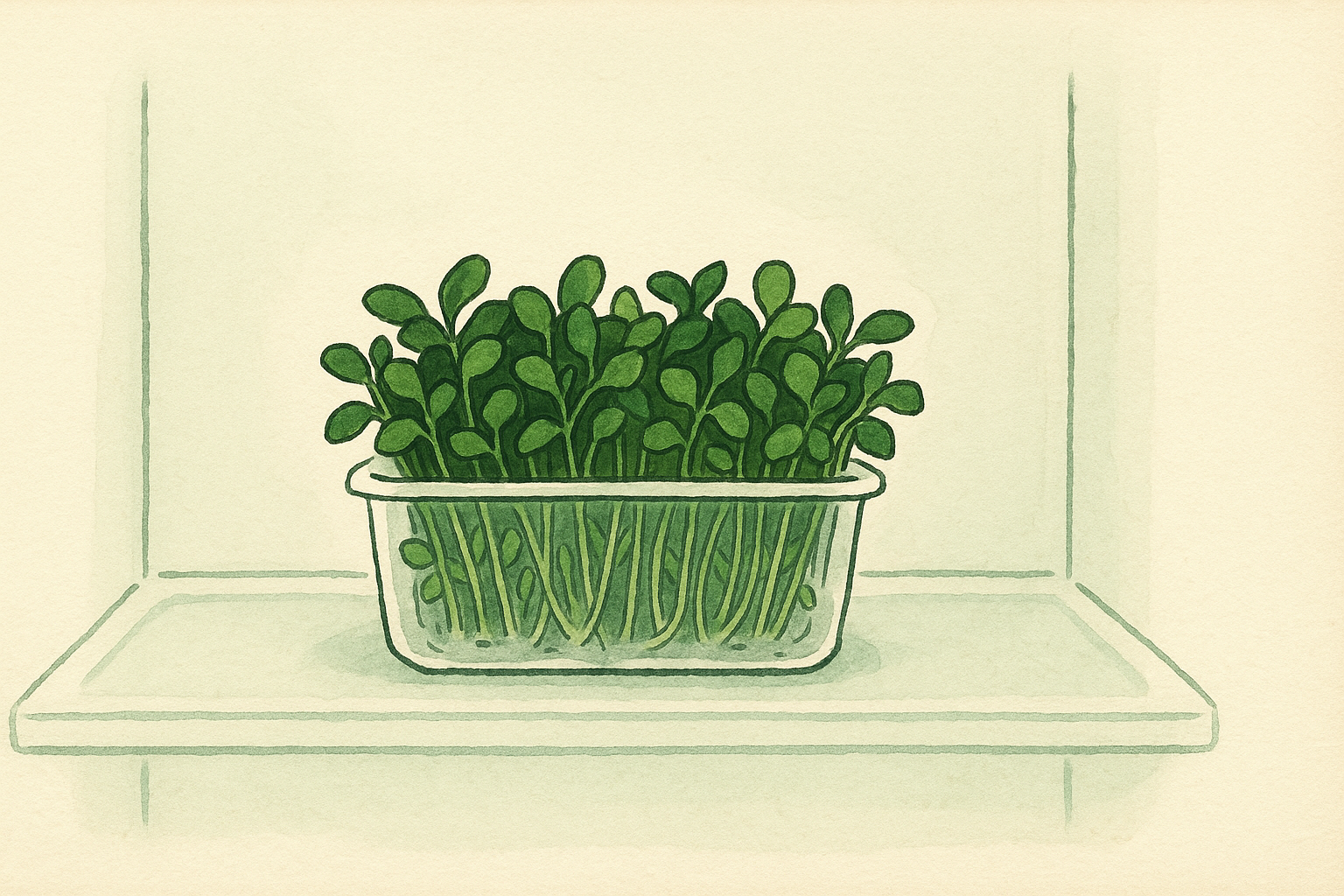
Put the container toward the back of a lower shelf, which is usually the coldest and most stable spot. Skip the crisper drawer. It’s built to hold humidity for sturdy vegetables like carrots, and that damp air is the last thing delicate greens want.
Keep your microgreens away from apples, bananas, tomatoes, and other fruit that gives off ethylene gas as it ripens. That gas speeds up aging in nearby greens and yellows them faster. And never freeze fresh microgreens. Freezing bursts the cells in those tender leaves, and they thaw into a limp, watery mess.
Wash right before you eat, not before you store
This is the rule that trips up the most people, so it’s worth saying plainly. Don’t wash the whole batch before you put it away. Washing adds the exact moisture you’ve been working to avoid, and it can cut your shelf life in half.
Instead, store the greens dry and rinse only the portion you’re about to use. When you’re ready, drop that handful into a bowl of cool water, swish gently, and lift them out. Pat them dry with a towel or give them a soft spin in a salad spinner.
If you grew them cleanly in a fresh mix and cut well above the soil, many home growers give a quick rinse and eat. Either way, that rinse belongs at the very end, right before the greens hit your plate.
A real week with one tray
Say you cut a full clamshell of broccoli microgreens on a Sunday morning. You watered the soil on Friday, so the leaves are dry. You snip them with clean scissors, shake off any hulls, and lay them in a glass container over a dry paper towel.
Sunday and Monday, you grab a small handful for eggs and a sandwich, rinsing only what you take. By Wednesday the paper towel feels a touch damp, so you swap it. The greens still look bright and crisp.
Come Saturday, almost a week later, you’ve worked through most of the tray and the last handful is still good. That’s the difference dry storage makes. If you’d rinsed the whole batch back on Sunday, you’d likely have tossed a slimy container by Tuesday. Not sure what to do with all those fresh greens? A handful goes into almost anything, and we gathered a few easy ideas in our guide to simple microgreen recipes.
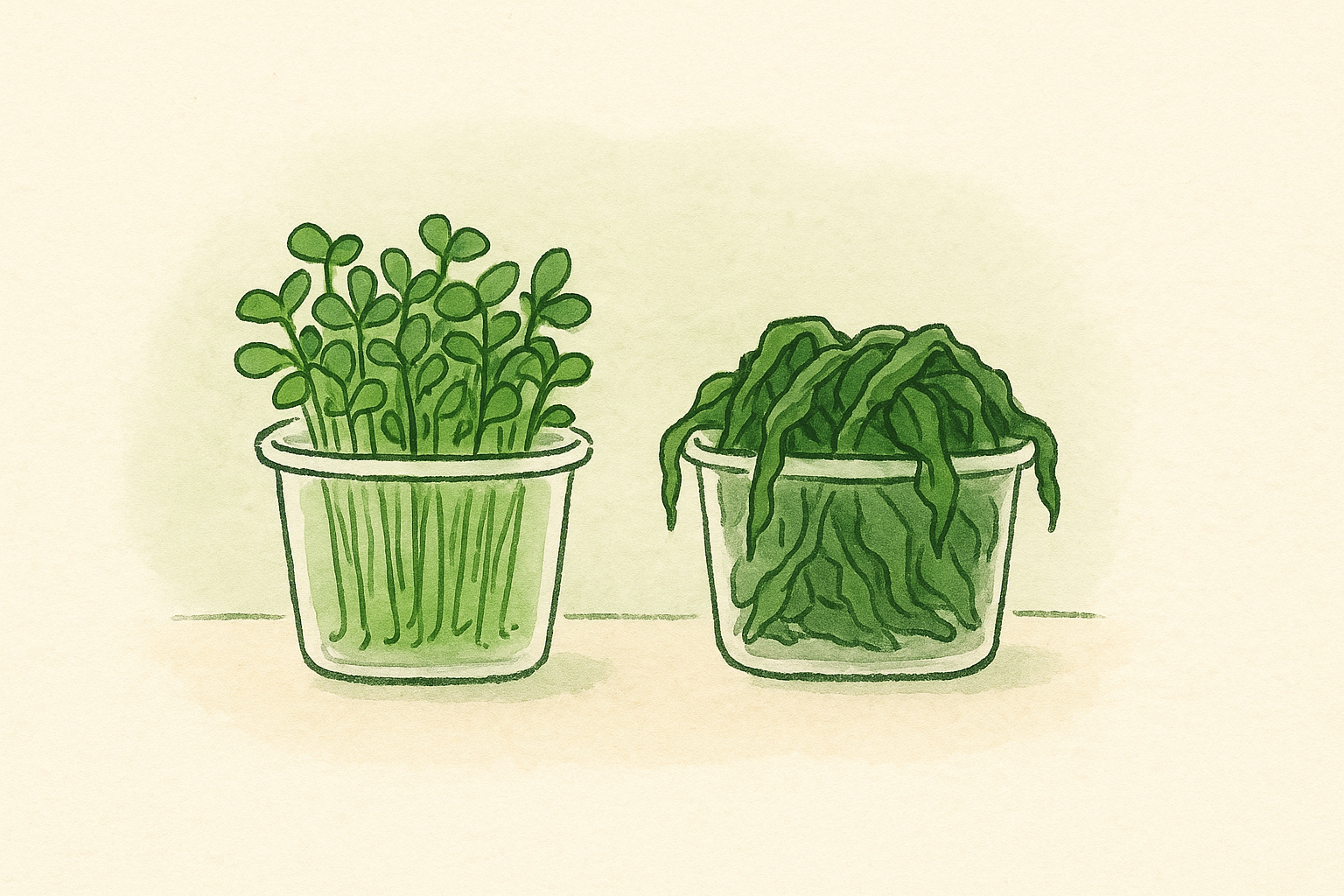
Common mistakes to avoid
When people ask how to store microgreens and still end up with mush, it’s usually one of these habits:
- Washing before storing. The most common one. Keep them dry until you eat.
- Cutting wet. Water the soil, not the leaves, before you harvest.
- Packing them tight. Crushed leaves bruise and rot faster, so give them room.
- Leaving them on the counter. Warm greens age fast, so refrigerate soon after cutting.
- Using the crisper drawer. It’s too humid for delicate greens.
- Forgetting the towel. That little square of paper is doing real work, so change it when it’s damp.
Key takeaways
Here’s the short version. Learning how to store microgreens really comes down to controlling water and temperature. Harvest dry with a clean blade, store them dry in an airtight container with a paper towel, keep them cold at the back of a lower shelf, and rinse only what you’re about to eat. Do that and most trays will stay fresh and crisp for a week or two instead of a couple of days.
If you’re still getting the hang of growing them, our complete guide to growing microgreens at home walks through the whole process, and our roundup of the best microgreens for beginners covers the easiest ones to start with.
This article is general information about food storage and handling, not medical advice. If you have a health condition, take medication, or are pregnant or nursing, check with a qualified professional before making changes to your diet.
Frequently asked questions
How long do microgreens last in the fridge?
Stored dry and cold, most microgreens stay fresh for about 7 to 14 days. Hardy types like broccoli and kale often reach two weeks, while tender pea and sunflower shoots are best within a week.
Should I wash microgreens before storing them?
No. Washing before storage adds moisture that speeds up spoiling. Keep them dry in the fridge and rinse only the portion you’re about to eat.
Can you freeze microgreens?
Freezing isn’t a good option if you want to eat them fresh. It ruptures the delicate leaves, so they thaw soft and watery. If you want to preserve them, blend them into ice cubes for smoothies instead.
Why do my microgreens get slimy so fast?
Sliminess almost always comes from trapped moisture. Cutting wet greens, washing before storage, or skipping the paper towel are the usual causes. A dry harvest and dry storage fix most of it.
Do microgreens keep growing after you cut them?
No. Once you cut microgreens above the soil, they don’t regrow. That’s why storing your harvest well matters so much, since each tray gives you a single cutting.