
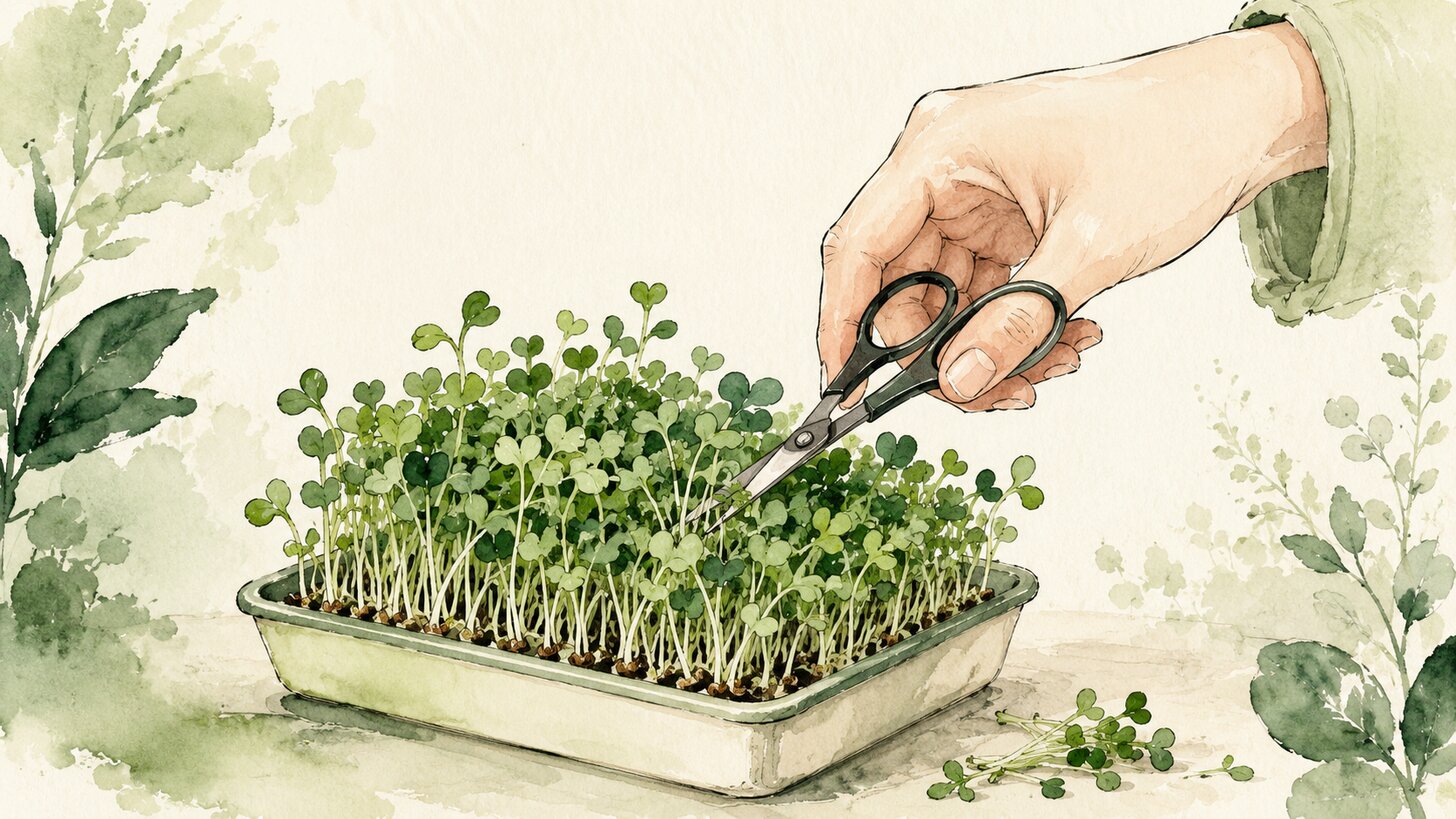
If you’ve spotted a scatter of tiny, delicate greens on a restaurant plate and wondered what they were, you’ve probably met microgreens. So what are microgreens, exactly? They’re young vegetable and herb plants, snipped when they’re only a week or two old, somewhere between a sprout and a baby leaf. They’re small, but they carry a real nutritional punch, and that’s a big reason we grow so many of them at Etum.
Here’s a plain guide to what they are, how they differ from the things people mix them up with, why they’re so good for you, and how to eat them every day.
What are microgreens, really?
A microgreen is the seedling of an edible plant, harvested soon after its first real leaves open. Most get cut when they’re about 1 to 3 inches tall, usually 7 to 14 days after the seed goes down. You eat the stem and the leaves, and you leave the root behind.
Almost any vegetable or herb can grow as a microgreen. Common ones include broccoli, radish, kale, beet, pea, sunflower, cabbage, arugula, and herbs like basil and cilantro. Each one tastes like a softer, fresher version of the grown up plant, which is part of the fun. A radish microgreen still bites, and a pea shoot still tastes green and sweet.
Microgreens vs sprouts vs baby greens
This is where people get tripped up, so let’s sort it out. Sprouts are germinated seeds you eat whole, root and all. They grow in water over just a few days, with no soil and barely any light.
Microgreens go a step further. They grow in soil or on a grow mat, they get light and airflow, and you cut them above the root once the leaves open. Baby greens are older still, closer to a small salad leaf you’d buy in a clamshell.
That difference matters for more than size. Because sprouts sit in warm, damp conditions, they carry a higher risk of foodborne bacteria. Microgreens get air and light, which lowers that risk, though you should still give them a rinse before eating.
Why microgreens are so nutrient dense
This is the part that gets people excited. A young plant is busy building everything it needs to grow, so its leaves can be loaded with vitamins, minerals, and antioxidants. Research has found that many microgreens hold far higher concentrations of certain nutrients than the full grown vegetable, in some cases several times more, depending on the variety and the nutrient.
Red cabbage, radish, and broccoli microgreens, for example, often get singled out for their vitamin and antioxidant content. What that means for you is simple. You can eat a small handful and still get a meaningful dose of nutrients like vitamin C, vitamin K, vitamin E, and plant antioxidants. It’s the same idea behind other nutrient dense foods we’re fond of, like spirulina.
None of this makes microgreens a magic bullet, and you shouldn’t think of them as a supplement. Think of them as an easy way to make an ordinary meal a little richer, one handful at a time.
How microgreens are grown
The short version is that they’re wonderfully low effort. You scatter seeds across a shallow tray of soil or a grow mat, keep them covered and dark for a few days while they sprout, then move them into light until the first leaves open. Most are ready to cut in 7 to 14 days.
You don’t need a garden or a greenhouse. A bright windowsill and a little water will do, which is exactly why they’re such a satisfying thing to grow at home. If you want the full walk through, we put together a complete guide to growing microgreens at home, plus a rundown of the best microgreens to grow for beginners.
What do microgreens taste like?
Flavor depends entirely on the plant. Radish and mustard microgreens are peppery and bold. Pea shoots are sweet and crisp. Sunflower is nutty and substantial. Broccoli and kale are mild and green. Beet is earthy, with a pretty red stem.
Because the flavors are concentrated, a little goes a long way. Mixing two or three kinds gives you a nice range of taste and color in a single handful, which is a simple way to keep meals interesting.
How to use microgreens every day
You don’t really cook microgreens, since heat wilts them in seconds. Treat them as a fresh finishing touch instead. Pile them on avocado toast, tuck them into a sandwich or wrap, scatter them over eggs, soup, or a grain bowl right before you eat, or blend a handful into a smoothie where you won’t even notice them.
They also make a quick, bright pesto. If you like the idea of slipping more greens into food you already eat, our guide to easy ways to use spirulina follows the same spirit: hide the good stuff in things you already enjoy.
Here’s a real world example. A plain scrambled egg becomes a proper breakfast with a small handful of broccoli or radish microgreens tossed on at the end, plus a little salt and good olive oil. It takes about ten seconds and it looks like something off a menu.
Are microgreens safe to eat?
For most people, yes. They’re eaten raw, so the main thing is cleanliness. Rinse them gently before eating, keep them cold, and use them within a few days. If you grow your own, use clean trays and clean water, and water from the bottom to keep the leaves dry.
If you’re pregnant, nursing, very young, older, or have a weakened immune system, be a little more cautious with any raw sprout or green, and ask a professional if you’re unsure.
Buying and storing microgreens
When you buy microgreens, look for fresh, perky leaves and skip any tray or clamshell that smells off or looks slimy. Store them in the fridge in a container lined with a dry paper towel, and use them within a few days for the best flavor and crunch. If they came rooted in a little tray, you can leave them growing on the counter and snip as you go.
Where microgreens fit in a healthy diet
Think of microgreens as a booster, not a main dish. They won’t replace a full plate of vegetables, but they make it easy to add a little extra nutrition and flavor to food you’re already eating. A handful on your lunch, a pinch in your smoothie, a scatter over dinner, and it adds up across a week without any real effort.
That low effort quality is the whole point. The best healthy habits are the ones you actually keep, and few things are easier than tossing a few fresh greens on top of whatever’s already on your plate.
Key takeaways
- Microgreens are young vegetable and herb seedlings, harvested at about 1 to 3 inches and 7 to 14 days old.
- They’re different from sprouts (grown in water, eaten whole) and baby greens (older and larger).
- They tend to be very nutrient dense, so a small handful counts.
- Eat them raw as a finishing touch, and they’re genuinely easy to grow at home.
Microgreens FAQ
Are microgreens healthy? Yes. They’re low in calories and tend to be rich in vitamins, minerals, and antioxidants, which makes them an easy way to round out a meal.
Do you eat the whole microgreen? You eat the stem and the leaves. Snip them just above the soil and leave the root behind.
Are microgreens just baby sprouts? No. Sprouts are germinated seeds grown in water and eaten whole. Microgreens grow in soil or on a mat, get light, and are cut above the root.
Can you eat microgreens every day? For most people, a daily handful is a great habit. Rinse them first and enjoy the variety.
This article is for general information and isn’t medical advice. If you have a health condition, take medication, or are pregnant or nursing, check with a qualified professional before making big changes to your diet.