
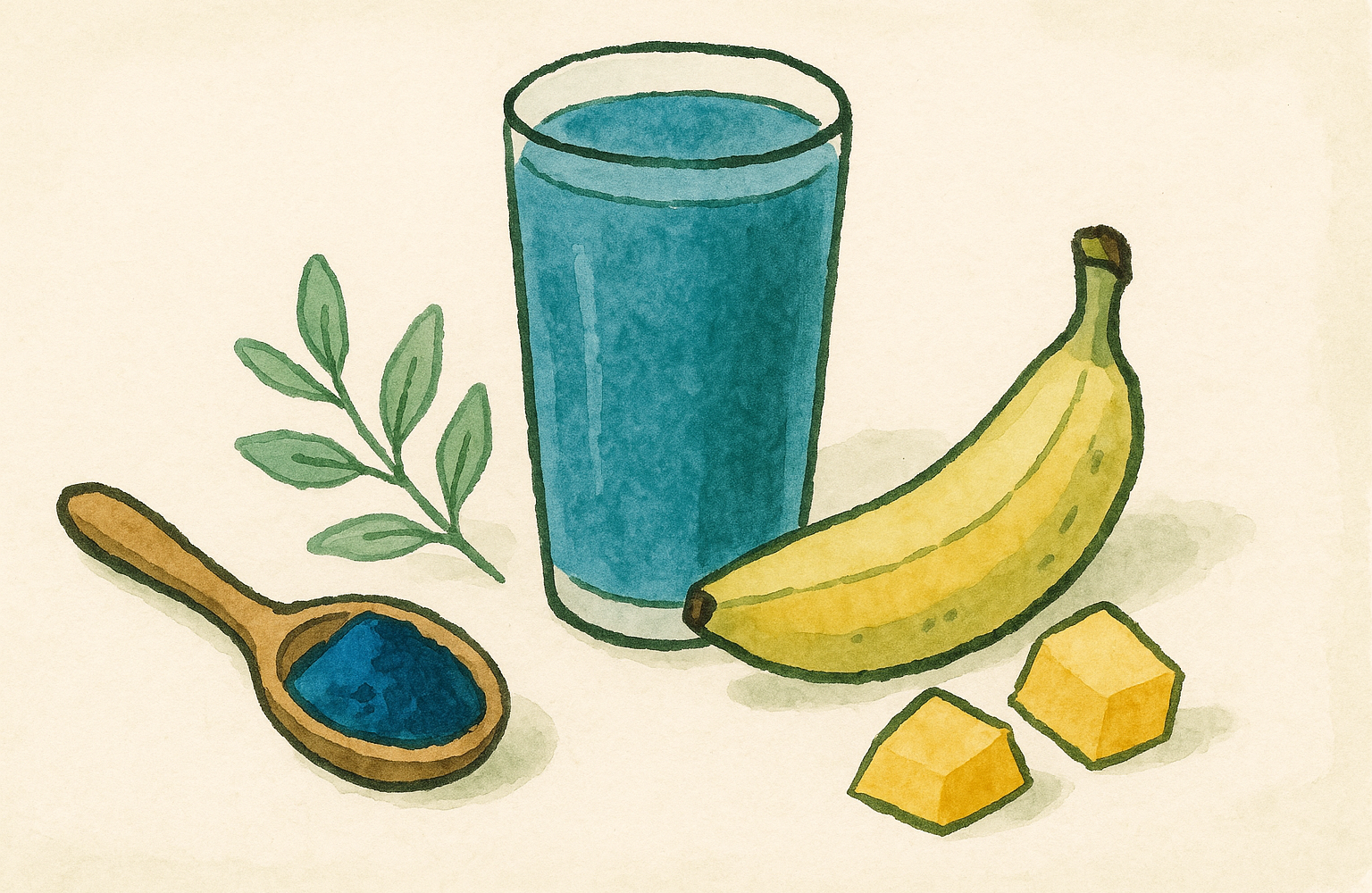
You probably saw it before you knew what to call it. That electric blue smoothie bowl on your feed, the one so bright it looks almost too vivid to be real food. Most of the time that color comes from a single ingredient, and it isn’t dye. It’s blue spirulina, and right now it’s showing up in cafe lattes, kids’ popsicles, and more than a few home kitchens.
So what is the bright blue powder actually made of, is it good for you, and is it the same thing as the green spirulina you may already have in the cupboard? Here’s a plain look at where it comes from, how to use it, and the one rule that trips most people up.
What is blue spirulina, exactly?
Blue spirulina starts as regular spirulina, the blue green algae that people have eaten for a very long time. Green spirulina is simply the whole algae, dried and ground into that deep forest green powder. If you want the full story on the plain version, we cover it in Spirulina 101.
Blue spirulina is different. To make it, producers take that green algae and filter out one single part: a bright blue protein called phycocyanin. They rinse it out with water, concentrate it, and dry it into that cobalt blue powder. So it isn’t a whole food. It’s a concentrated pigment extract, usually somewhere around 30 to 40 percent phycocyanin, with the chlorophyll and most of the protein, vitamins, and minerals left behind.
That one fact explains almost everything else about it: why it’s so blue, why it tastes milder, and why it doesn’t carry the same nutrition as the green kind.
Blue spirulina vs green spirulina
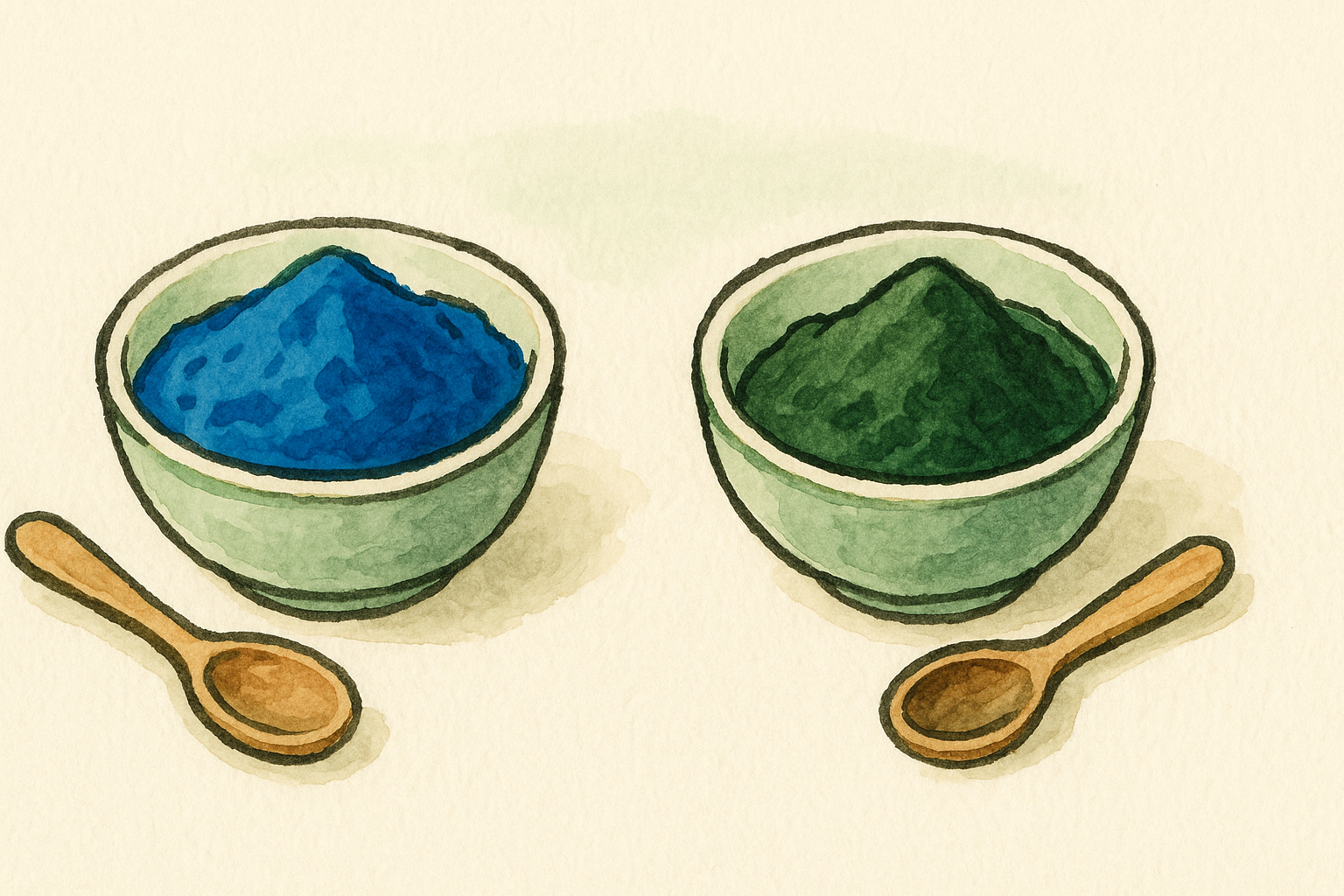
These two come from the same algae, but they do very different jobs, and neither one is simply better than the other.
Green spirulina is the whole food. It keeps the full package: protein, B vitamins, iron, chlorophyll, and antioxidants all together. The tradeoff is the taste. Green spirulina has that earthy, almost seaweed flavor that some people love and others work hard to hide.
Blue spirulina is the pigment. Because it’s mostly phycocyanin, it brings that jaw dropping color and a much milder taste, so it blends into a smoothie without taking over. What it doesn’t bring is the broad nutrition of the green version. If you’re reaching for spirulina mainly for protein and iron, the green powder is the one doing that work. If you want color plus the antioxidant phycocyanin, blue is your pick. Curious how each one tastes? We break that down in What Does Spirulina Taste Like.
What phycocyanin actually does
Phycocyanin is the reason blue spirulina gets attention beyond its looks. It’s an antioxidant, which means it helps your body deal with the everyday cell stress that comes from normal living. Researchers have also studied it for anti inflammatory effects. In one small human trial, people who took a phycocyanin extract daily for two weeks reported less ongoing pain.
Here’s the honest part. Most of what we know about phycocyanin still comes from lab and animal studies, and the human research is early and limited. So it’s fair to call it a promising antioxidant that’s worth enjoying, not a cure for anything. Treat the bold health claims you see on some product pages with a healthy dose of doubt.
How to use blue spirulina at home
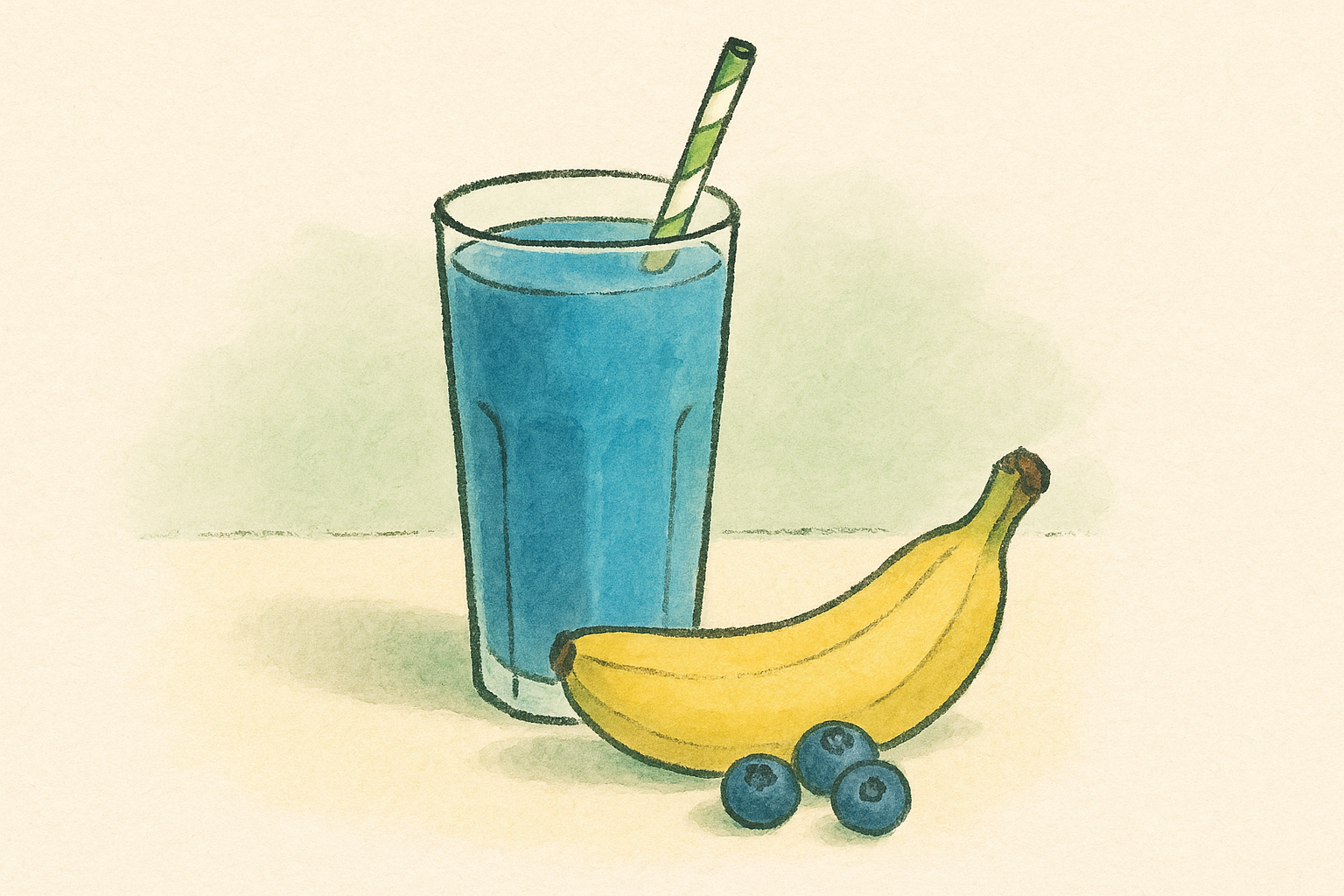
This is where the blue powder really shines, because the mild taste makes it easy. A little goes a long way. Stir a small amount into cold or room temperature foods and drinks:
- Smoothies and smoothie bowls
- Cold lattes and plant milks
- Lemonade and sparkling water for a blue fizz
- Yogurt, chia pudding, and overnight oats
- Popsicles, energy balls, and frostings
Now the one rule that matters most, the one that trips up almost everyone the first time: heat destroys it. Phycocyanin is fragile, and once it gets above roughly 113 degrees Fahrenheit it starts to break down. Stir it into hot coffee or cook it on the stove and you’ll watch that gorgeous blue fade to a sad gray. So keep it cold. Add it at the end, off the heat.
Here’s what that looks like on a real Tuesday morning. You blend a frozen banana, a handful of frozen mango, a cup of cold oat milk, and about half a teaspoon of blue spirulina. Thirty seconds later you’ve got a bright blue smoothie that tastes like tropical fruit, with no fishy note at all. Want more ideas like that? We keep a running list in Easy Ways to Use Spirulina.
On amount: for color alone, a quarter to half a teaspoon is plenty. If you’re using it for the phycocyanin itself, many products suggest around a teaspoon, close to 5 grams, per day. Start small. Too much turns your food a muddy blue gray and can add a faint bitterness.
Is blue spirulina safe?
For most healthy adults, blue spirulina in normal food amounts is generally considered safe. The bigger safety question is about quality, and it’s worth understanding.
Spirulina is a bioaccumulator, which is a fancy way of saying it soaks up whatever is in the water it grows in. Grown in a clean, controlled setup, that’s fine. Grown in dirty or uncontrolled water, it can pick up heavy metals like lead, arsenic, and mercury, or get mixed with other algae that produce liver stressing toxins called microcystins. That’s why buying from a brand that does third party testing for heavy metals and microcystins isn’t optional, it’s the whole ballgame. Look for that testing on the label or the company’s site.
Some people should be extra careful and check with a doctor first. That includes anyone who is pregnant or nursing, since there isn’t enough research to call it safe there, plus people on blood thinners or with a bleeding disorder, those with an autoimmune condition like lupus or rheumatoid arthritis, people managing diabetes, and anyone with liver disease. It can also cause mild stomach upset, especially if you start with too much at once.
Common mistakes people make
- Cooking with it. Heat wipes out the color and the phycocyanin. Keep it cold.
- Buying the cheapest powder you can find. With spirulina, no testing means no way to know what’s in it.
- Expecting green spirulina’s nutrition. Blue is mostly pigment. It’s not a protein source.
- Using too much. More doesn’t mean bluer. Past a point it turns gray and bitter.
- Storing it in heat or light. Keep the jar sealed, cool, and out of the sun so the color holds.
Key takeaways
- Blue spirulina is phycocyanin, a bright blue pigment pulled out of green spirulina, not a whole food.
- It brings vivid color, a mild taste, and antioxidant phycocyanin, but not the protein and minerals of green spirulina.
- Keep it cold. Anything above about 113 degrees Fahrenheit fades the color and breaks down the phycocyanin.
- A quarter to half a teaspoon colors a whole smoothie. Start small.
- Quality is everything. Choose a brand that third party tests for heavy metals and microcystins.
Frequently asked questions
Is blue spirulina the same as regular spirulina?
Not quite. They come from the same algae, but regular green spirulina is the whole dried plant, while blue spirulina is just one pigment, phycocyanin, extracted from it.
Does it taste like anything?
It’s very mild, much milder than green spirulina. In a fruit smoothie you’ll mostly taste the fruit. Use too much, though, and a faint bitter, earthy note can creep in.
Can you put it in hot tea or coffee?
It’s best not to. Heat breaks down phycocyanin, so a hot drink will dull the blue and lose the benefit. If you want a blue latte, make it iced.
How much should you use per day?
For color, a quarter to half a teaspoon is plenty. If you’re after the phycocyanin, many products suggest around a teaspoon, roughly 5 grams, a day. Start low and see how you feel.
This article is general information, not medical advice. If you have a health condition, take medication, or are pregnant or nursing, check with a qualified professional before adding blue spirulina or any new supplement to your routine.