
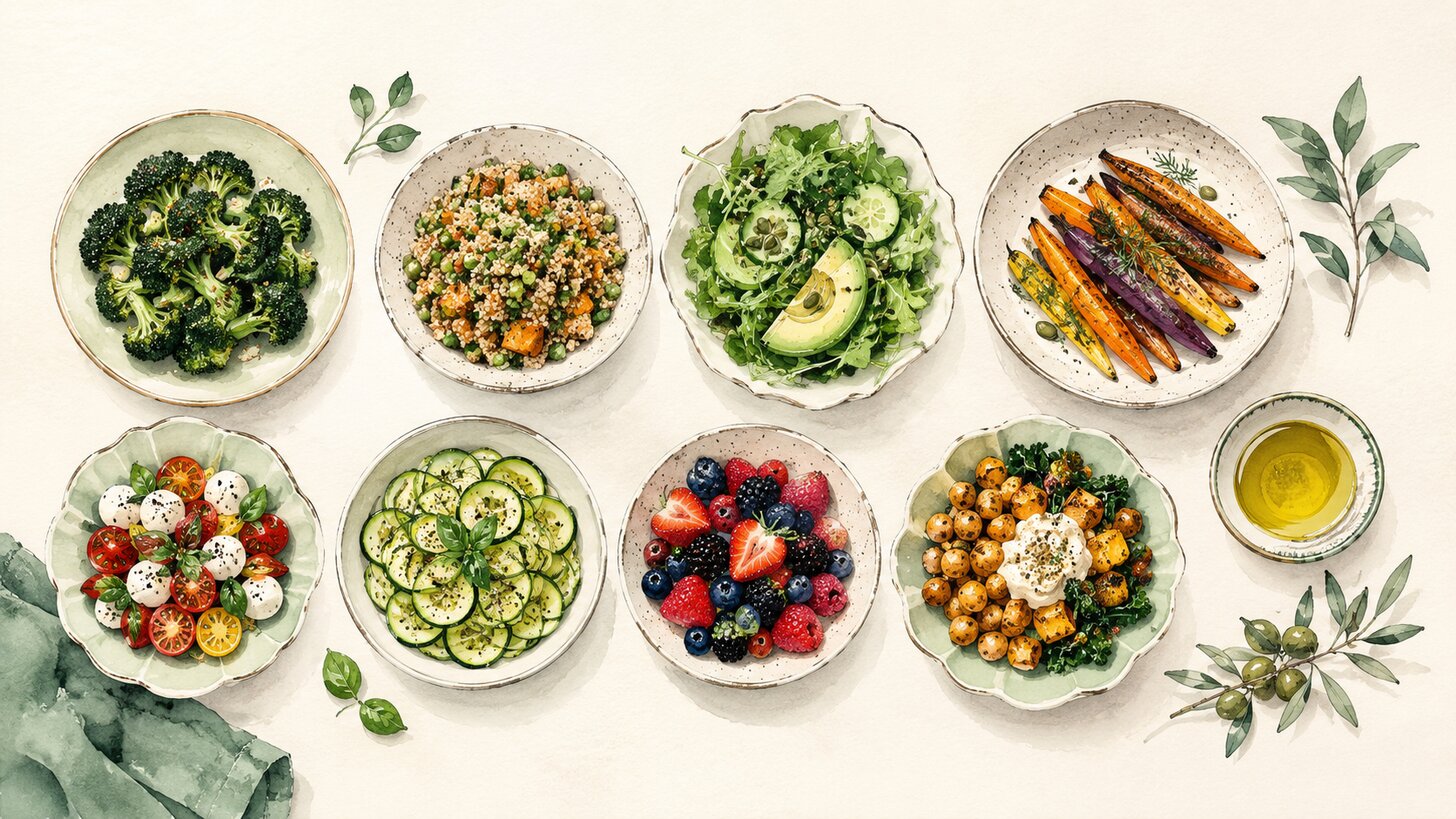
It’s six o’clock, the fridge door is open, and you’re standing there hoping dinner will assemble itself. You already know you want to eat in a way that’s kinder to your body, but willpower runs thin at the end of a long day. That’s the real reason good intentions fall apart. Not because you don’t care, but because deciding what to eat, three times a day, is exhausting.
A plan takes those decisions off your plate before you’re tired and hungry. Below you’ll find a full week of simple, colorful meals built around foods that help calm inflammation, plus a shopping list and a few prep tricks so the week actually runs. Nothing fancy, nothing you can’t find at a normal grocery store. Just real food, laid out so you can stop guessing.
What makes a meal plan anti inflammatory
An anti inflammatory meal plan isn’t a strict diet with a list of banned foods. It leans on the same pattern researchers keep pointing to: the Mediterranean way of eating. That means lots of vegetables and fruit, whole grains, beans and lentils, nuts and seeds, olive oil, and fish a couple of times a week. Think of it as a template, not a set of rules.
The foods you lean on are the colorful ones. Berries, leafy greens, and other bright produce carry antioxidants that support your body’s defenses. Fatty fish like salmon and sardines bring omega 3 fats, which research links to lower levels of inflammatory markers in the blood. Fiber, from whole grains and legumes, helps too. If you want the deeper reasoning, our guide on what an anti inflammatory diet actually is walks through it.
You don’t have to be perfect. The foods worth easing up on are the usual suspects: sugary drinks, packaged sweets, white bread and other refined grains, and processed or fried foods. You’re not banning them forever. You’re just making the good stuff the default, so the treats become an occasional thing instead of the whole meal.
The 7 day anti inflammatory meal plan
Here’s a full week. Every day gives you a breakfast, a lunch, a dinner, and a snack, all built from the foods above. Portions are up to you and your appetite. Feel free to repeat a meal you love, swap the fish night for beans if you’d rather, or move things around to fit your schedule. The plan is a starting point, not a test.
| Day | Breakfast | Lunch | Dinner | Snack |
|---|---|---|---|---|
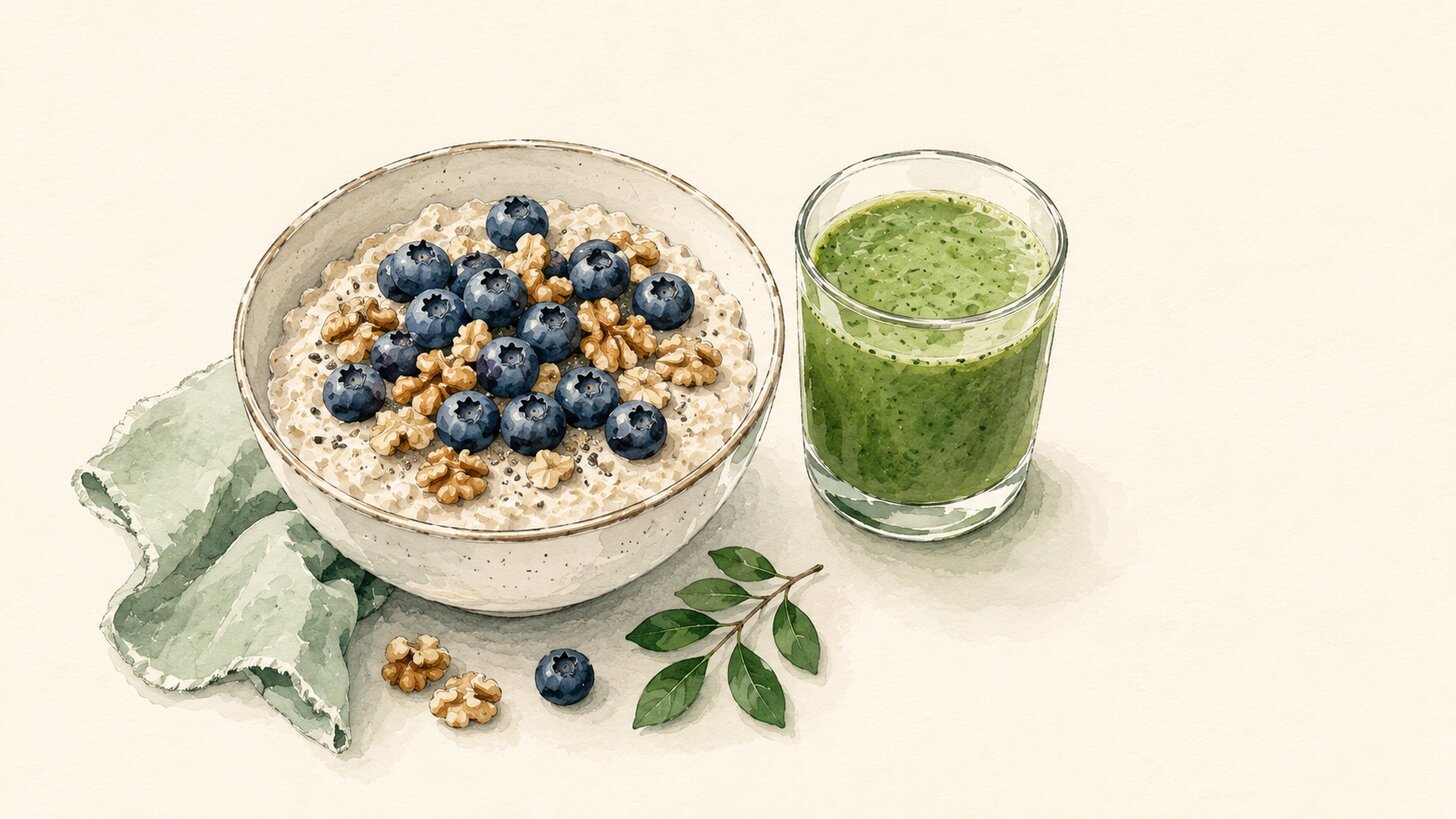
| Monday | Overnight oats with blueberries and walnuts | Big green salad with chickpeas, cucumber, and olive oil | Baked salmon, roasted broccoli, and quinoa | An apple and a small handful of almonds |
| Tuesday | Greek yogurt with strawberries and a spoon of seeds | Leftover salmon over mixed greens | Lentil and vegetable soup with whole grain bread | Carrot sticks with hummus |
| Wednesday | Smoothie with spinach, banana, and berries | Whole grain wrap with turkey, avocado, and greens | Chicken and vegetable stir fry over brown rice | A pear and a few walnuts |
| Thursday | Oatmeal with sliced banana and cinnamon | Lentil soup again, or a grain bowl with leftovers | Sheet pan cod with sweet potato and green beans | Plain yogurt with a drizzle of honey |
| Friday | Two eggs with sauteed spinach and tomato | Quinoa bowl with black beans, corn, and salsa | Whole grain pasta with olive oil, garlic, and greens | A small handful of mixed nuts |
| Saturday | Yogurt bowl with berries, oats, and seeds | Big salad with canned sardines or tuna | Turkey chili with beans and plenty of vegetables | Sliced bell pepper with guacamole |
| Sunday | Veggie omelet with a side of fruit | Leftover chili or a hearty grain bowl | Roasted chicken with a big tray of vegetables | An orange and a few almonds |
Notice how much repeats. You cook salmon Monday and eat it again Tuesday. The lentil soup covers two lunches. The chili does the same. That’s on purpose. Cooking once and eating twice is the quiet secret that keeps a meal plan alive past Wednesday.
Your simple shopping list
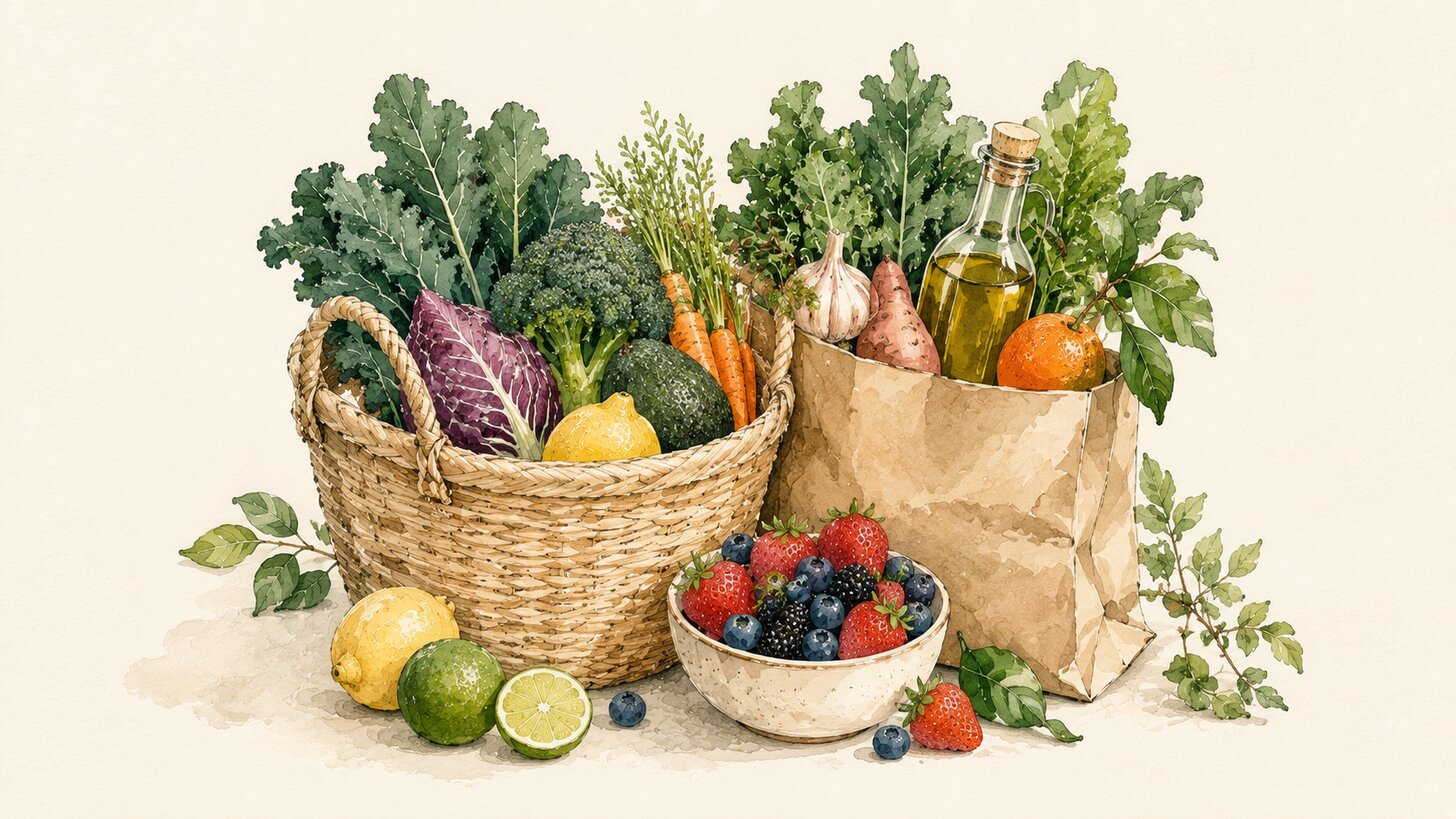
You can screenshot this or jot it on the back of an envelope. It covers the whole week above. Adjust amounts for how many people you’re feeding, and skip anything you already have in the pantry.
- Produce: spinach, mixed salad greens, broccoli, green beans, sweet potatoes, carrots, bell peppers, cucumber, tomatoes, garlic, onion, bananas, apples, pears, oranges, blueberries, strawberries, avocados, lemons
- Protein: salmon, cod, canned sardines or tuna, chicken, ground turkey, eggs, canned chickpeas, canned black beans, dried or canned lentils
- Whole grains: rolled oats, quinoa, brown rice, whole grain bread, whole grain pasta or wraps
- Pantry and dairy: olive oil, walnuts, almonds, mixed nuts, seeds, hummus, plain Greek yogurt, cinnamon, salsa, canned tomatoes, low sodium broth
Want to see why each of these earns its spot in the cart? Our anti inflammatory foods list breaks the whole grocery aisle down, and it comes as a printable too.
How to prep the week without losing your evening
The plan only works if the cooking feels light. You don’t need a Sunday spent chained to the stove. An hour or so of easy prep is plenty, and most of it happens while you do other things.
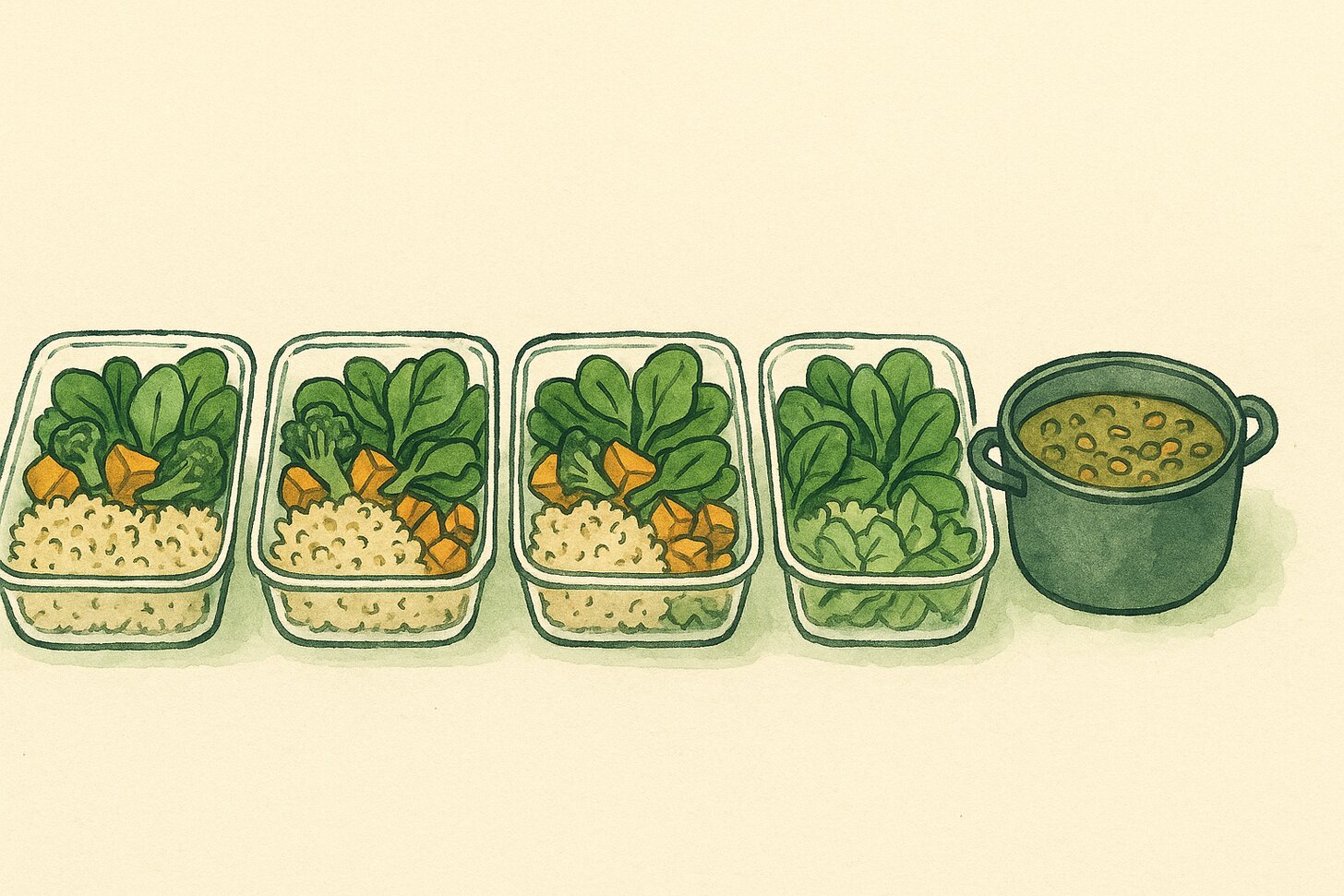
Start by cooking a big pot of a grain, like quinoa or brown rice, and roasting a large tray of vegetables. Those two things alone turn most weeknight dinners into a ten minute job. While the oven does its work, wash and dry your greens so a salad is grab and go, and make the lentil soup or chili that carries you through two or three meals.
A few small habits keep it easy all week. Fill half your plate with vegetables at every meal, add a palm sized portion of protein, and finish with a healthy fat like olive oil, avocado, or a scatter of nuts. If you drink your greens some mornings, a quick anti inflammatory juice or smoothie counts too.
Real example: on a recent Sunday, one of our farm crew roasted two trays of vegetables, cooked a pot of quinoa, and simmered a big lentil soup, all in about an hour. That Tuesday, dinner was leftovers reheated in the time it took to set the table. That’s the whole point. The work you do once quietly feeds you for days.
Common mistakes to avoid
The first mistake is trying to overhaul everything at once. If your current week looks nothing like the plan above, don’t flip your whole kitchen on Monday. Swap in two or three meals, keep them for a couple of weeks, then add more. Slow changes stick. Dramatic ones tend to collapse by Thursday.
The second is thinking bland equals healthy. Inflammation calming food should taste good, or you won’t keep eating it. Lean on garlic, lemon, herbs, and a good olive oil. A pinch of turmeric or a handful of fresh gut friendly ingredients can lift a simple bowl into something you actually look forward to.
The third is quietly undoing your good meals with sugary drinks and snacks. A colorful lunch loses ground fast when it’s washed down with soda and followed by a packaged pastry. You don’t need to be strict. Just notice where the added sugar sneaks in, and trade a few of those for fruit, nuts, or plain yogurt.
Key takeaways
- An anti inflammatory meal plan follows the Mediterranean pattern: mostly plants, whole grains, beans, olive oil, and fish a couple of times a week.
- Lean on colorful produce, fatty fish, nuts, seeds, and fiber. Ease up on sugary drinks, refined grains, and processed foods.
- Cook once and eat twice so the week doesn’t fall apart midway.
- A short hour of prep, a big grain, a tray of roasted vegetables, and a pot of soup, carries most of your dinners.
- Change a few meals at a time. Slow and tasty beats strict and short lived.
Frequently asked questions
How long before an anti inflammatory diet makes a difference?
It varies from person to person. Some people notice they feel a little better within a few weeks, while for others the benefits build slowly and quietly over months. The pattern works best as a long term way of eating, not a quick fix, so give it time and focus on consistency rather than speed.
Do I have to eat fish to follow this plan?
No. Fish is a convenient source of omega 3 fats, but you can get healthy fats from walnuts, flax, chia, and olive oil instead. Swap the fish nights for beans, lentils, or tofu, and keep the rest of the plan the same. A plant forward version works just as well.
Is this meal plan good for weight loss?
It can support it, because whole foods, fiber, and protein tend to keep you full and satisfied. That said, this plan is built around eating well, not counting calories. If weight is a specific goal, it’s worth talking with a doctor or dietitian who knows your situation.
Can I make this plan cheaper?
Yes. Canned beans and lentils, frozen vegetables and berries, canned sardines, eggs, oats, and brown rice are all inexpensive and fit the plan perfectly. Buy produce that’s in season, lean on the freezer, and let beans do some of the work your fish and chicken would otherwise do.
This article is general information, not medical advice. If you have a health condition, take medication, or are pregnant or nursing, check with a qualified professional before making big changes to how you eat.