
If you’ve ever grown a tray of microgreens and then stared at it wondering what to actually do with all of them, this one’s for you. These five microgreen recipes are built to use the whole tray, not just a pretty pinch on top. They’re simple, they don’t ask you to buy anything strange, and they turn a handful of tiny greens into real food you’ll want to eat again.
Microgreens are the young seedlings of vegetables and herbs, harvested about a week or two after sprouting. They pack a lot of flavor and nutrition into a small leaf, and the best way to enjoy them is fresh. So instead of letting half the tray wilt in the fridge, here’s how to work them into breakfast, lunch, and dinner without any fuss.
A quick ground rule before we cook: heat is not a microgreen’s friend. They’re delicate, so you’ll add most of them at the very end, off the heat or on top. Treat them like a fresh herb or a soft salad green and you’ll never go wrong.
How to handle microgreens before you cook
Microgreens bruise easily, so a gentle hand matters. Snip them just above the soil line with clean scissors, and only cut what you’ll use in the next day or two. The rest keeps best still growing in the tray.
If you need to rinse them, do it lightly and dry them well. A quick spin in a salad spinner or a soft pat with a clean towel keeps them crisp. Wet greens turn to mush, so drying is the one step people skip and later regret.
Milder greens like pea shoots and sunflower are great by the handful. Spicier ones like radish or mustard bring a peppery kick, so you’ll want a lighter touch with those. Taste a leaf first and let that guide how much you add.
1. Microgreen pesto
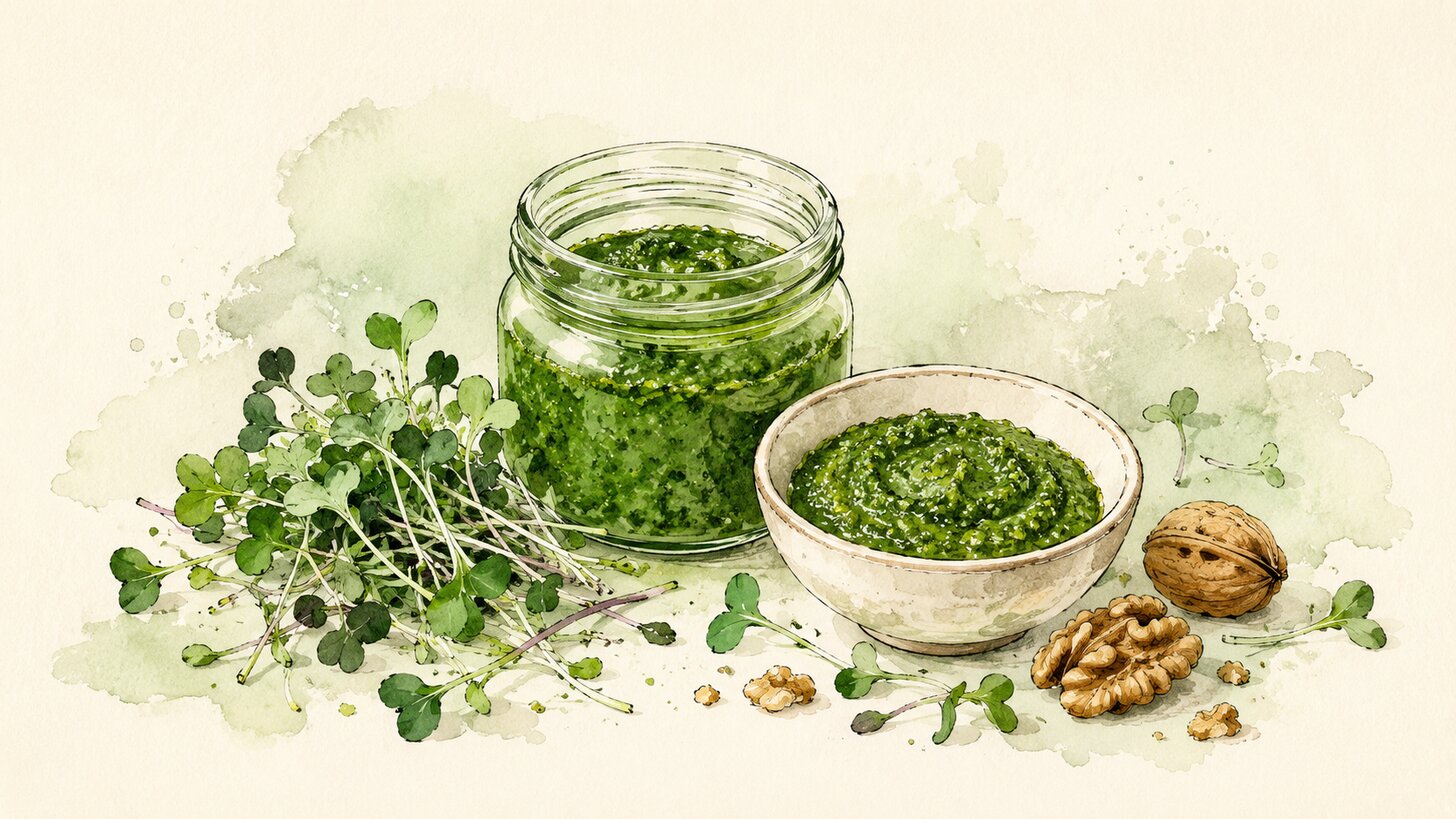
This is the single best way to use a lot of microgreens at once, which makes it the star of any list of microgreen recipes. Pesto is forgiving, it freezes well, and it hides the sharper greens inside something rich and savory.
Add two big handfuls of microgreens to a food processor with a small handful of nuts (walnuts, pine nuts, or sunflower seeds all work), a clove of garlic, a squeeze of lemon, and a little grated hard cheese if you like. Pulse it, then drizzle in olive oil until it comes together. Season with salt and taste as you go.
Toss it with warm pasta, spread it on toast, swirl it into soup, or spoon it over roasted vegetables. It keeps in the fridge for a few days with a thin layer of oil on top, and it freezes beautifully in an ice cube tray for those weeks the tray gets ahead of you.
2. A loaded grain bowl
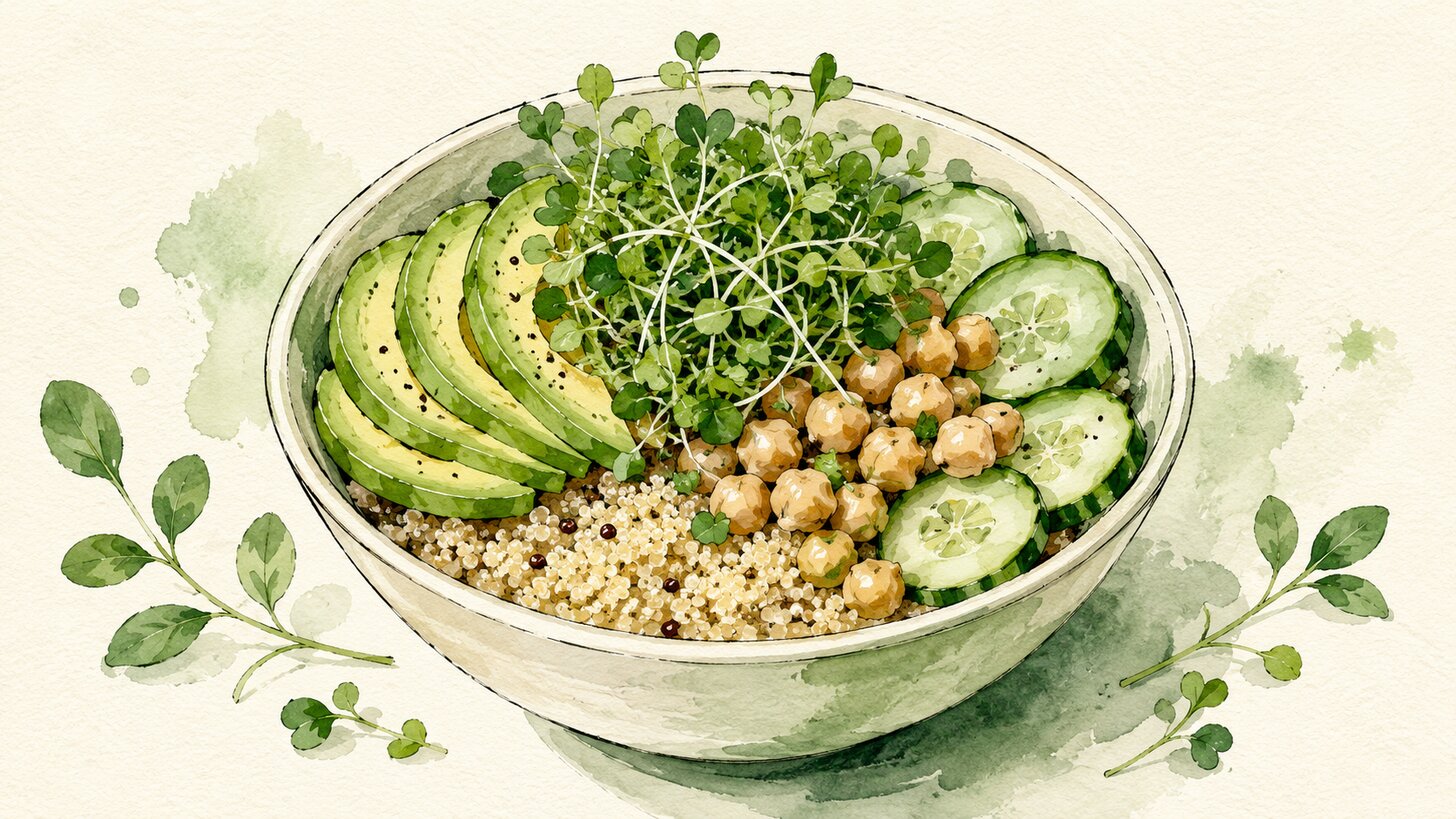
A grain bowl is really just an excuse to pile good things into one dish, and microgreens are the finishing touch that makes it feel fresh. Start with a cooked grain you already like, such as quinoa, rice, or farro, warm or at room temperature.
Add whatever you’ve got: roasted sweet potato, chickpeas, a soft boiled egg, sliced avocado, cucumber, a spoon of hummus. Then pile a generous handful of microgreens on top right before you eat. Laying them over the warm grain gives you a nice contrast of hot and cool, soft and crisp.
Here’s a real example from a busy weeknight. You cook a pot of quinoa on Sunday, and each day that week you build a quick bowl with leftovers plus a fresh fistful of pea shoots and radish microgreens. Five minutes, no recipe, and the tray slowly empties the way it should.
A dressing pulls it all together. A little olive oil, lemon, and salt is plenty, or use a spoon of the microgreen pesto from the first recipe.
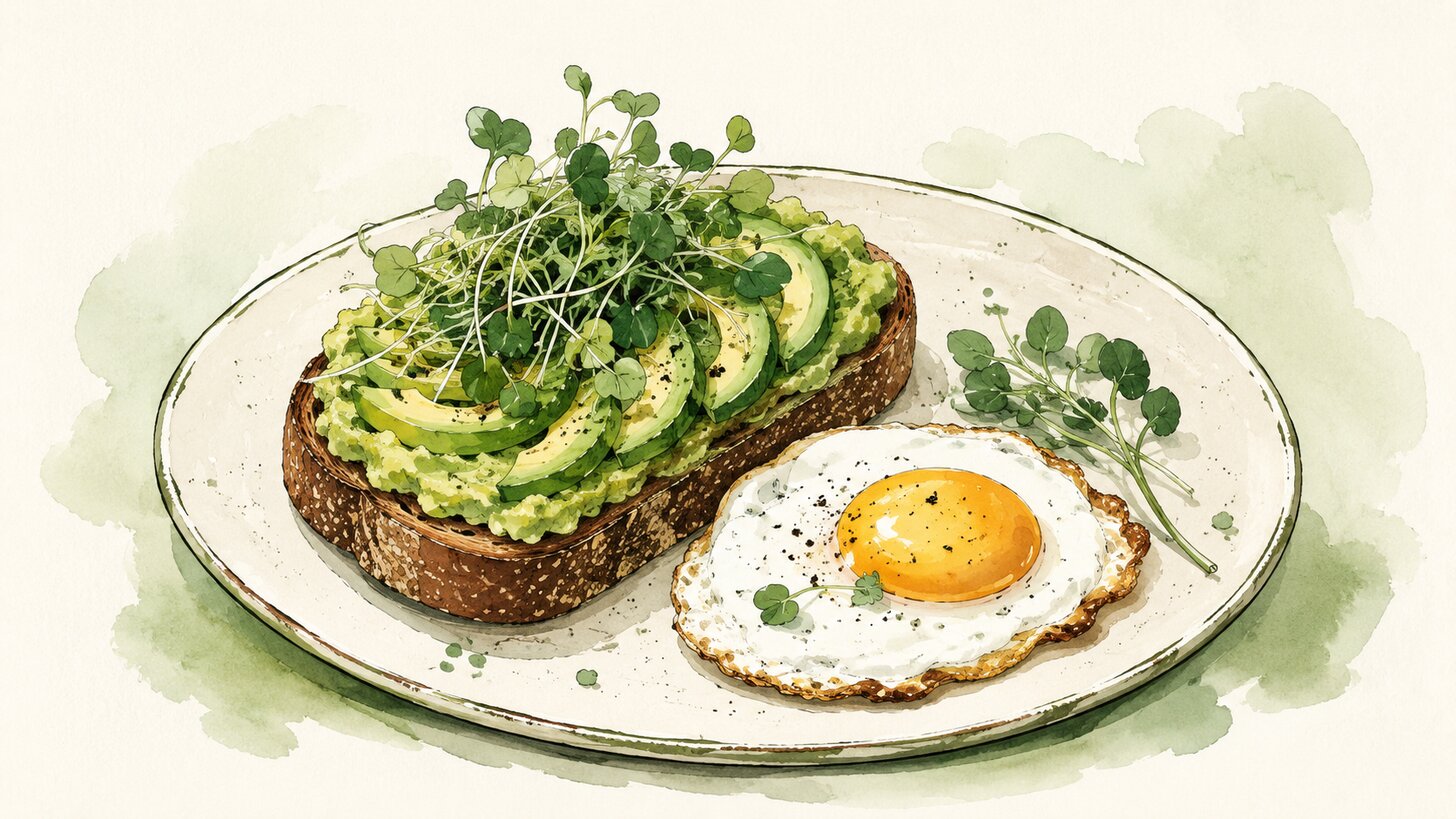
3. Microgreen avocado toast
Avocado toast gets a bad rap for being basic, but it’s basic because it works. Mash a ripe avocado with a pinch of salt, a crack of pepper, and a squeeze of lemon. Spread it thick on toasted bread.
Now go heavy on the microgreens. This is where you can actually use a big handful instead of a garnish. Press them gently into the avocado so they stick, then finish with a drizzle of olive oil and a little flaky salt.
Want it more filling? Add a soft fried or poached egg on top. Sunflower and pea microgreens are mild and lovely here, while a few radish microgreens add a peppery bite that cuts the richness of the avocado.
4. Soft scrambled eggs with microgreens
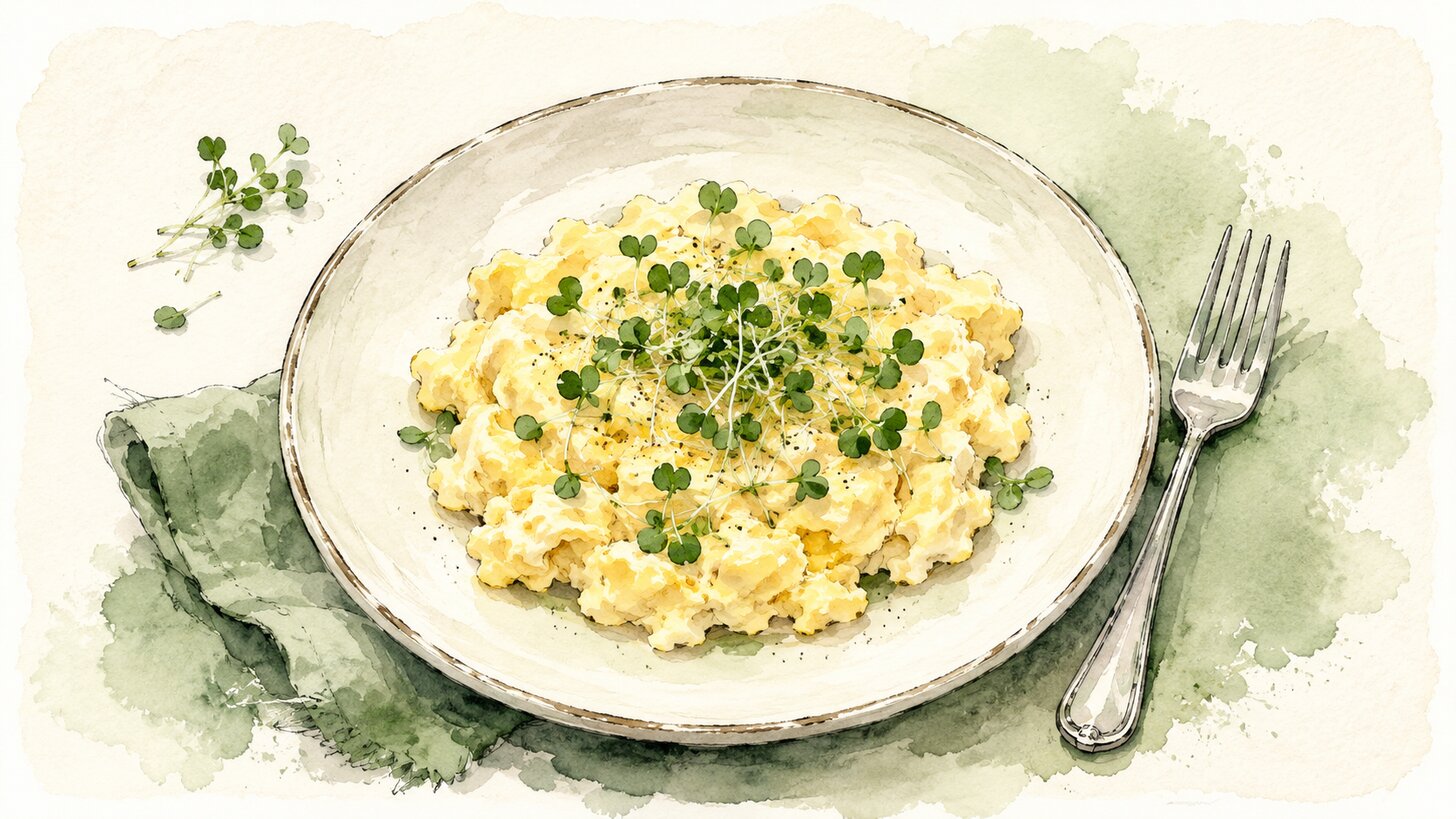
Eggs and microgreens are a natural pair, and this is one of the fastest microgreen recipes you’ll make. The trick is to keep the greens off the heat so they stay bright and fresh instead of wilting into the pan.
Scramble your eggs low and slow for that soft, creamy texture. Pull them off the stove while they’re still a touch glossy, then fold in a handful of microgreens right at the end. The residual warmth softens them just slightly without cooking them down.
The same idea works for an omelet or a frittata. Scatter the greens on after it’s plated rather than mixing them into the raw egg. You get the color, the fresh flavor, and all the nutrition that heat would otherwise dull.
5. A simple microgreen side salad
Sometimes the whole point is to let the greens be the greens. A side salad built mostly from microgreens is quick, and it’s a great way to clear a tray in one go. Milder varieties shine here because you’re eating them raw and unmasked.
Fill a bowl with sunflower and pea microgreens, add a few thin slices of cucumber or radish, maybe some cherry tomatoes, and dress it lightly. A squeeze of lemon, good olive oil, and a pinch of salt is all it needs. Overdressing weighs the delicate leaves down, so go easy.
You can stretch a small harvest by mixing microgreens with regular salad leaves too. That way a modest tray still flavors a big bowl, and nobody’s greens go to waste.
Common mistakes with microgreen recipes
The most common slip is cooking microgreens like spinach. They’re too tender for that. Long exposure to heat turns them limp and flat, so add them at the end nearly every time.
The second is storing them wet. Moisture is what makes a batch slimy, so dry them well and keep any cut greens in a container with a dry paper towel. Better yet, leave them growing in the tray and snip as you need them.
The third is using too little. A shy pinch on top looks nice, but you grew a whole tray. Be generous, because a real handful is where the flavor and the nutrient boost actually come from.
If you’re still deciding which varieties to grow for the kitchen, our guide to the best microgreens to grow for beginners is a good place to start. Pea, sunflower, and radish are the workhorses for most of these dishes.
Key takeaways
- Add microgreens at the end, off the heat, so they stay fresh and keep their nutrition.
- Pesto is the best way to use a big batch at once, and it freezes well.
- Grain bowls, avocado toast, eggs, and side salads all take a generous handful, not a pinch.
- Dry your greens well and cut only what you’ll use in a day or two.
- Milder pea and sunflower greens are versatile, while radish and mustard add a peppery kick.
Frequently asked questions
Can you cook microgreens?
You can, but it’s usually better not to. They’re delicate and lose texture and some nutrients with heat. If you want them in a hot dish, stir them in at the very end so they warm through without wilting down.
How do you eat a whole tray of microgreens?
Pesto and side salads use the most at once. Spreading them across a few meals also works well: eggs at breakfast, a grain bowl at lunch, and a handful tossed into dinner. Snip as you go so the rest keeps growing.
Do microgreens lose nutrients when stored?
Fresh is always best, and cut microgreens slowly lose quality over several days in the fridge. Keeping them dry and cool helps them last. The freshest option is to leave them in the tray and harvest right before you cook.
Which microgreens taste best in recipes?
Pea shoots and sunflower are mild, sweet, and crunchy, so they suit almost anything. Radish and mustard are peppery and great where you want a little heat. Broccoli microgreens are mild and a favorite for their nutrition. For more on the flavors and their role in a gut friendly diet, taste and mix as you like.
However you use them, the goal is the same: eat the whole tray while it’s fresh. Grow a little, cook a lot, and let these microgreen recipes turn those tiny greens into something you look forward to.
This article is general information, not medical advice. If you have a health condition, take medication, or are pregnant or nursing, check with a qualified professional before making changes to your diet.