
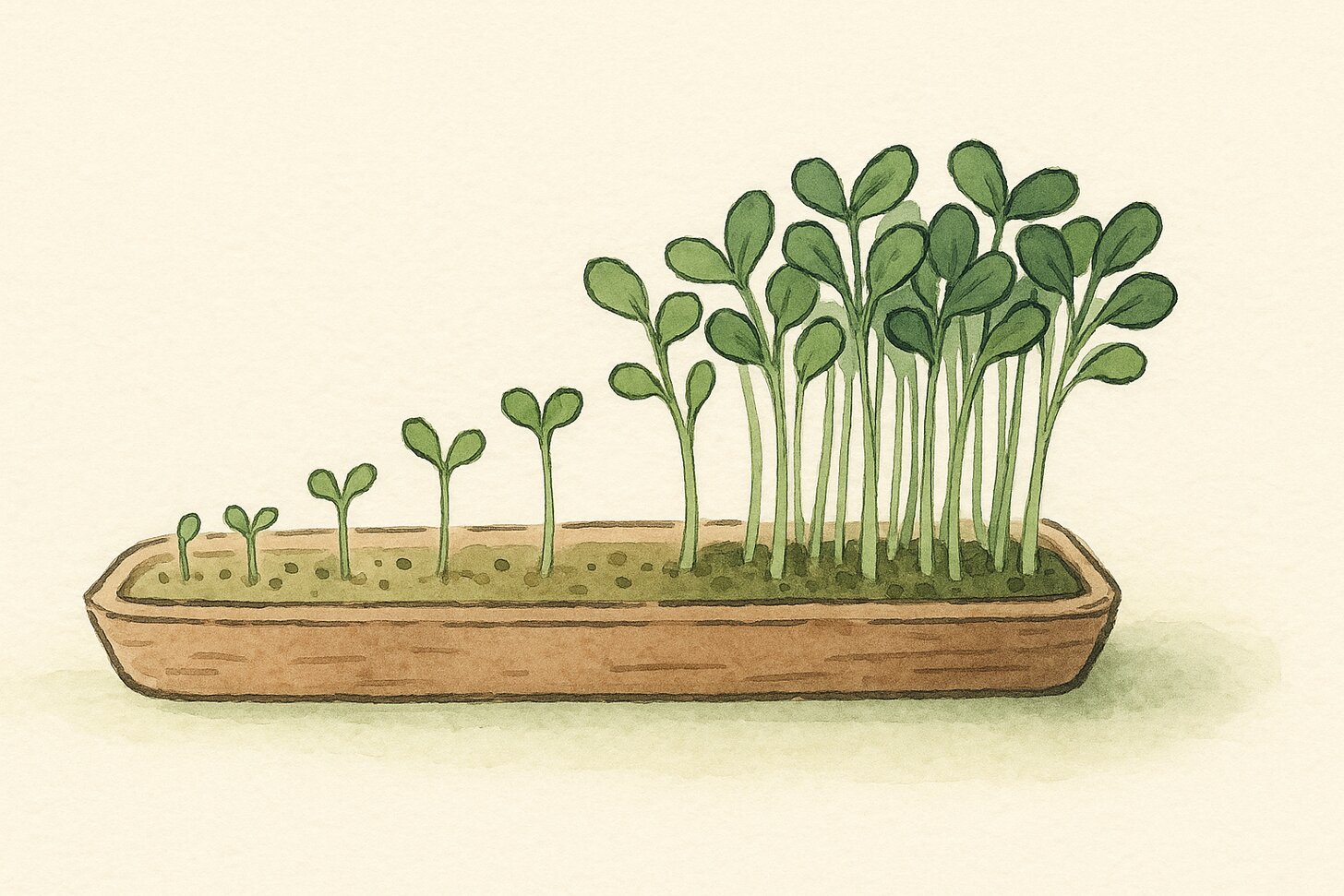
Most microgreens take about 7 to 21 days to grow, counting from the day you plant the seed to the day you snip them. So how long do microgreens take to grow really comes down to which variety you pick. Fast greens like radish can be ready in under a week. Slower herbs like basil or parsley can make you wait closer to three weeks. Once you know where your variety lands, you can plan your trays so you always have something fresh to cut.
This guide gives you a clear timeline chart for the most common varieties, then walks you through the stages so you know exactly where those days go. If you’re brand new to all this, start with our primer on what microgreens are, then come back here to plan your grow.
How long do microgreens take to grow? The short answer
Nearly all microgreens fall into a three week window. The seed sprouts in a couple of days, the tray sits in the dark for a few more, then the greens stretch toward the light and fill in. When the first true leaves show up, they’re ready.
It helps to sort varieties into three groups. Fast growers are done in about 7 to 10 days. Medium growers take 10 to 14 days. Slow growers, mostly herbs, need 14 to 25 days. Pick a fast variety for your first tray so you get an early win, then branch out from there.
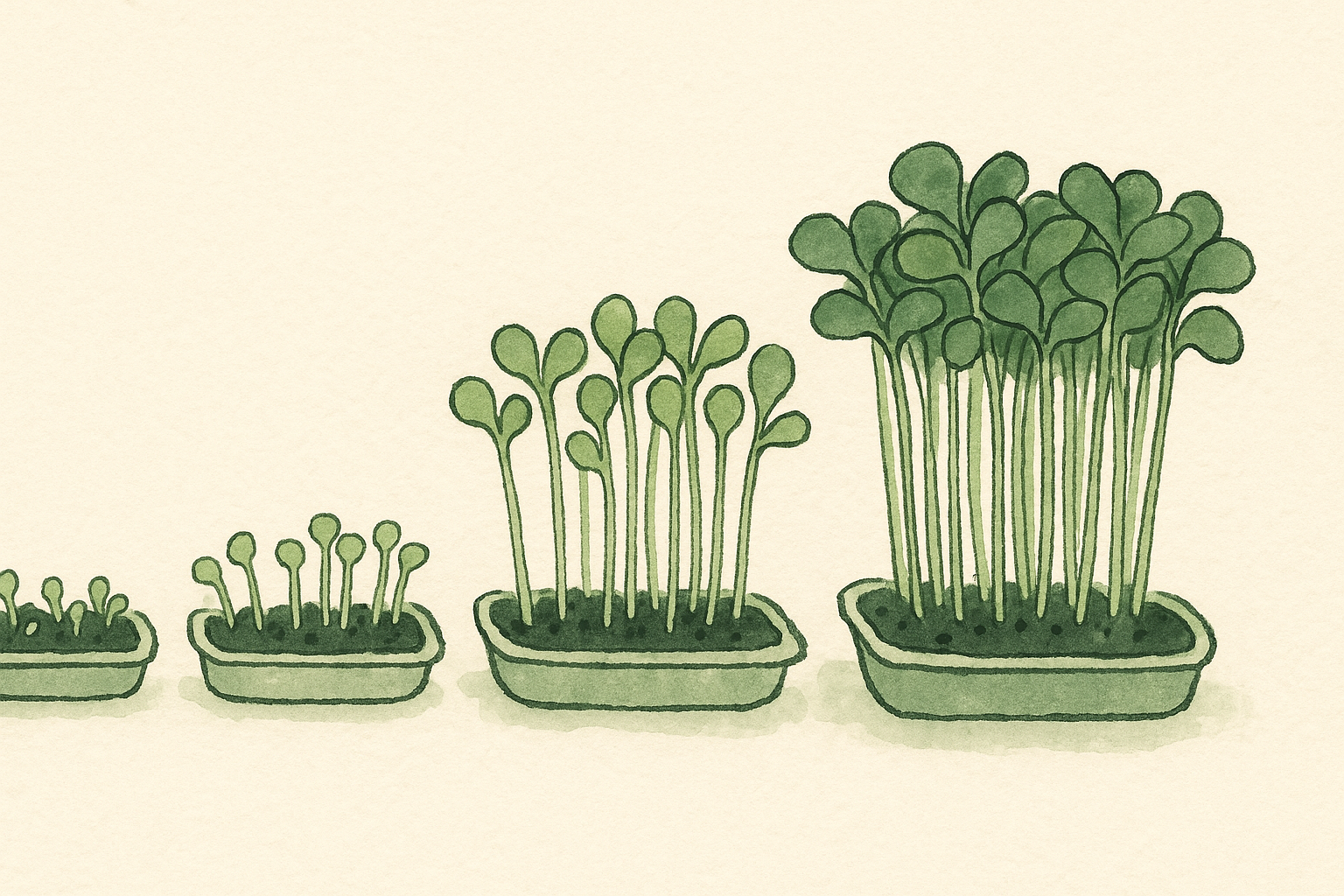
Microgreens growing timeline chart
Here’s a variety by variety look at how many days from seed to harvest you can expect. These are typical ranges for a warm indoor setup. Your own numbers will shift a little with temperature and light, which we cover below.
| Variety | Days to harvest | Speed group | Good to know |
|---|---|---|---|
| Radish | 5 to 8 | Fast | The classic first tray, spicy and forgiving |
| Cress | 5 to 10 | Fast | Peppery, sprouts almost overnight |
| Mustard | 7 to 10 | Fast | Hot and zesty, quick to fill in |
| Arugula | 7 to 10 | Fast | Nutty and peppery, in high demand |
| Broccoli | 8 to 12 | Fast | Mild, popular for its sulforaphane |
| Kale | 8 to 12 | Fast | Mild and easy, sturdy little leaves |
| Cabbage | 8 to 12 | Fast | Gentle flavor, tidy even trays |
| Kohlrabi | 8 to 12 | Fast | Mild and slightly sweet |
| Pea shoots | 8 to 14 | Medium | Sweet and crunchy, benefits from a soak |
| Sunflower | 8 to 14 | Medium | Nutty and thick, soak and weight it down |
| Beet | 10 to 18 | Medium | Earthy, slow and uneven to sprout |
| Swiss chard | 10 to 18 | Medium | Colorful stems, patient germination |
| Cilantro | 14 to 21 | Slow | Bold flavor, seeds take their time |
| Basil | 14 to 25 | Slow | Fragrant, one of the longest waits |
| Parsley | 18 to 25 | Slow | The slowest of the common greens |
Want a deeper look at which of these pack the most nutrition per bite? Our microgreens nutrition chart ranks them side by side.
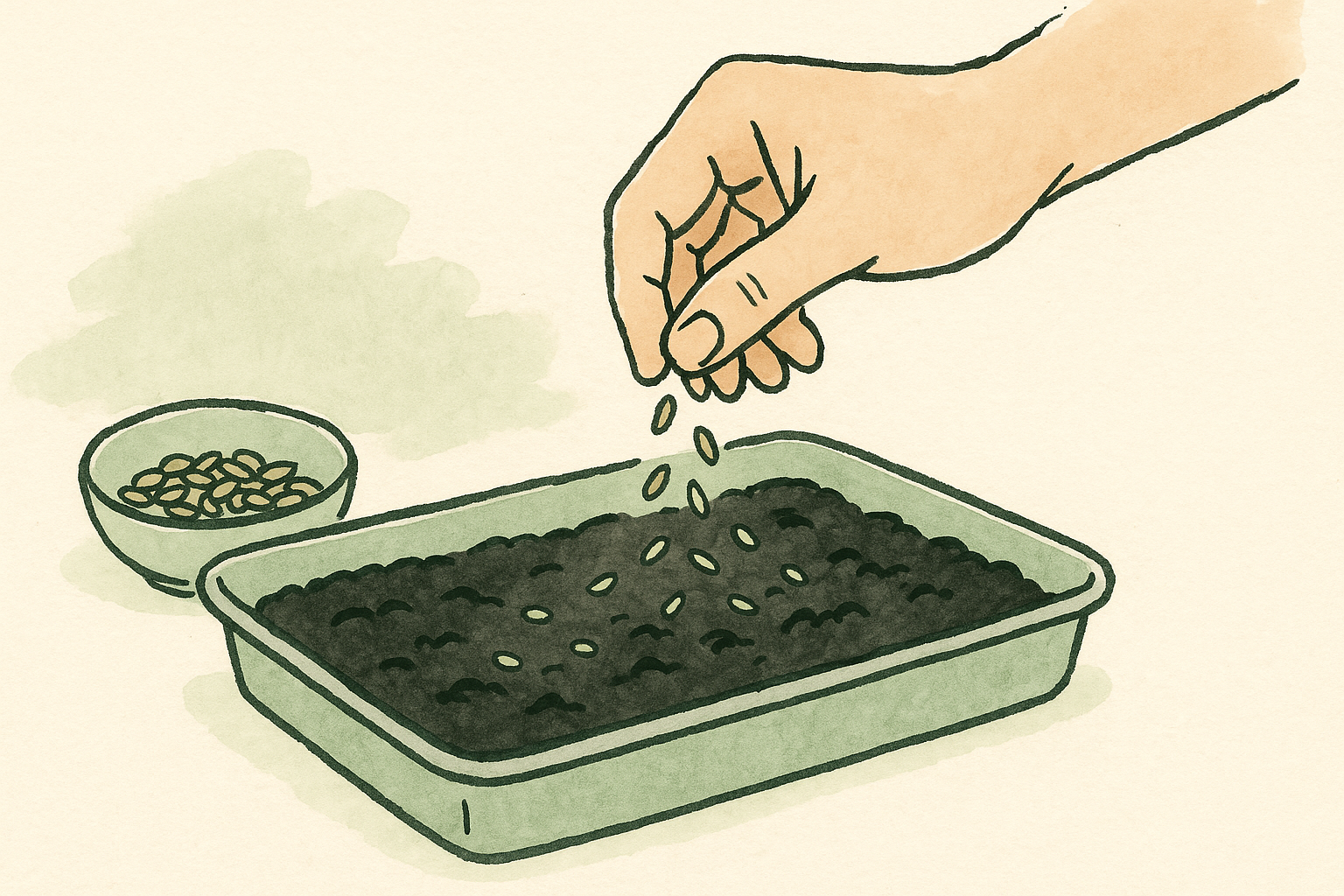
Where the days actually go: the four stages
Knowing the total number helps, but it’s easier to plan when you can see what’s happening each day. How long microgreens take to grow depends on how quickly they move through four simple stages. Here’s what each one looks like.
Stage 1: Soaking, only for some seeds
Big seeds with a hard coat, like peas and sunflower, do better with a soak of 4 to 12 hours before you plant. It softens the shell and wakes them up. Small seeds like radish, broccoli, kale, and mustard skip this step entirely. Soaking a small seed just turns it into a gluey mess, so leave those dry.
Stage 2: Germination
Once seeds hit the soil, most crack open and sprout within 1 to 3 days. Fast brassicas like radish and broccoli often pop in a day or two. Slower seeds like beet, chard, and the herbs can take four or five days to get going. Keep them warm and covered during this stretch and they’ll come up more evenly.
Stage 3: The blackout stage
After sprouting, growers usually keep the tray in the dark for another 2 to 4 days, often with a light weight on top. This is called the blackout stage. The greens reach and stretch looking for light, which gives you taller, stronger stems. Most fast varieties only need about 48 hours of this before you uncover them.
Stage 4: Light, then harvest
Now you uncover the tray and give it light, either a bright windowsill or a simple grow light. Over the next few days the greens turn deep green and the first true leaves appear. That’s your signal. Cut them just above the soil line with clean scissors and rinse. For the full setup from tray to harvest, our complete guide to growing microgreens at home walks through every step.
What makes microgreens grow faster or slower
Two people can plant the same seeds and harvest days apart. A few things explain the gap, and most of them are in your control.
Temperature is the big one. Microgreens like it in the range of a comfortable room, roughly 65 to 75 degrees. Too cold and they crawl. Too hot and they can bolt or rot. Light matters once the blackout stage ends. A weak, cloudy windowsill grows pale, leggy greens slowly, while a decent grow light keeps them compact and on schedule.
Seed density plays a part too. Sow enough seed to carpet the tray, but crowd them and airflow drops, which invites mold and slows everything down. Water is the last piece. Keep the medium evenly damp, never soggy, and try to water from the bottom once the greens are up so the leaves stay dry.
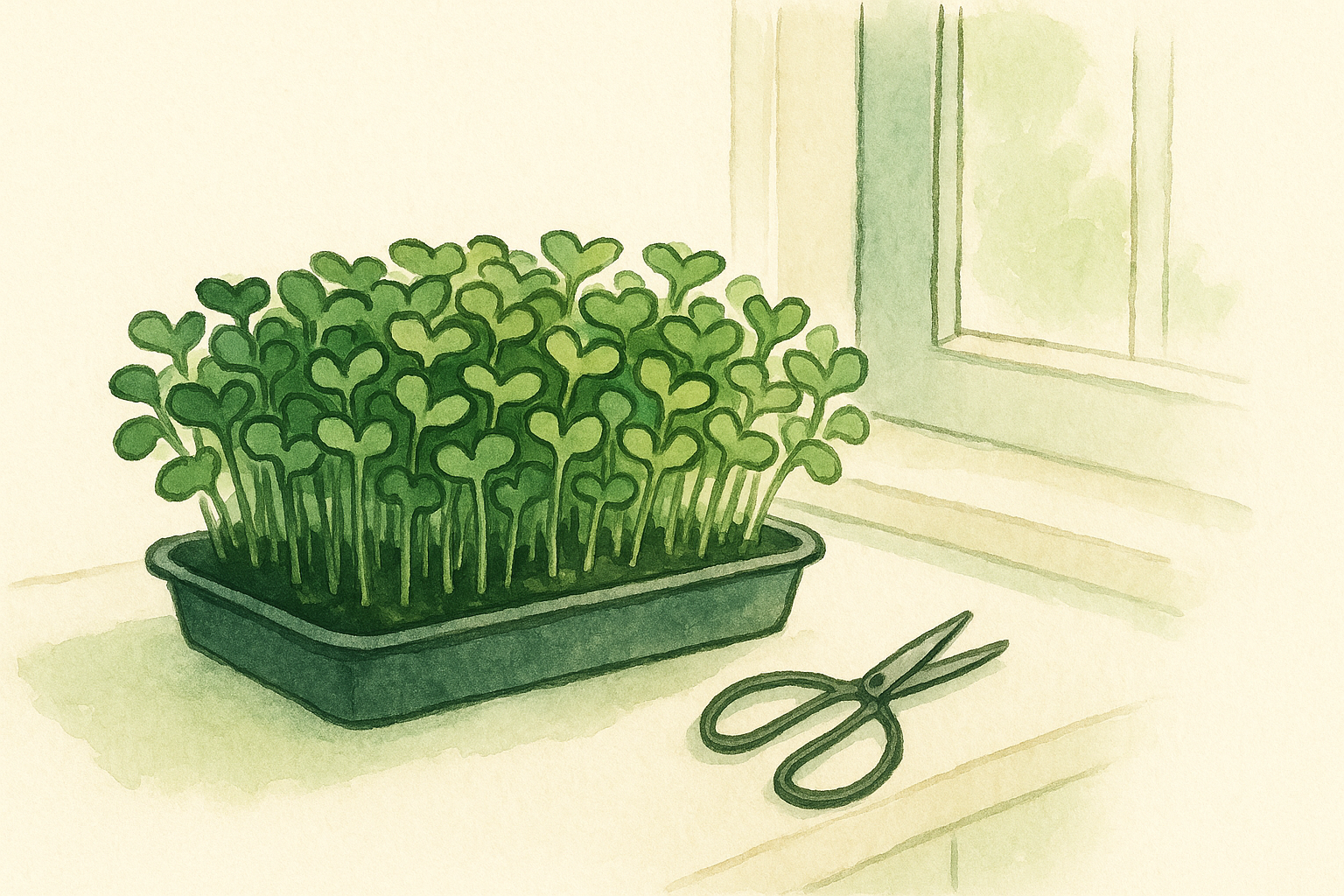
A real example: a radish tray on the counter
Say you plant a tray of radish on a Sunday afternoon. You scatter dry seed across damp soil, mist it, and stack a second tray on top for weight. By Monday evening you already see white roots and the first split seeds. You keep it covered.
By Wednesday the greens have pushed the top tray up, so you uncover them and move the tray to a sunny window. They green up fast. By Friday or Saturday, six days in, the first true leaves show and the tray is a thick green mat. You snip a handful for dinner and keep the rest in the fridge. That quick turnaround is exactly why radish is the variety we point beginners to first in our roundup of the best microgreens to grow for beginners.
Common mistakes that slow your microgreens down
If your trays keep running long, one of these is usually the reason.
- Growing too cold. A chilly garage or a drafty window can add several days. Move trays somewhere warm and steady.
- Uncovering too early. If you pull the cover before the greens have stretched, you get short, uneven growth. Let the blackout stage finish.
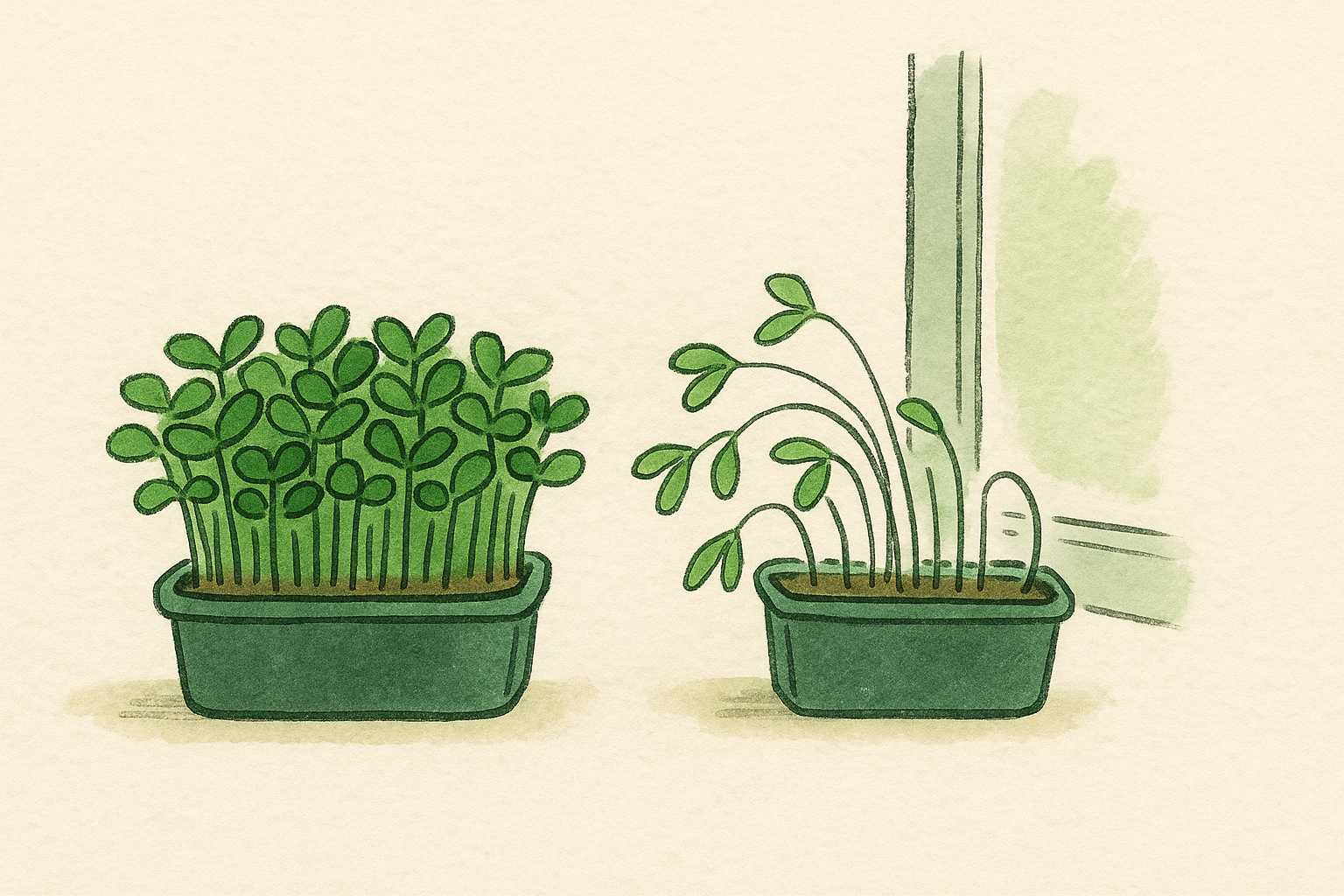
- Not enough light after blackout. Pale, floppy greens leaning hard toward the window mean they’re starved for light. Add a grow light or a brighter spot.
- Sowing too thin. A sparse tray takes longer to fill in and never looks lush. Use enough seed to cover the surface.
- Expecting herbs to keep up with radish. Basil, cilantro, and parsley are simply slow. Give them the full two to three weeks and don’t panic.
Key takeaways
- Most microgreens are ready in 7 to 21 days from seed to harvest.
- Radish, cress, and mustard are the fastest, often under 10 days. Basil, cilantro, and parsley are the slowest.
- The grow moves through four stages: an optional soak, germination, a short blackout, then light and harvest.
- Warmth, light, seed density, and even watering decide whether you land at the fast or slow end of the range.
- Start with a fast variety, harvest when the first true leaves appear, and stagger your trays for a steady supply.
Frequently asked questions
What is the fastest microgreen to grow?
Radish is the usual winner, ready in about 5 to 8 days. Cress and mustard are close behind. These are the ones to plant when you want greens on your plate in a hurry.
How do I know when microgreens are ready to harvest?
Look for the first set of true leaves, the ones that appear after the initial rounded seed leaves. At that point the tray is a dense mat of green, usually a couple of inches tall. That’s the sweet spot for flavor and nutrition.
Do microgreens grow back after you cut them?
Most don’t. Because you cut the stem above the soil, the plant has little left to regrow from. Peas are the main exception and can give a smaller second cutting. For most varieties, plan to compost the tray and start fresh.
Why are my microgreens taking so long?
Cold temperature is the most common cause, followed by weak light and overwatering. Move the tray somewhere warm and bright, ease up on the water, and most greens speed right back up.
This article is general information, not medical advice. If you have a health condition, take medication, or are pregnant or nursing, check with a qualified professional before making changes to your diet.