
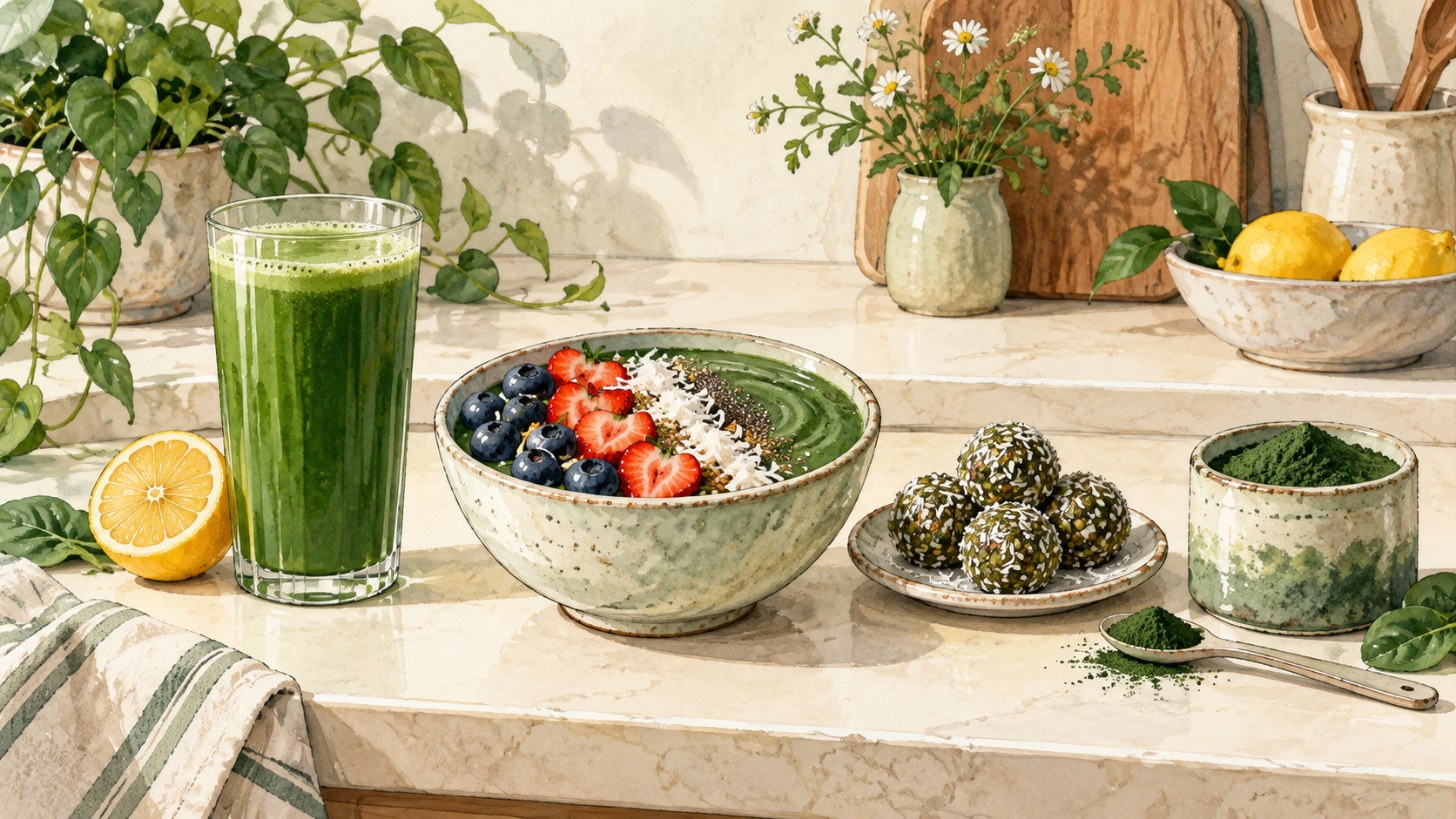
There’s a tub of green powder somewhere in your cupboard. You bought it back in February with real intentions. You used it twice, both times stirred into a glass of plain water, and both times you finished the glass a little faster than you wanted to.
That’s how most spirulina ends up. The powder isn’t the problem. A full teaspoon in plain water tastes like a tide pool, and nobody builds a habit around something they have to brace for.
What actually works is smaller and duller than the label suggests. You need two or three places to put it that already exist in your day, and a much lighter hand. Drinks with spirulina are the natural starting point, because a drink is already something you’re making anyway. Bowls and snacks come later, once you know what half a teaspoon really tastes like.
Why drinks with spirulina are the easiest place to start
A drink is the lowest effort container you own. No cooking, no recipe, no cleanup beyond a glass. That’s why people who stick with spirulina almost always begin there.
The trick is what you put it in. Plain water gives the algae nothing to hide behind, so every savory, seaweedy note lands right on your tongue. Give it something tart, sweet, or creamy and it drops into the background.
Citrus is the reliable partner. Lemonade, orange juice, pineapple juice, or water with a hard squeeze of lime all soften it noticeably. Coconut water does the same job, and so does a banana smoothie, where the sweetness and the thickness both pitch in. If you want them written out, we have a set of easy spirulina drink recipes that follow this exact logic.
The paste trick that fixes clumping
Spirulina does not want to dissolve. Dump it straight into a full glass and it floats in little green islands that stay green no matter how long you stir.
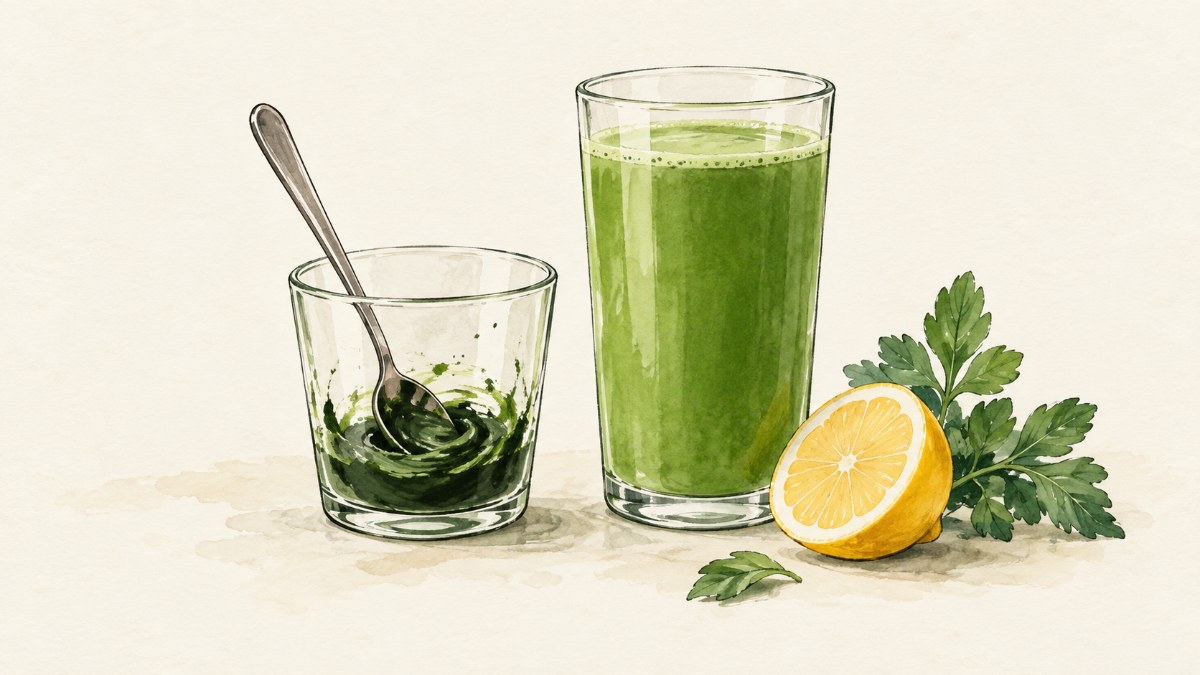
So make a paste first. Put the powder in the bottom of an empty glass, add a splash of your liquid, maybe a tablespoon, and stir it into a smooth dark slurry with a spoon. Then pour the rest of the liquid in. You’ll get an even color and no gritty bits at the bottom.
A jar with a lid works just as well if you’d rather shake than stir. Powder, splash, lid, shake, then top it up.
Where spirulina fits across a normal day
You don’t need a plan. You need to notice the moments where you’re already putting something in a glass or a bowl, and pick one.
Morning
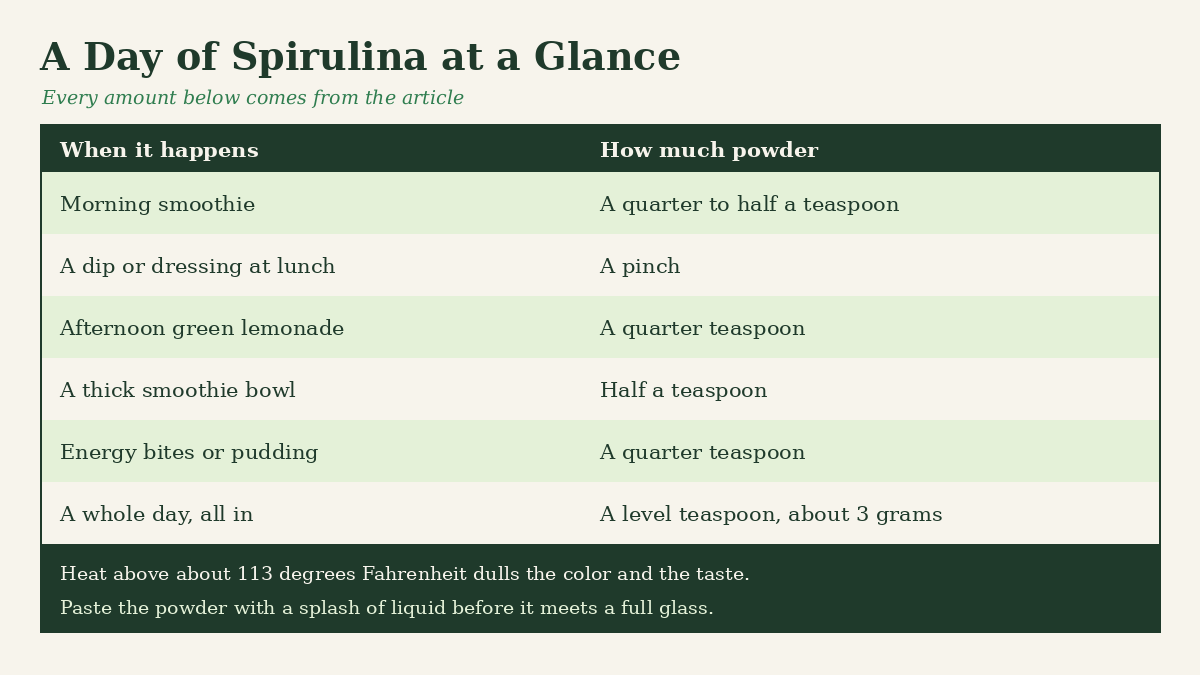
Morning is the easiest slot because most people already drink something. A quarter to half a teaspoon goes into a smoothie without announcing itself, especially one built on banana, mango, or pineapple.
If you’re not a smoothie person, a small glass of orange juice with a quarter teaspoon stirred in takes about fifteen seconds. Keep it cold. Skip the coffee for this, which we’ll get to.
Midday
Lunch is where the savory side of spirulina stops being a problem and turns useful. A pinch stirred into hummus, guacamole, or a salad dressing reads as herby rather than strange.
Whisk it into olive oil and lemon and you get a deep green that looks like it came from herbs. Nobody at the table asks.
Afternoon
The afternoon slump is where a small green drink actually earns its place. Cold water, lime, a little honey or maple, and a quarter teaspoon of powder makes something closer to a lemonade than a supplement.
This is also where most drinks with spirulina end up sticking, because you’re already reaching for something cold at that hour.
Evening
Evening deserves some honesty. Some people find spirulina mildly energizing and would rather not have it late. Others notice nothing.
If dinner is where it fits, stir it into a cold soup, a yogurt dip, or a pesto, always off the heat.
Bowls and snacks, when you want it to feel like food
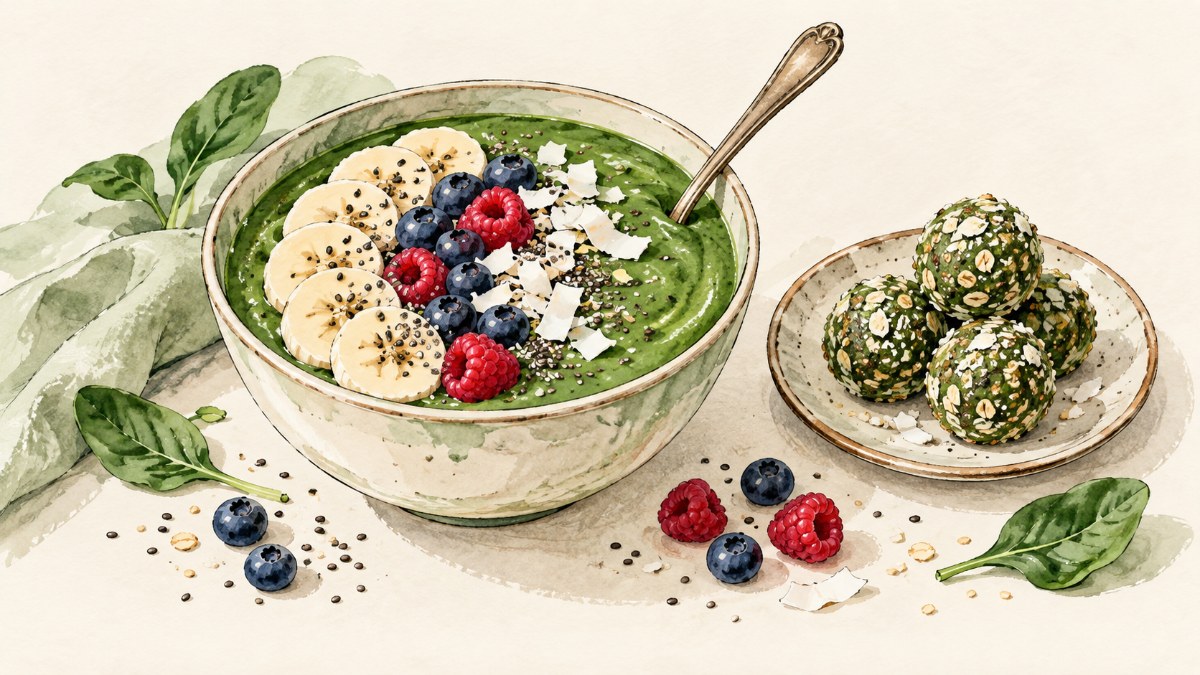
Once a drink is a habit, bowls are the natural next step. A thick smoothie bowl carries about 3 grams of powder without tasting like much, and the toppings give you something to hide behind.
Blend frozen banana and frozen mango with as little liquid as the blender will tolerate, add half a teaspoon of spirulina, and top it with coconut flakes, berries, and seeds. The texture matters more than the flavor here. If it’s thick enough to hold a spoon upright, the toppings sit on top instead of sinking.
Snacks are the other quiet win. No bake energy bites made from dates, oats, nut butter, and a quarter teaspoon of spirulina hide it almost completely, and you get a week of them from ten minutes of work. Rolled in coconut, they look like they came from a shop.
Chia pudding is the laziest version. Milk, chia seeds, a little maple, a quarter teaspoon of powder, stir, fridge, overnight. There are more ideas in our roundup of simple spirulina recipes.
How much to use before more stops helping
Most people use too much on day one, hate it, and quit. Starting small isn’t a compromise. It’s the thing that makes the habit survive.
A level teaspoon of spirulina powder weighs roughly 3 grams. Most research on spirulina uses somewhere between 1 to 3 grams a day, and a typical daily serving sits around 3 to 5 grams. France’s food safety agency suggests holding around 5 grams a day as a sensible ceiling.
So one teaspoon a day is already a normal amount. Two is not twice as good. What you gain by doubling the dose you usually lose in taste, and a spoonful you dread is a spoonful you skip.
Start at a quarter teaspoon for a week. Move to half. Sit there for a while. Most people never need more than a level teaspoon, split across a drink and a bowl if you’d rather not taste it all at once.
Heat is the one thing that undoes it
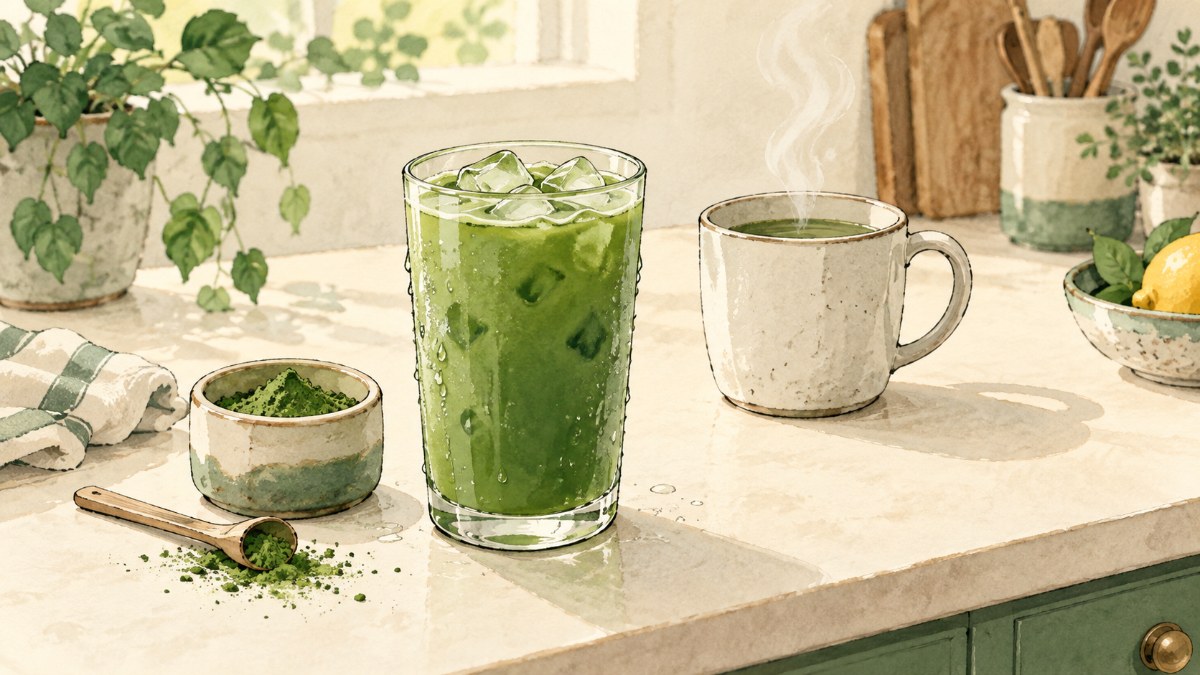
This is the mistake that ruins more spirulina than any other. Stirring it into hot coffee or tea feels efficient, and it’s the fastest way to waste the spoonful.
Phycocyanin, the blue pigment that gives spirulina its color and a lot of its appeal, is fragile above roughly 45 degrees Celsius, which is about 113 degrees Fahrenheit. Push past that and the color starts sliding toward a murky grey green. At higher temperatures the change happens fast.
That doesn’t mean every nutrient vanishes the moment things warm up. The minerals are fine. But the pigment, the color, and the fresh taste all suffer, and a grey drink is not one you’ll make twice.
The working rule is simple: add spirulina to anything cold, and add it to anything warm only after the heat is off. Stir it into soup in the bowl, not the pot. Fold it into pesto, dressings, and dips, which never boil anyway. Baking is the one place people get away with more, because fat and sugar in the dough offer the pigment some protection, but expect the color to dull.
What a normal week actually looks like
Here’s a real version, not an aspirational one. Monday through Friday, a quarter teaspoon goes into whatever gets blended for breakfast, usually frozen banana and almond milk. That’s the anchor, and it takes no decision.
Wednesday afternoon, there’s a batch of energy bites in the fridge from Sunday, so two of those cover the second dose without any thought at all. Thursday, a green lemonade around three in the afternoon, because the morning smoothie got skipped.
Saturday and Sunday, nothing happens. The tub stays closed. Monday it picks back up, mostly because the tub sits at the front of the shelf and the blender never leaves the counter.
Four or five uses a week, a quarter to half a teaspoon at a time. A routine that survives a skipped weekend beats a perfect one that lasts nine days.
Common mistakes to avoid
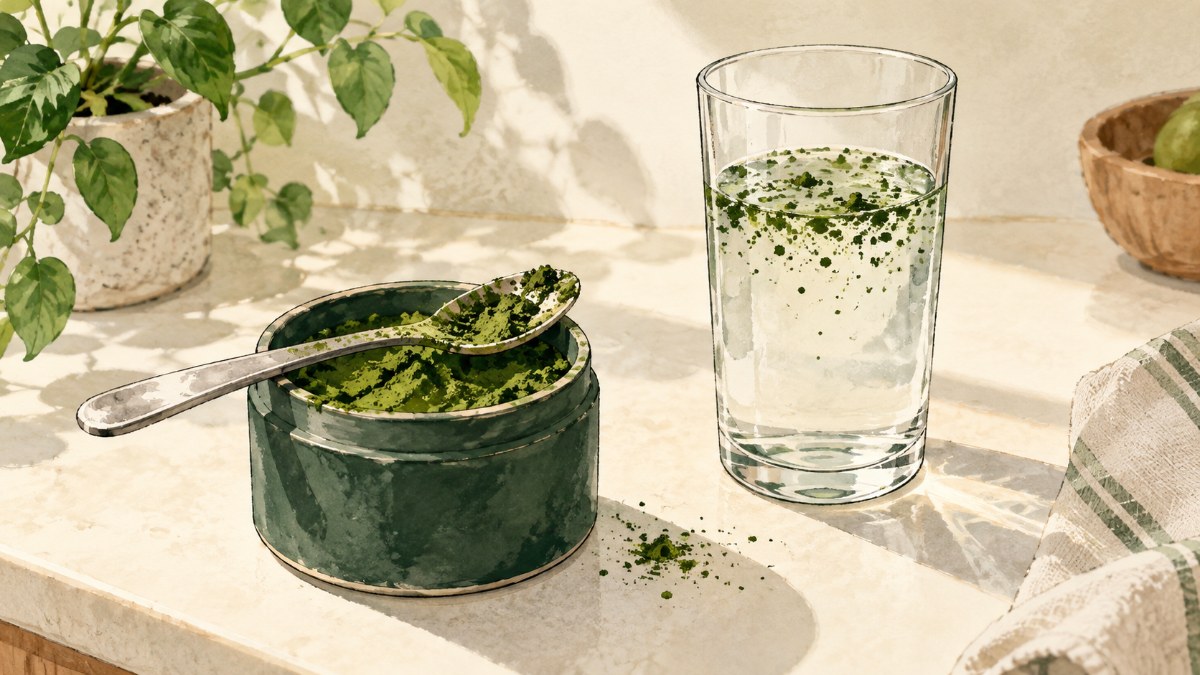
Dumping the powder into a full glass. It clumps, it floats, and you’re left chewing green flecks. Paste it with a splash first, every time.
Going straight to a full teaspoon. The taste is the whole obstacle, so start smaller than you think and let your palate catch up.
Using plain water. Nothing about plain water helps. Tart, sweet, or creamy all do.
Adding it to hot drinks. Coffee and tea are the two places spirulina goes to die.
Leaving the tub open or warm. Light, heat, and air all fade the color. Keep it sealed in a cool dark cupboard and use a dry spoon, because a wet spoon introduces moisture and clumps the whole tub.
Buying on price alone. Spirulina is grown in open water, so contamination is a real concern. Choose a brand that publishes third party test results for heavy metals and microcystins.
Key takeaways
Drinks with spirulina are the easiest entry point because the container already exists in your day. Paste the powder with a splash of liquid before it meets a full glass, and pick something tart, sweet, or creamy rather than plain water.
A quarter to half a teaspoon is plenty to start, and a level teaspoon a day is already a normal serving. Keep it cold, or add it after the heat is off. Bowls and snacks come next, once a drink has become automatic.
Questions people ask
Can you just put spirulina in water?
You can, and most people only do it once. Water gives the flavor nowhere to go. Add lemon, lime, a little honey, or use coconut water instead and the same amount of powder becomes easy to drink.
What do drinks with spirulina actually taste like?
Savory and faintly of the sea, a bit like a mild seaweed. Sweet and tart flavors cover it best. The less you use, the less you notice it.
When is the best time of day to take spirulina?
There isn’t a clear best time. Take it whenever you’ll remember, which for most people means whatever they already drink in the morning. If you find it slightly energizing, keep it before mid afternoon.
Can you cook with spirulina?
Yes, as long as the heat is gentle or already off. Stir it into finished soup, dressings, dips, and pesto. Avoid boiling it and avoid hot drinks, because the color and flavor fade fast above about 113 degrees Fahrenheit.
How long before you notice anything?
Most research runs for eight weeks or longer, so treat it as a slow addition to an already decent diet rather than something you feel this week. The MedlinePlus entry on spirulina is a plain place to read the current evidence.
This article is general information and not medical advice. If you have a health condition, take medication, or are pregnant or nursing, please check with a qualified health professional before adding spirulina or any supplement to your routine.