
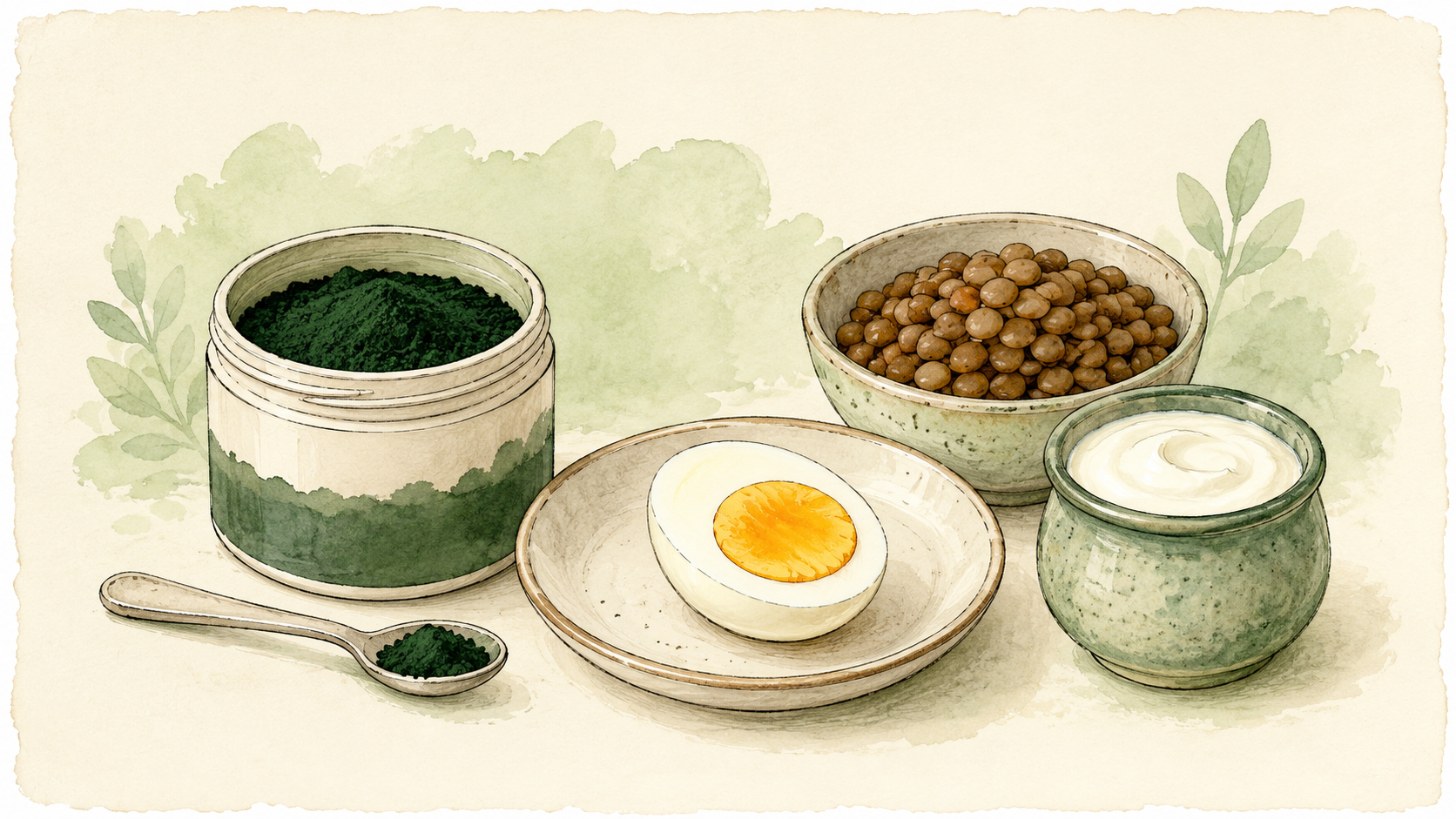
The tub says 60 percent protein on the front. The scoop inside is about the size of your thumbnail. That gap is where most of the confusion starts.
Both things on that label are true. Spirulina really does carry all nine essential amino acids, which is the technical bar a food has to clear to be called complete. It also comes in a serving so small that what you get barely moves your daily total.
So the honest answer about spirulina protein has two halves, and people tend to hear only the first one. Here’s what the numbers actually say, what the research says about quality, and how to use the stuff without expecting it to do a job it was never going to do.
What a complete protein actually means
Your body builds everything from 20 amino acids. It can make eleven of them on its own. The other nine have to come from food, which is why they’re called essential.
A food gets called a complete protein when it contains all nine of those in meaningful amounts. Meat, eggs, dairy, and fish clear that bar easily. Most single plant foods don’t. Beans run low on methionine, grains run low on lysine, which is why beans and rice together are a classic pairing.
Spirulina clears it. That’s not marketing, it’s just what the amino acid profile looks like when you measure it. Every one of the nine shows up, and none of them is missing outright.
Here’s the part the label leaves out. Complete only describes what’s in there, not how much of it lands on your plate. A food can be complete and still be a rounding error in your day.
Where the 60 percent protein number comes from
Dried spirulina is somewhere around 55 to 70 percent protein depending on the strain and how it was processed. USDA data puts common dried spirulina powder at roughly 57 grams of protein per 100 grams.
That’s a genuinely impressive figure. It’s also where the sleight of hand happens, because that number is measured by dry weight, and dry weight is a very different thing from what you eat.
Think about a chicken breast. Cooked, it’s roughly 31 percent protein by weight, which sounds far less impressive than spirulina. But you eat a whole 100 gram piece of chicken. You eat three grams of spirulina.
Percentages only matter next to portion size. That one idea explains most of the confusing claims you’ll read about powdered greens.
How much protein is in one serving of spirulina
Run the math on a real spoon and it gets clear fast.
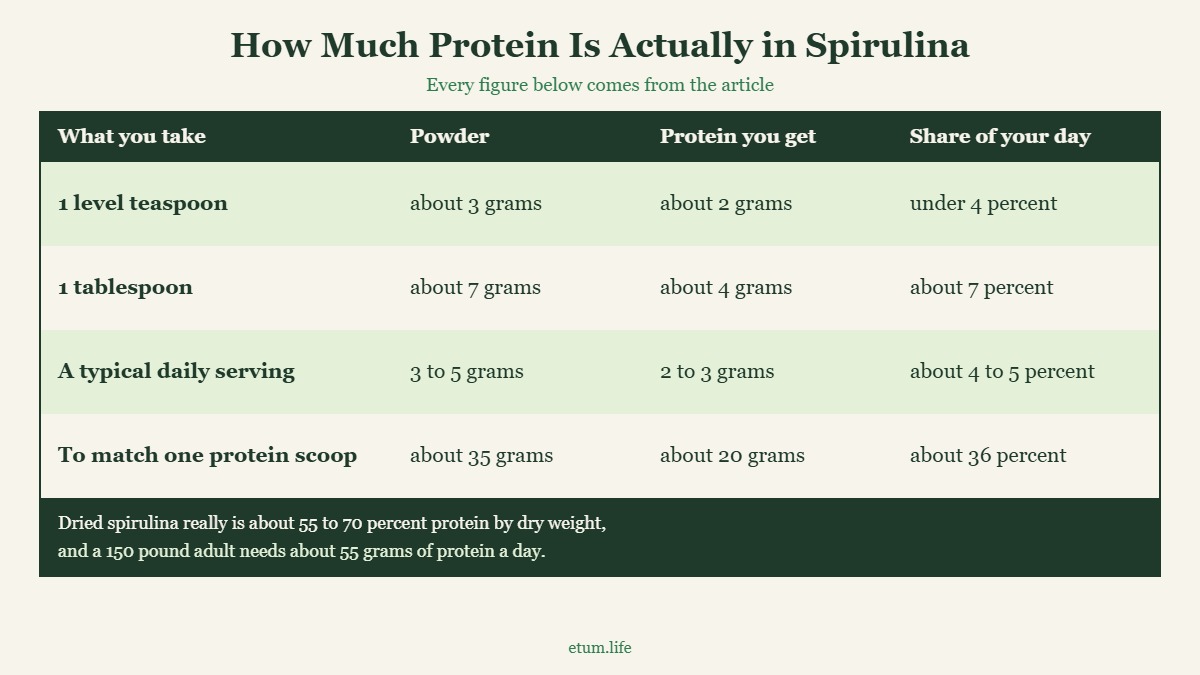
- One level teaspoon is about 3 grams of powder, which works out to about 2 grams of protein.
- One tablespoon is about 7 grams of powder, or roughly 4 grams of protein.
- A typical daily serving on most labels is 3 to 5 grams of powder, so 2 to 3 grams of protein.
Now put that against what you need. The standard recommendation sits at 0.8 grams of protein per kilogram of body weight, which lands near 55 grams a day for a 150 pound adult. Plenty of nutrition researchers argue the real target should be higher, especially for older adults and anyone lifting weights.
Either way, a teaspoon of spirulina covers under 4 percent of what a typical adult needs in a day. One egg beats it. Half a cup of yogurt buries it.
Is spirulina protein actually good quality?
This is the better question, and here the news is good. Amount and quality are separate things, and spirulina does much better on the second.
Digestibility studies put spirulina protein around 80 to 85 percent absorbed, which sits comfortably alongside other plant proteins and isn’t far off dairy. Nothing about the cell structure gets in the way, a real advantage over chlorella, whose tough cell wall has to be cracked before you can use much of what’s inside.
On the scoring systems nutritionists use to rank protein quality, spirulina lands around 0.8 out of 1. Whey and egg sit at the top of that scale at 1.0. Most beans land lower.
Where it slips a little, lysine is the weak link, absorbed at a lower rate than the other eight. Methionine and cysteine also come in on the modest side. None of that matters if spirulina is a small piece of a varied diet. It would matter a lot if it were your main protein, which brings us to the obvious thought experiment.
What it would take to hit a protein goal with spirulina
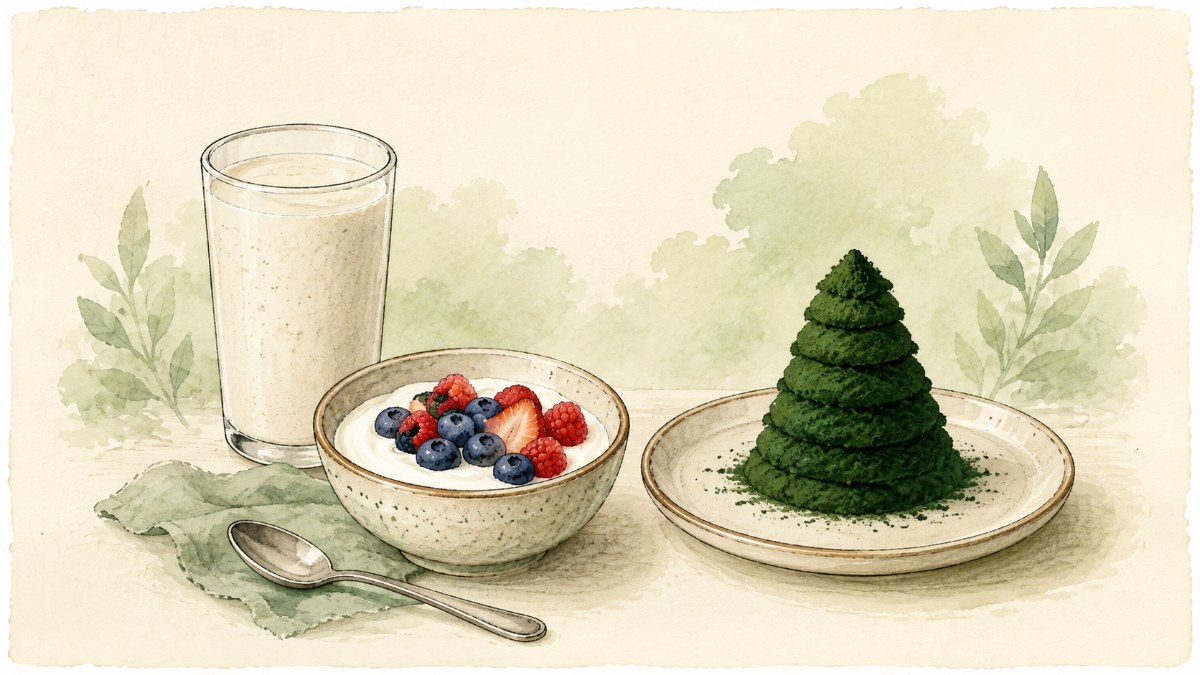
Say you want 20 grams of protein out of a single serving, roughly what you’d get from a cup of Greek yogurt or a chicken thigh. To get there from powder, you’d be eating roughly seven heaping teaspoons of spirulina in one sitting.
Three problems show up immediately. It tastes like the bottom of a pond at that dose. It runs somewhere near ten dollars of powder depending on the brand. And that much algae at once gives a lot of people an unhappy stomach.
A real example helps. A customer at our farmers market table told us she’d swapped her morning protein shake for a spirulina drink because the label said complete protein. She’d gone from about 24 grams of protein at breakfast to about 2, and couldn’t work out why she was starving by ten.
She put the shake back and kept the spirulina in it. That’s the whole fix.
So what is spirulina actually good for?
Take protein off the pedestal and spirulina gets a lot more interesting, because the things it’s genuinely dense in are things most people don’t get much of.
A teaspoon carries a meaningful amount of iron and copper for its size, along with several B vitamins and a good hit of chlorophyll. It’s also the main dietary source of phycocyanin, the blue pigment that gives blue spirulina its color and gets most of the research attention.
One important caveat: spirulina is not a reliable source of vitamin B12. It contains a form your body can’t use well, so if you’re vegan, keep your actual B12 source separate.
The right mental model is simple. It’s a nutrient supplement that happens to be protein rich, not a protein supplement. Once you see it that way the small serving size stops being disappointing and starts making sense.
How to work it into a normal day of eating
The trick is to add spirulina to something that’s already carrying the protein load, so you get the micronutrients without asking the powder to do the heavy lifting.
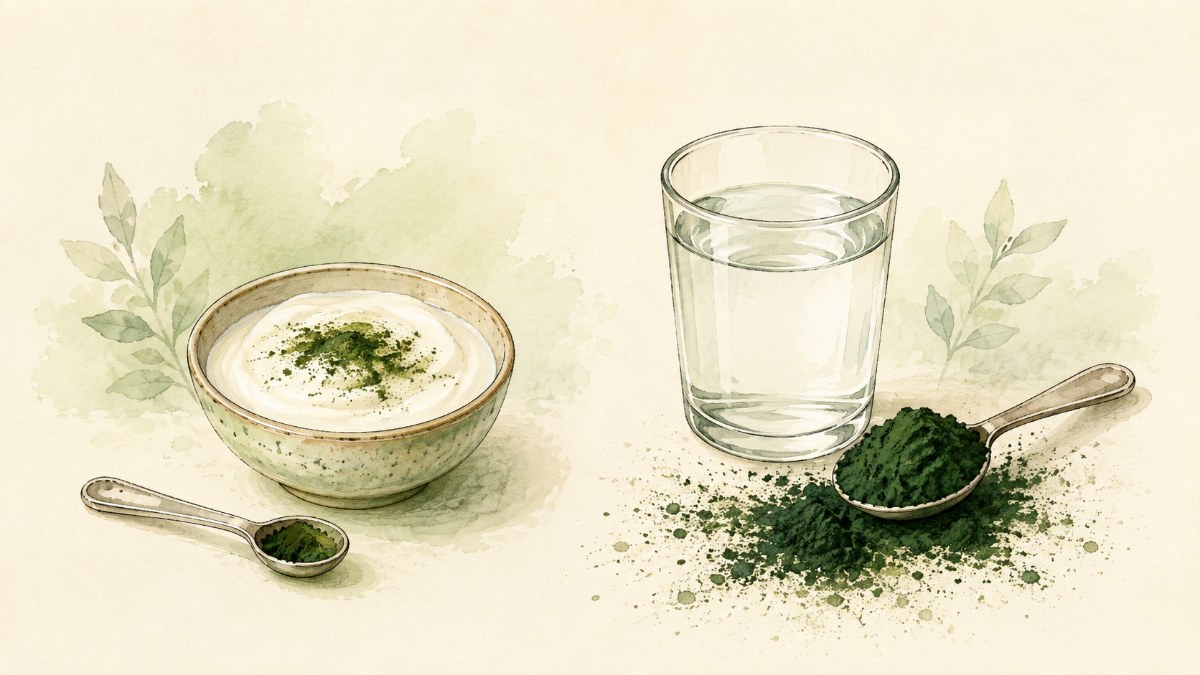
- Stir a teaspoon into a smoothie that already has yogurt, milk, or a scoop of protein powder in it.
- Whisk it into a lemony vinaigrette and pour that over a bowl with beans or chicken in it.
- Blend it into hummus, where the garlic and lemon cover the flavor completely.
- Mix it into a cold drink with citrus, which is the easiest way in if you’re new to the taste. Our guide to easy spirulina drinks walks through five of them.
Start at half a teaspoon and work up to one. If the flavor is what’s stopping you, we broke down what spirulina actually tastes like and how to fix it, and there are more ideas in our roundup of simple spirulina recipes.
Common mistakes to avoid
Swapping your protein powder for it
This is the big one and it’s the reason most people end up disappointed. They’re different products doing different jobs. Use both if you want, but don’t trade one for the other.
Taking huge doses to chase the protein
Piling on tablespoons costs a fortune, tastes awful, and upsets a lot of stomachs, all to gain a few grams you could get from an egg.
Ignoring where it came from
Spirulina absorbs what’s in its water, so poorly grown product can carry heavy metals or contamination from other algae. Buy from a brand that publishes third party test results and don’t shop on price alone.
Using it to paper over a low protein diet
If you’re honestly short on protein, spirulina won’t close that gap. Beans, lentils, eggs, yogurt, fish, or tofu will. Fix the meals first, then add the powder on top.
Key takeaways
- Spirulina is a complete protein. All nine essential amino acids are present, and that part of the label is accurate.
- Dried powder runs about 55 to 70 percent protein by dry weight, with USDA data near 57 grams per 100 grams.
- A real teaspoon gives you about 2 grams of protein, which is a small slice of a 55 gram daily target.
- Quality holds up well. Absorption sits around 80 to 85 percent, with lysine the weakest of the nine.
- Treat it as a micronutrient boost with good protein attached, and add it to food that’s already feeding you.
Frequently asked questions
Is spirulina a complete protein?
Yes. It contains all nine essential amino acids in measurable amounts, which is the definition of a complete protein. The catch is portion size, not the amino acid profile.
How much protein is in a teaspoon of spirulina?
About 2 grams. A level teaspoon holds roughly 3 grams of powder, and a little under two thirds of that is protein.
Is spirulina protein better than whey?
Whey scores higher on quality and comes in servings twenty times larger, so for building muscle it wins comfortably. Spirulina brings iron, copper, and plant pigments that whey doesn’t have. They’re not really competing.
Can spirulina replace protein powder?
No. You’d need about seven heaping teaspoons to match one scoop of protein powder, which is impractical on taste, cost, and digestion. Use them together instead.
Does spirulina have more protein than chlorella?
Slightly, yes, and it’s easier to absorb because there’s no tough cell wall to break down. We compared the two in detail in our guide to spirulina and chlorella.
The bottom line
Spirulina protein is real, complete, and well absorbed. It just arrives in teaspoons, and teaspoons don’t feed you.
Keep it in your kitchen for what it’s dense in and let real meals handle the protein. If you want the fuller picture of what this algae is and where it comes from, start with Spirulina 101, or browse the USDA FoodData Central entry if you want the raw numbers yourself.
This article is general information and not medical advice. If you have a health condition, take medication, are pregnant, or are nursing, please check with a qualified healthcare professional before adding spirulina or making changes to your diet.