
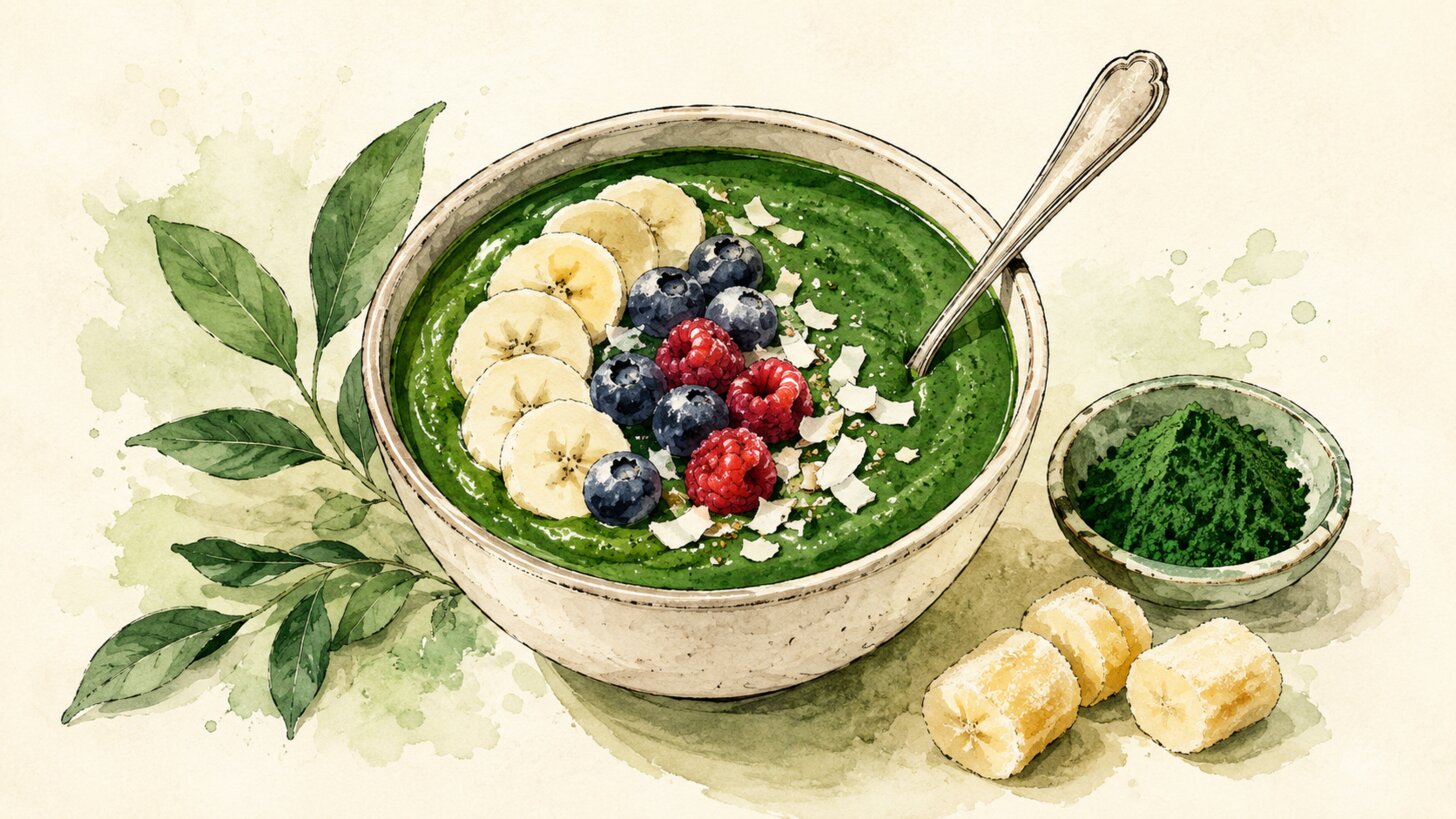
You’ve seen the photos. A deep blue or vivid green bowl, fruit fanned across the top, coconut flakes scattered like snow. Then you make one at home and end up with a grey puddle that tastes faintly of a pond.
That gap has nothing to do with the camera. It comes down to three things: how much powder you use, what you blend it with, and how much liquid goes in before you hit the button.
Get those right and a spirulina bowl is one of the fastest breakfasts you can make. Frozen fruit, a splash of liquid, a teaspoon of powder, done in about four minutes.
What a spirulina bowl actually is
It’s a smoothie thick enough to eat with a spoon, with spirulina blended in for color and nutrition. Same ingredients as a drink, far less liquid.
The thickness is the whole point. A thin blend slides off the spoon and drowns whatever you sprinkle on it. A thick one holds granola and sliced banana right on the surface, which is why the bowls you scroll past look the way they do.
Spirulina itself is a blue green algae grown in warm fresh water, dried, and ground into powder. It’s dense stuff. A tablespoon carries roughly 4 grams of protein along with iron, B vitamins, and the pigments that give it that color. If you want the full background, our Spirulina 101 guide covers where it comes from and what’s actually in it.
Blue or green: which powder belongs in your bowl
This is where most bowls go wrong before the blender even starts.
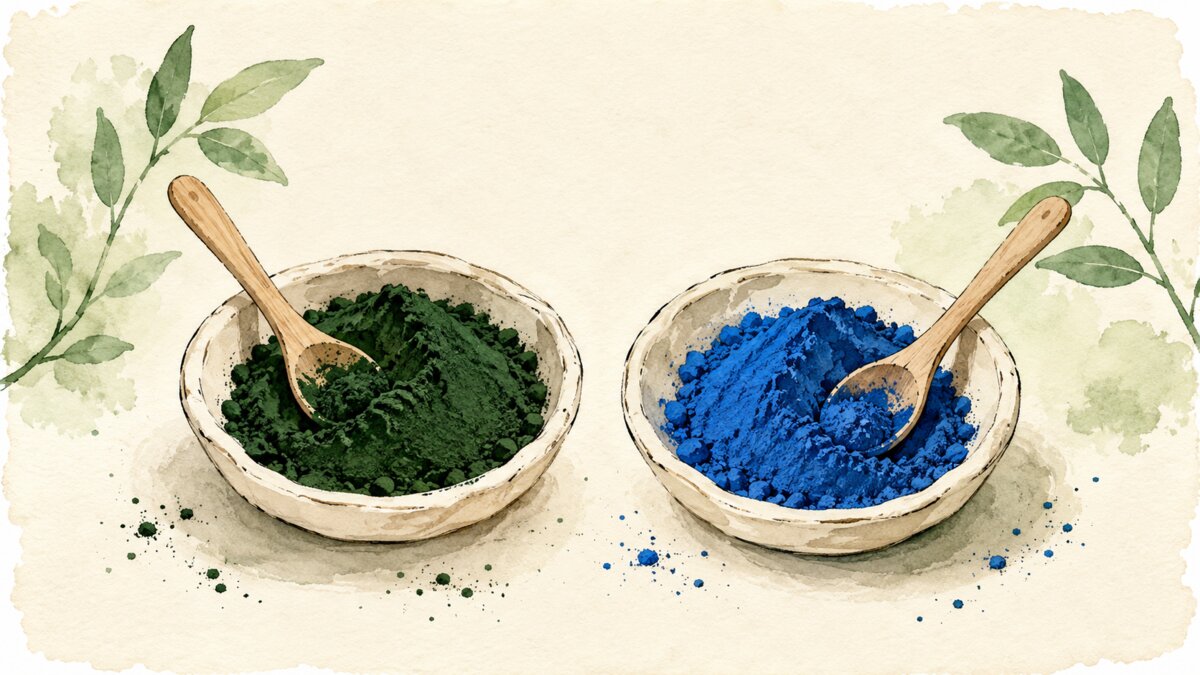
Green spirulina is the whole dried algae. It carries the full nutrient profile, and it tastes like it: grassy, earthy, a little like the ocean at low tide. Some people barely register it. Others notice nothing else.
Blue spirulina is an extract. It’s the phycocyanin pigment pulled out of the green powder, and pulling out the pigment leaves most of the flavor behind along with most of the other nutrients. Blue spirulina is nearly tasteless, which is exactly why it shows up in every photogenic bowl on the internet.
So choose based on what you’re after. Green if you want the nutrition and can live with a savory edge. Blue if you’re feeding a suspicious eight year old or you want that electric color without the algae announcing itself. We went deeper on this in how much blue spirulina powder to use in smoothies.
How much spirulina powder to use
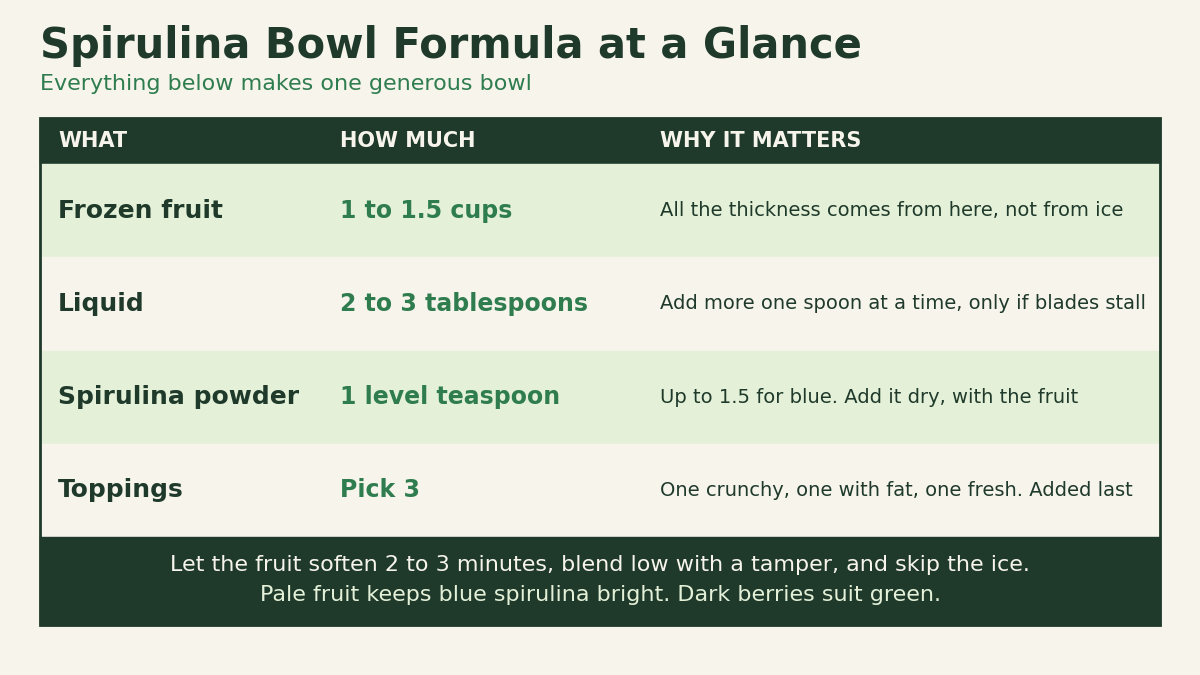
Start with one level teaspoon. That’s enough to color an entire bowl and enough to taste, and adding more is easy. Taking it back out is not.
With green powder, a teaspoon is about the ceiling for most people in a single serving. Push past it and the flavor stops hiding behind the fruit. With blue you can go to a teaspoon and a half for a deeper color without paying for it in taste.
Add the powder dry, straight into the blender with the frozen fruit. Stirring it into a finished bowl leaves streaks and dry little pockets that taste like chalk.
The base decides whether your bowl is thick or sad
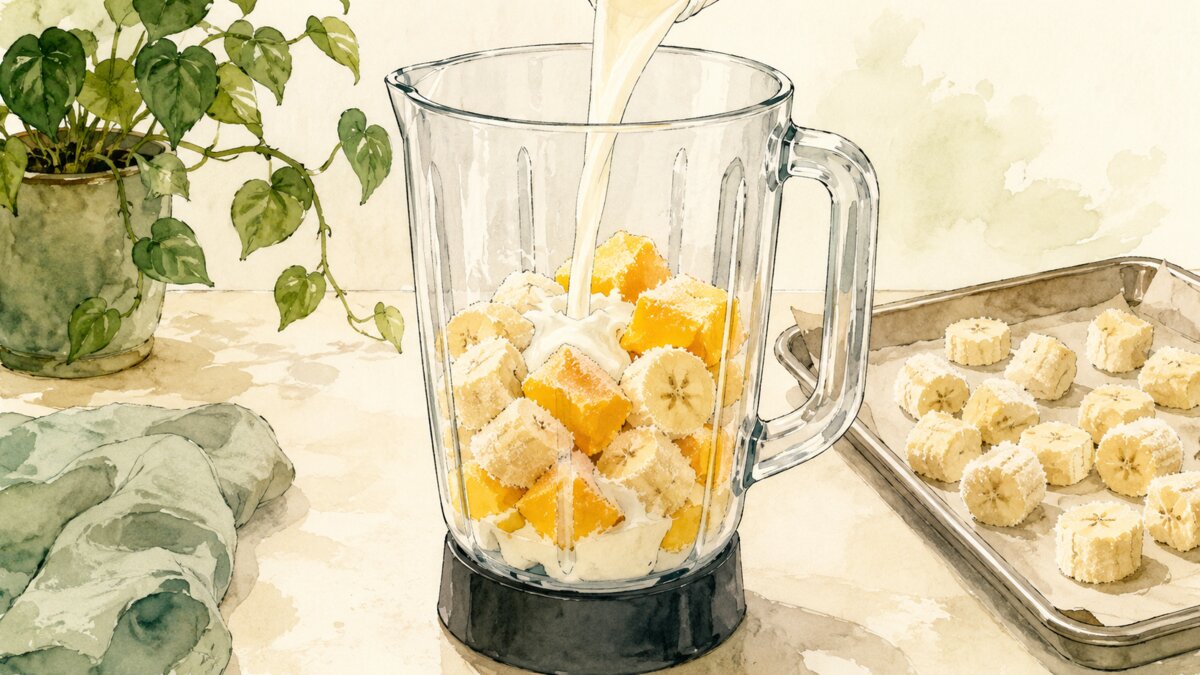
Frozen fruit does the work. That’s the trick, and there isn’t a second one.
Use 1 to 1.5 cups of frozen fruit per bowl and only a splash of liquid, about 2 to 3 tablespoons to start. Frozen banana is the backbone here, because it blends creamy instead of icy the way most frozen berries do.
Let the fruit sit on the counter for 2 to 3 minutes first. Rock hard fruit straight from the freezer makes your blender scream and tempts you into pouring in liquid you don’t actually need.
Then blend low, use the tamper, and scrape the sides. Add liquid one tablespoon at a time, and only when the blades genuinely stall. Skip the ice entirely. Ice melts, and melted ice is just water in your breakfast.
4 spirulina bowl recipes to try
Each of these makes one generous bowl. Blend in the order listed, fruit first.
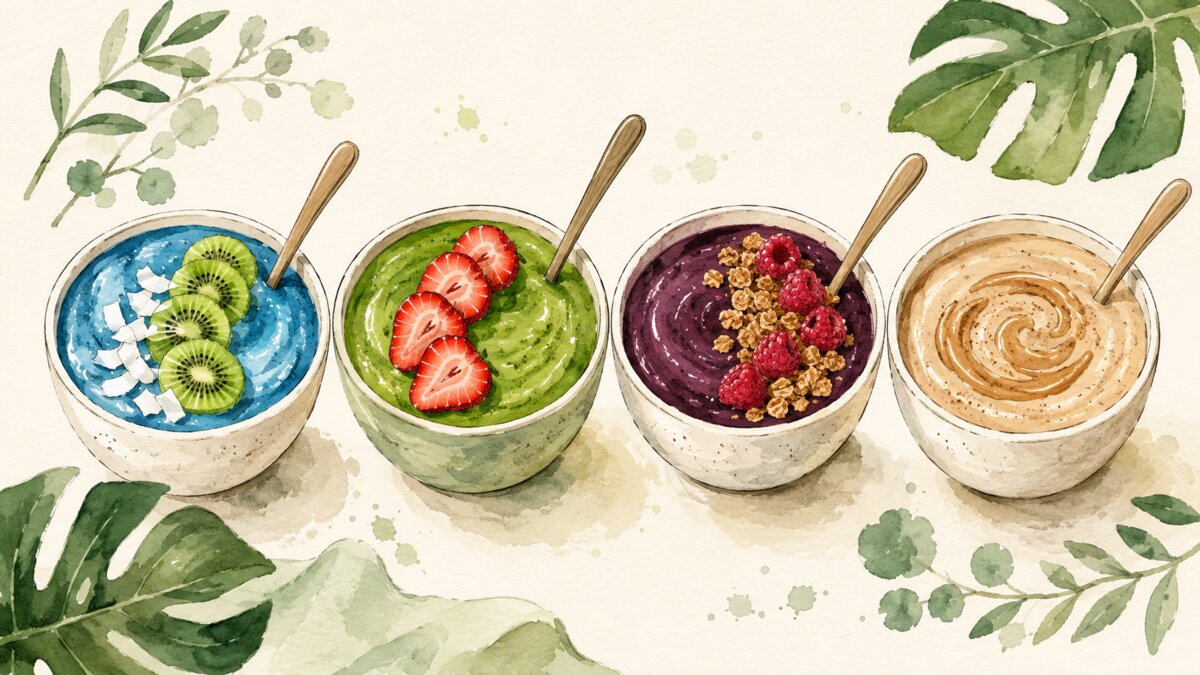
The tropical blue
1 cup frozen pineapple, 1 frozen banana, 1 teaspoon blue spirulina, 3 tablespoons coconut milk. Top with kiwi, coconut flakes, and pumpkin seeds.
This is the one that actually looks like the pictures, because pineapple and banana are both pale enough to let the blue come through clean.
The everyday green
1 frozen banana, 1 cup frozen mango, a small handful of fresh spinach, 1 teaspoon green spirulina, 3 tablespoons oat milk. Top with sliced strawberries and hemp seeds.
Mango is sweet and loud enough to carry green spirulina without a fight. This is the bowl to make on a Tuesday when nobody is watching.
The berry and green
1 cup frozen mixed berries, 1 frozen banana, 1 teaspoon green spirulina, 3 tablespoons milk of your choice, 1 spoon of almond butter. Top with granola and a few fresh raspberries.
The color lands somewhere between deep purple and moss, so it will never win a photo contest. It tastes better than it looks, and dark berries are the best cover there is for the earthy note in green powder.
The protein bowl
1 frozen banana, 1/2 cup frozen cauliflower, 1 teaspoon spirulina, a scoop of plain Greek yogurt or your usual protein powder, 3 tablespoons milk. Top with peanut butter and cacao nibs.
Frozen cauliflower is the sneakiest thickener on this list. It adds body and fiber and disappears completely behind the banana. Buy it frozen and riced so you can scoop it straight from the bag.
Toppings that earn their place
Pick three, one from each group, and stop there. A bowl buried under nine things is a dessert.
- Something crunchy: granola, toasted coconut, buckwheat groats, cacao nibs.
- Something with fat: nut butter, tahini, hemp seeds, chia. This is what keeps you full past ten in the morning.
- Something fresh: sliced banana, berries, kiwi, or a small tuft of mild microgreens like pea shoots.
Add them right before you eat. Granola sitting on a cold bowl goes soft in about four minutes. If microgreens on breakfast sounds odd, they’re milder than you’d guess, and we cover the friendly varieties in our microgreen smoothie recipes.
A real morning, start to finish
Sunday evening, three bananas on the counter are going brown. You peel them, break them into chunks, and spread the pieces on a sheet pan so they freeze separately instead of fusing into one banana brick. Half an hour later they go into a bag.
Wednesday at 7am you pull out a handful of banana chunks and a cup of frozen mango and leave them out while the coffee brews. Two minutes later they go in the blender with a teaspoon of green spirulina and three tablespoons of oat milk.
Low speed, tamper down, scrape once. It grinds for maybe forty seconds, seizes up, takes one more tablespoon of milk, and comes together thick and glossy. Into a bowl, a spoon of peanut butter, a scatter of granola, four sliced strawberries.
Total time at the counter: under five minutes. The only real work happened on Sunday.
Common mistakes to avoid
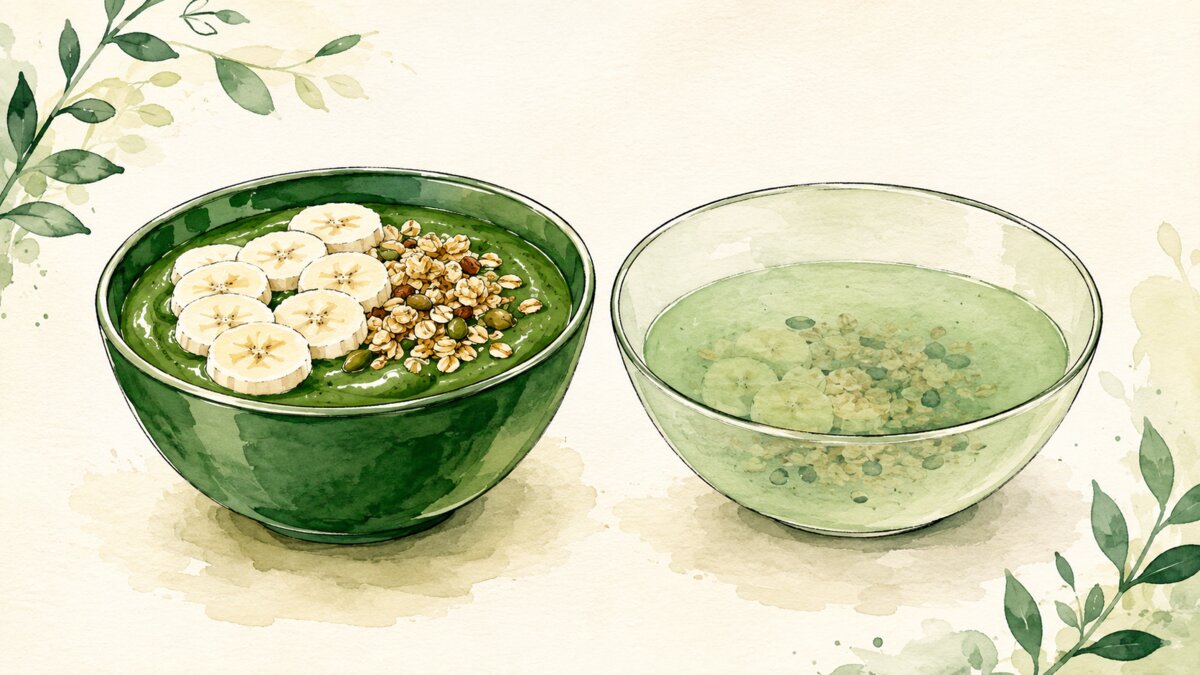
- Pouring the liquid in first. Start with a splash and add more only when the blender stalls. Almost every watery bowl starts here.
- Reaching for ice. It thins the texture and gives you nothing in return. Frozen fruit is your ice.
- Dumping in a heaping tablespoon of green powder. More does not mean healthier, and it will taste like a fish tank.
- Blending dark berries into a blue bowl. Purple plus blue makes grey every single time. Keep blue with pale fruit.
- Skipping the fat. Fruit alone will leave you hungry by mid morning. A spoon of nut butter or yogurt fixes it.
- Buying the biggest bag first. Try a small pouch before you commit. Spirulina is not cheap, and not everybody likes it.
Key takeaways
- A spirulina bowl is a thick smoothie you eat with a spoon. The thickness comes from frozen fruit, not from ice.
- Use 1 to 1.5 cups frozen fruit and start with 2 to 3 tablespoons of liquid.
- One level teaspoon of powder is the sweet spot. Add it dry, with the fruit.
- Green tastes earthy and carries the full nutrition. Blue is nearly flavorless and mostly there for color.
- Pale fruit for blue, dark berries for green.
- Three toppings: crunchy, fatty, fresh. Added last.
Spirulina bowl FAQ
Does spirulina make a smoothie bowl taste bad?
Green spirulina has a real flavor, grassy and slightly oceanic, and a teaspoon in a bowl of frozen mango or berries mostly disappears. Blue spirulina has almost no flavor at all. If you’ve tried it once and hated it, you probably used too much, or used green where blue would have done the job.
Why did my blue bowl turn grey?
Something dark got in. Blueberries, blackberries, cacao, or dark cherries will pull that bright blue toward a murky purple grey. Heat does it too, so blue spirulina belongs in cold blends only. Keep the base pale and cold and the color holds.
Is blue spirulina as healthy as green?
Not really, and it isn’t trying to be. Blue is an isolated pigment, so it carries the phycocyanin but not the protein, iron, and B vitamins that come with the whole algae. Think of blue as food coloring with a nice backstory and green as the nutritional one.
Can I make one without a high powered blender?
Yes, with a little patience. Let the fruit soften a full 5 minutes instead of 2, break the banana into smaller chunks, and accept one extra tablespoon of liquid. A food processor often handles thick mixtures better than a budget blender does.
How much spirulina is a normal amount to eat?
Everyday culinary amounts land somewhere around 1 to 3 grams, which is roughly half a teaspoon to a rounded teaspoon of powder. That’s the range most recipes and package directions use. There’s a growing body of research on spirulina’s nutrient profile if you want the science, including this review hosted by the National Institutes of Health. Looking for more ideas beyond bowls? We rounded up ten low effort ways to use spirulina.
Can I make it the night before?
The blended bowl doesn’t hold well. It separates and softens overnight. What you can prep ahead is the bag: portion the frozen fruit and the powder into a freezer bag per bowl, then tip the whole thing into the blender in the morning and add liquid.
This article is general information, not medical advice. If you have a health condition, take medication, or are pregnant or nursing, check with a qualified professional before adding spirulina or any new supplement to your routine.