
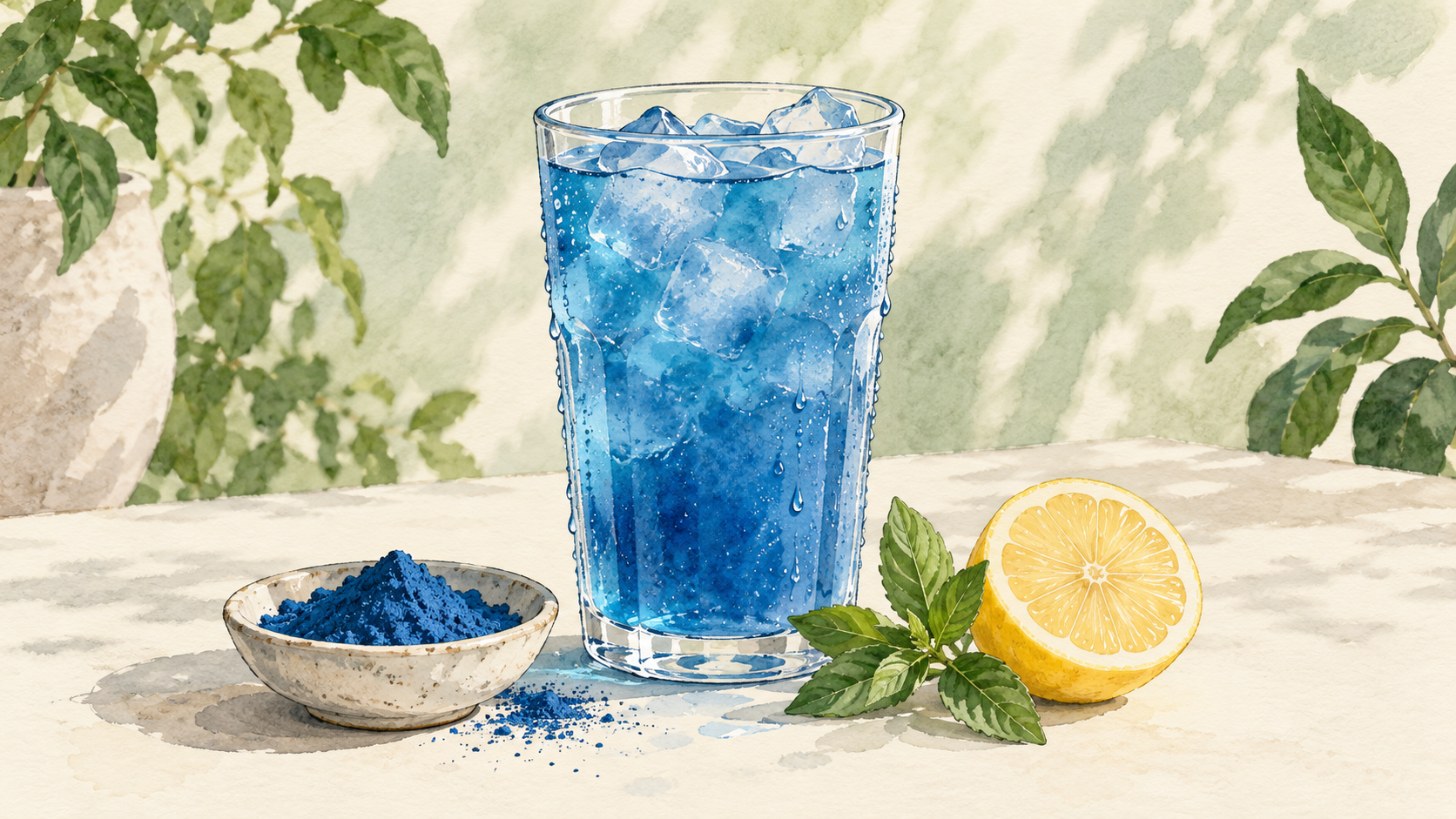
The first time you stir blue spirulina into a glass of coconut water, it looks fake. That electric blue doesn’t seem like it could come out of a pond organism. It sits there on your counter glowing like somebody spilled a highlighter into your drink.
Then you try it in a warm latte and the whole thing turns a sad grey green.
Nobody warns you about that part. Blue spirulina is a pigment, not a hardy powder, and it behaves like one. Get a few simple rules right and the blue spirulina recipes below stay bright for days. Get them wrong and you’ll waste an expensive jar on drinks the color of dishwater.
So here’s what’s actually going on in that jar, and how to use it.
What blue spirulina actually is
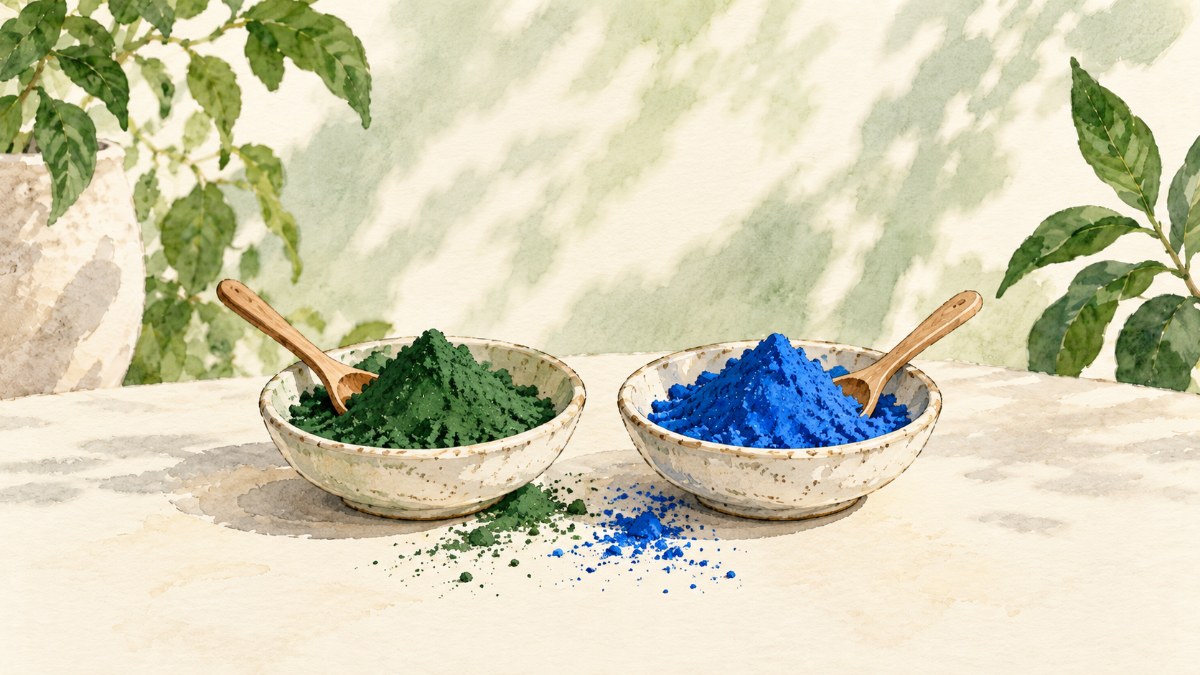
Blue spirulina isn’t spirulina. It’s one piece of it.
Producers take regular green spirulina, break the cells open with water, and pull out a single blue pigment protein called phycocyanin. Everything else stays behind: the chlorophyll, most of the protein, the iron, the B vitamins, the carotenoids. What ends up in the jar is often around 30 to 40 percent phycocyanin, with a carrier making up the rest.
That matters for two reasons.
The first is taste. Green spirulina tastes like a pond because of all the things extraction leaves out. Blue spirulina is close to flavorless, which is why it slips into smoothies and desserts that green powder would flatten. If the green stuff ever put you off, our guide to what spirulina tastes like explains why.
The second is nutrition. You’re buying color and a mild flavor, not a nutrition boost. If you want the protein and the minerals, reach for green. For the longer version, see what blue spirulina is.
How much blue spirulina powder to use
Most people use far too much on the first try, then wonder why their smoothie has a faint taste of the sea.
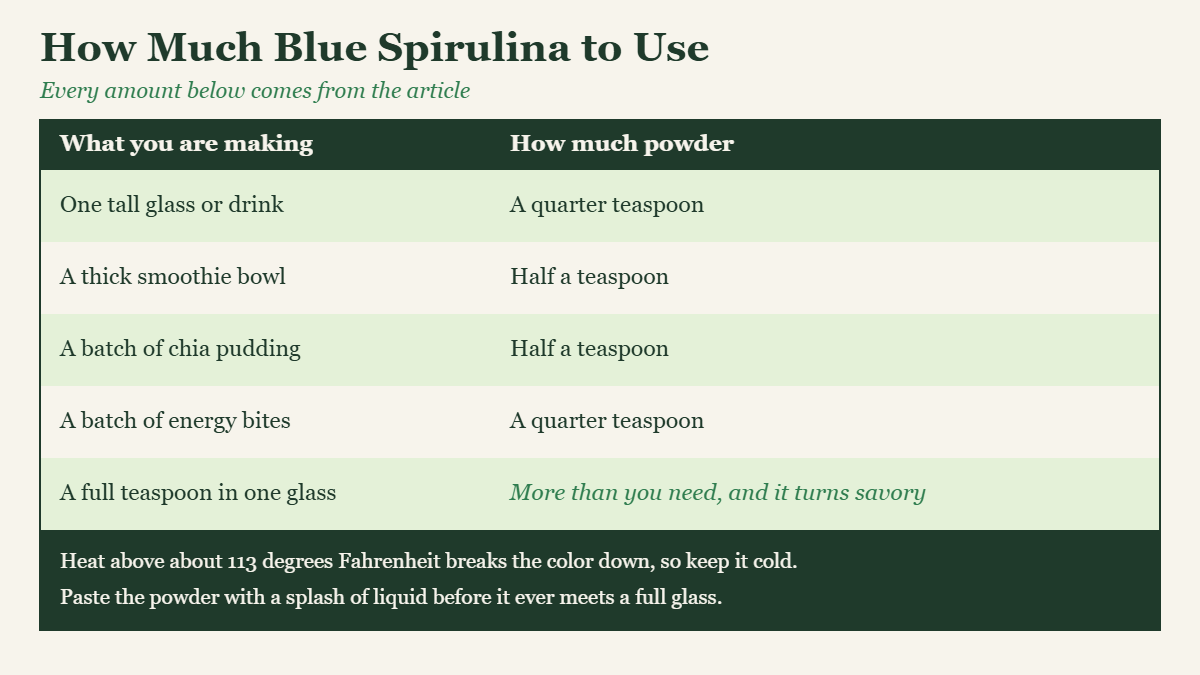
A quarter teaspoon colors a full glass of liquid. Half a teaspoon handles a thick smoothie bowl or a whole batch of chia pudding. A full teaspoon in one drink is mostly a waste of money, and it starts bringing that savory edge back in.
Start low. You can always stir in more. You can’t take blue back out.
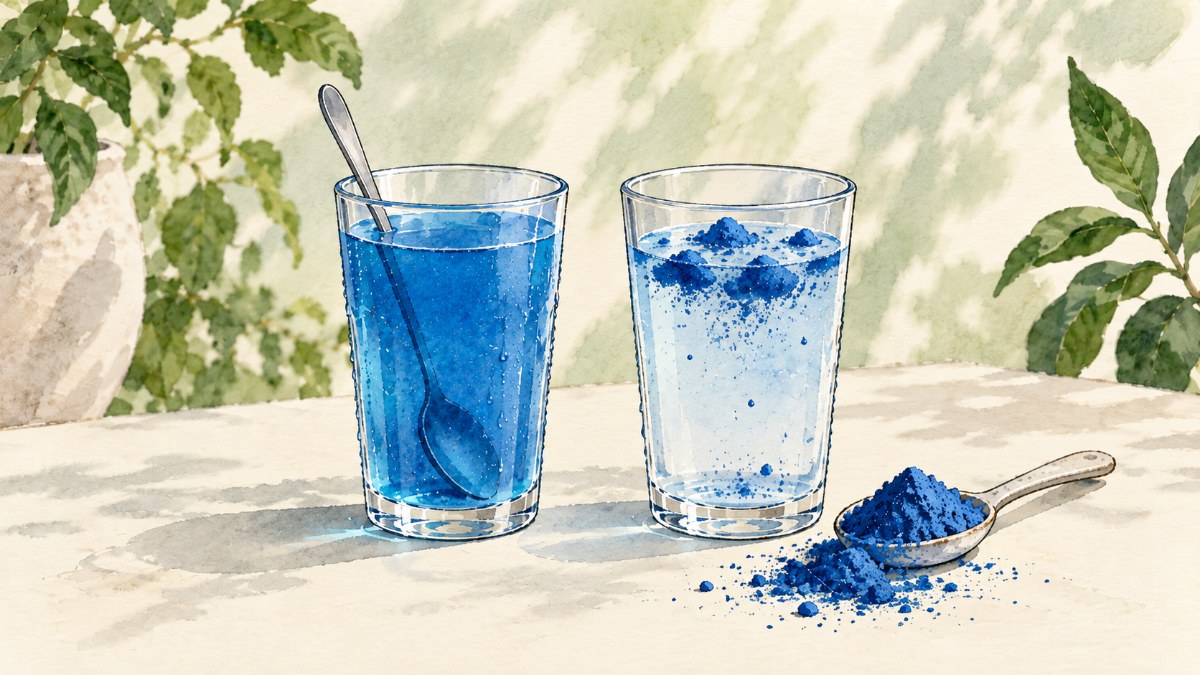
One thing to do before you blend anything: never dump dry powder into a full glass. Put the powder in the empty glass, add a splash of liquid, and work it into a smooth paste with the back of a spoon. Then fill the glass. Skip that step and you’ll be chasing blue clumps around the rim for ten minutes. Our guide to blue spirulina powder for smoothies goes deeper on ratios.
Heat is what ruins most blue spirulina recipes
Phycocyanin is a protein, and proteins come apart when they get hot.
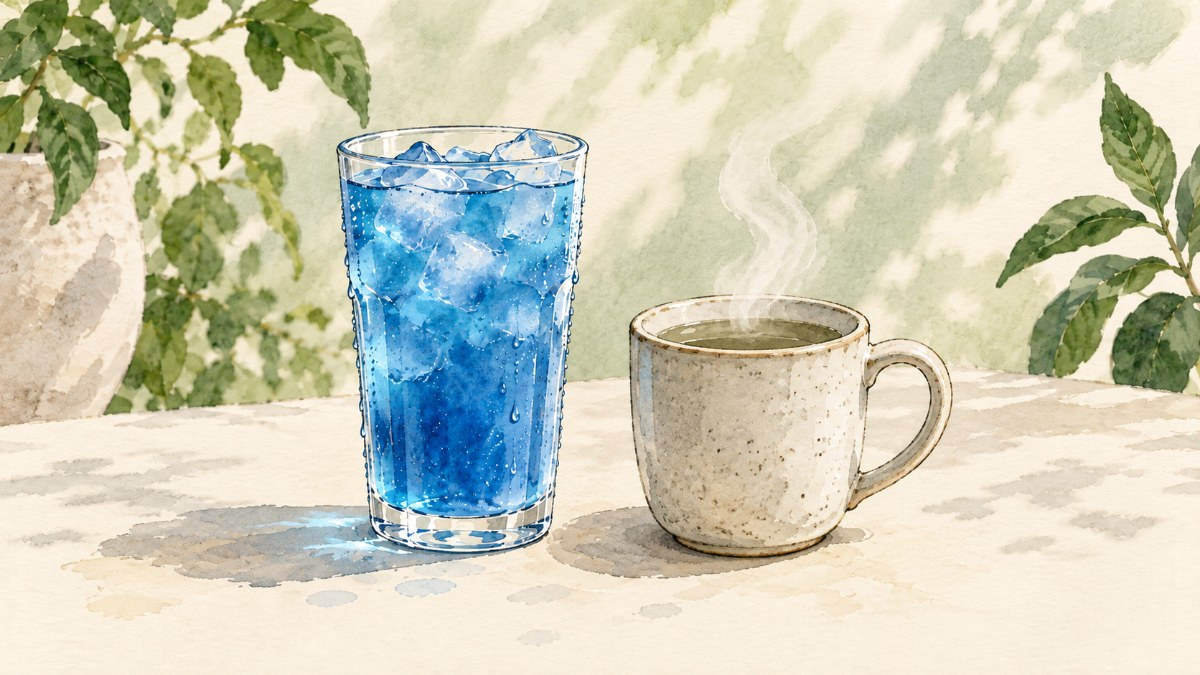
The color starts breaking down around 113 degrees Fahrenheit, which is barely warmer than a hot bath. Take it up to the temperatures used for pasteurizing and the blue is basically gone. That’s why your blue latte went grey and why blue muffins come out of the oven looking like a mistake.
The rule is simple. Keep it cold, or add it last.
Cold drinks, smoothies, bowls, puddings, frostings, ice pops, energy bites, and no bake desserts all work. Anything baked or simmered doesn’t. If you want blue on a baked good, color the frosting instead of the batter.
Acid does something different, and honestly more fun. Lemon juice doesn’t wreck the pigment the way heat does, it shifts it. Add enough and the bright blue drifts toward violet, then pink. You can use that on purpose.
5 blue spirulina recipes worth making
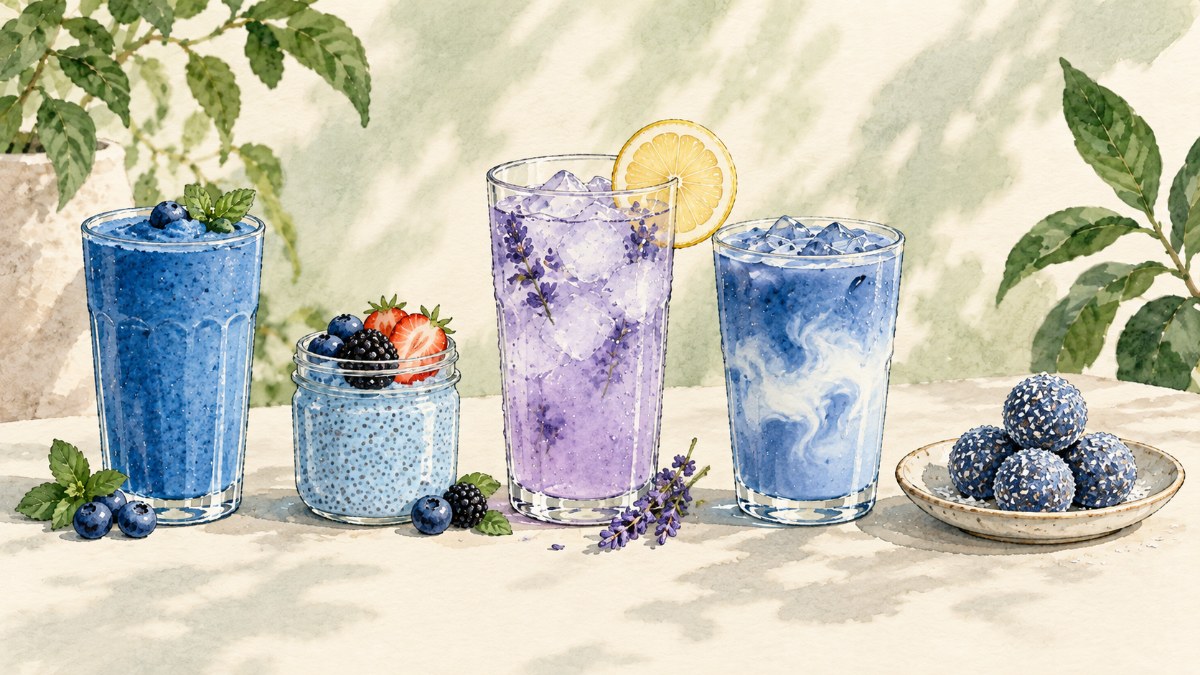
These five all stay cold, take about a minute of real work, and none of them need a fancy blender.
The everyday blue smoothie
One frozen banana, half a cup of frozen pineapple, three quarters of a cup of coconut milk, a quarter teaspoon of powder. Blend until smooth. The pineapple keeps it bright and tropical, the banana does the thickening.
Blue coconut chia pudding
Three tablespoons of chia seeds, one cup of coconut milk, a teaspoon of maple syrup, half a teaspoon of powder. Whisk, wait five minutes, whisk again so the seeds don’t clump on the bottom, then refrigerate overnight. You wake up to a jar of soft sky blue pudding that holds its color for about three days.
Color changing lemonade
Make a plain lemonade and set it aside. In the serving glass, stir a quarter teaspoon of powder into half a cup of cold water until it’s evenly blue. Pour the lemonade in slowly and watch the blue turn violet as the acid reaches it. It’s a party trick that happens to taste good.
Iced blue vanilla latte
Half a cup of cold oat milk, a quarter teaspoon of powder, a splash of vanilla, a teaspoon of honey. Shake it in a jar, pour it over ice, top with more oat milk. Iced only. A hot version is the fastest way to throw away your powder.
No bake blue energy bites
One cup of oats, half a cup of cashew butter, three tablespoons of maple syrup, a quarter teaspoon of powder, a pinch of salt. Mix, roll into balls, chill for twenty minutes. They come out a soft denim blue and keep in the fridge for a week.
A real example: one bowl, start to finish
Say it’s a Tuesday morning and you’ve got about four minutes before anyone else is up.
You drop a frozen banana, a handful of frozen mango, and two tablespoons of coconut milk into the blender. Not more milk than that, because a bowl has to be thick enough to hold its toppings. Before you touch the blender, you tip half a teaspoon of blue powder into a small cup, add a teaspoon of the coconut milk, and mash it into a paste. That paste goes in with everything else.
Thirty seconds of blending, a fair bit of scraping down the sides, and it comes out the color of a swimming pool. You spoon it into a bowl, lay sliced kiwi and a scatter of coconut flakes on top, and it holds them without sinking.
Active time was under five minutes and nobody tasted algae. That’s the whole point. If you want more of these, we have a full set of spirulina bowl recipes.
How to keep the blue from fading
Three things fade blue spirulina: heat, light, and moisture.
Keep the jar sealed and in a cupboard, away from the window and well away from the stove. Don’t store the scoop inside it either, because a slightly damp spoon carries moisture into the whole container.
Finished recipes hold their color best covered, in the fridge, out of direct light. A blue smoothie left on a sunny counter for an hour loses noticeably more color than the same smoothie sitting in the fridge.
Common mistakes to avoid
- Dumping dry powder straight into liquid. Paste it with a splash first, every time.
- Adding it to anything hot. Cold, or stirred in at the very end.
- Reaching for a full teaspoon when a quarter would do. More powder just costs more and brings back a savory edge.
- Expecting it to replace green spirulina. Blue is color and mild flavor. Green is the nutrition.
- Baking with it. The blue doesn’t survive an oven, so frost instead of baking it in.
- Buying the cheapest jar you can find. Algae takes up whatever is in the water it grew in, so buy from a brand that publishes third party test results for heavy metals and microcystins.
Key takeaways
- Blue spirulina is phycocyanin, a pigment pulled out of green spirulina. It’s for color and a neutral taste, not nutrition.
- A quarter teaspoon colors a drink. Half a teaspoon covers a bowl or a batch of pudding.
- Heat above roughly 113 degrees Fahrenheit breaks the color down, so keep everything cold or add it last.
- Acid shifts the blue toward violet, which you can use deliberately in lemonade.
- Paste the powder with a little liquid before it ever meets a full glass.
Pick one of the blue spirulina recipes above, start with a quarter teaspoon, and keep the jar somewhere cool and dark. That’s really all there is to it.
Questions people ask
Does blue spirulina taste like anything?
Barely. Most of what makes green spirulina taste like a pond gets left behind during extraction, so blue is close to neutral. You might catch a faint savory note if you use a lot of it, which is one more reason to keep the amount small.
Can you bake with blue spirulina?
Not if you want it to stay blue. Oven heat takes the color apart, so the usual workaround is to leave it out of the batter and put it in the frosting, glaze, or filling once everything has cooled.
Why did my blue drink turn purple?
Acid. Citrus juice, vinegar, or anything else sharp shifts the pigment from blue toward violet and pink. It isn’t spoiled and it’s still fine to drink. If you want it to stay blue, keep the acid out and build the color in plain water or milk.
Is blue spirulina as healthy as green spirulina?
No, and it isn’t trying to be. The extraction that makes it blue removes most of the protein, iron, and B vitamins that gave green spirulina its reputation. Use blue for the look and the mild taste, and keep green in the cupboard for everything else. Our rundown of simple spirulina recipes covers the green side.
How long does the color last in a finished recipe?
Covered and in the fridge, most cold recipes hold their color for about two to three days. Chia pudding does well. Anything with citrus in it starts drifting toward purple within hours, which may or may not be what you’re after.
This article is general information, not medical advice. Spirulina products aren’t right for everyone. If you have a health condition, take medication, are pregnant, or are nursing, check with a qualified professional before adding anything new to your routine. Anyone with phenylketonuria should avoid spirulina products entirely.