
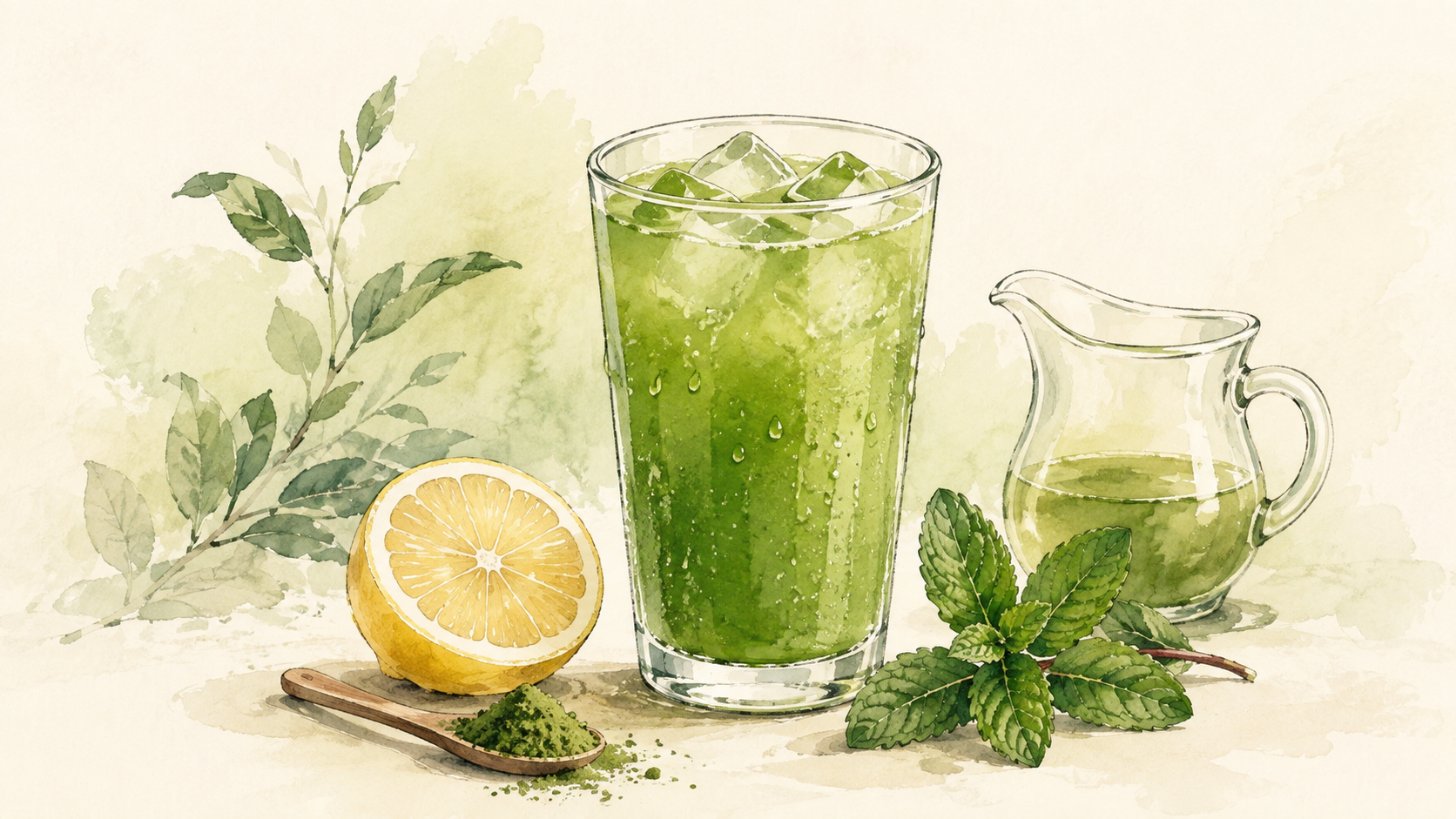
There’s a tub of green powder in a lot of kitchens that has been opened exactly twice. The first time was hopeful. The second time was a glass of gritty pond water at seven in the morning, and after that the tub moved to the back of the cupboard behind the baking soda.
That isn’t the powder’s fault. Spirulina has a strong, savory, slightly briny flavor, and warm plain water does nothing to hide it. Put the same teaspoon into something cold, tart, and a little sweet and it turns into something you’ll actually finish.
That’s the whole trick. Cold liquid, a squeeze of acid, a little sweetness, and a way of mixing that doesn’t leave clumps floating on top. Everything below is built on those four things, including five recipes you can make in about a minute each.
Why your spirulina drink tastes like a pond
Spirulina is a blue green algae, and it tastes like it. The flavor sits closer to seaweed than to spinach: mineral, savory, a little like the ocean. Nothing is wrong with your powder.
Three things make it worse. Warm liquid brings the smell forward, and smell is most of what you taste. Plain water gives the flavor nothing to hide behind. And tipping dry powder into a full glass leaves little clumps that burst on your tongue at full strength.
Citrus and pineapple are the reliable partners here. The acid cuts through the mineral note and the natural sugar rounds off what’s left. If you want the longer version of why the flavor behaves this way, our guide to what spirulina actually tastes like goes deeper.
One more thing worth knowing: heat works against you twice. It pushes the flavor forward, and it drags the color from bright green toward a tired olive. Keep the whole glass cold and you keep both.
How much powder to put in one glass
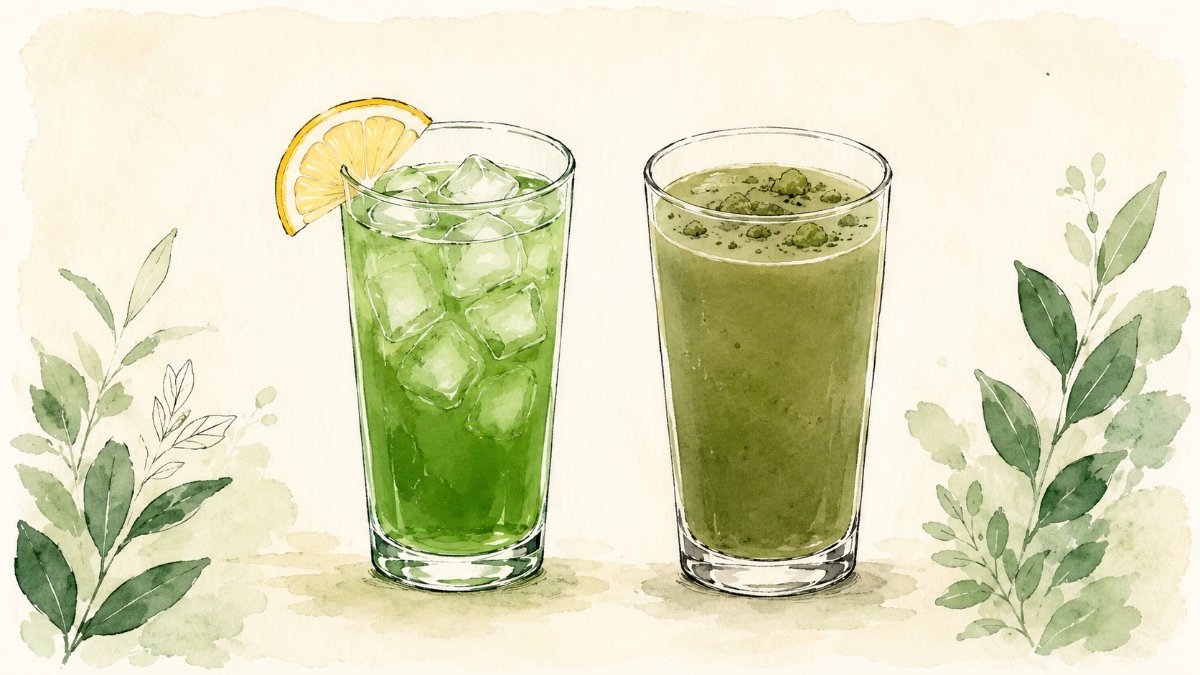
Start smaller than you think. Half a teaspoon is plenty for your first week. Most people settle at 1 level teaspoon, roughly 3 grams, per glass once their palate catches up.
Common intake in the research sits somewhere around 1 to 10 grams a day, so a teaspoon or two is well inside ordinary territory. Going higher doesn’t make the glass better. It makes it taste stronger and costs more.
For a normal 8 to 12 ounce glass, one teaspoon is the sweet spot. In a big 16 ounce tumbler you can push to a teaspoon and a half before the flavor starts running the show.
A spirulina drink is a food, not a dose. Treat the amount the way you’d treat salt: enough to do the job, not so much that it’s all you taste.
The paste trick that stops the clumping
Powder clumps because the outside of each little ball gets wet and seals the dry powder inside. Adding it to a full glass guarantees it happens.
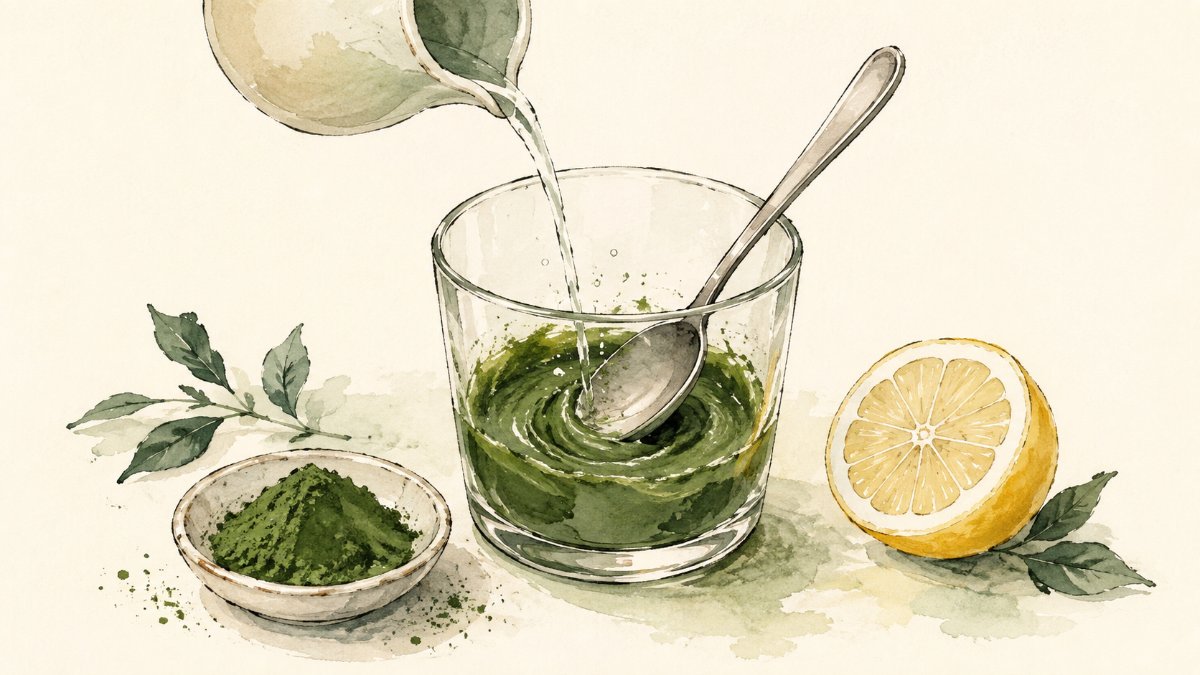
Do this instead. Put the powder in the bottom of the empty glass. Add a splash of liquid, about a tablespoon, and work it into a smooth paste with the back of a spoon. It takes ten seconds. Then pour in the rest and stir.
A jar with a lid does the same job. Powder, a little liquid, lid on, shake, top it up, shake again. If you own a shaker bottle with a wire ball, you can skip the paste step entirely.
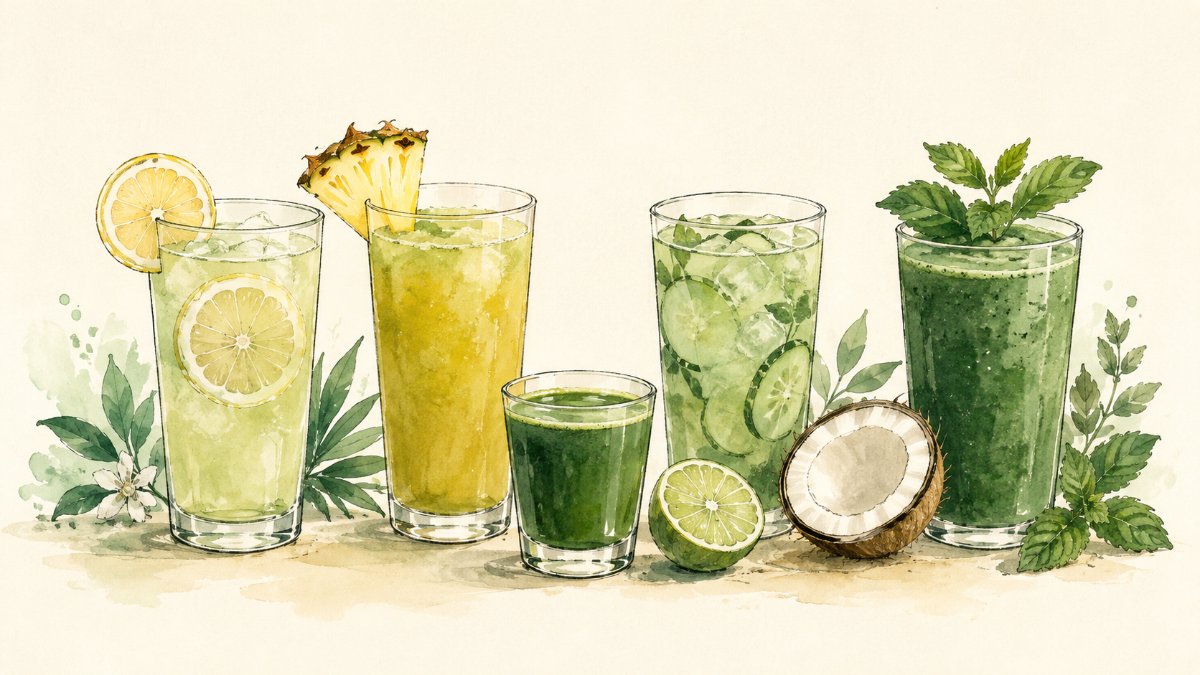
5 spirulina drinks worth making twice
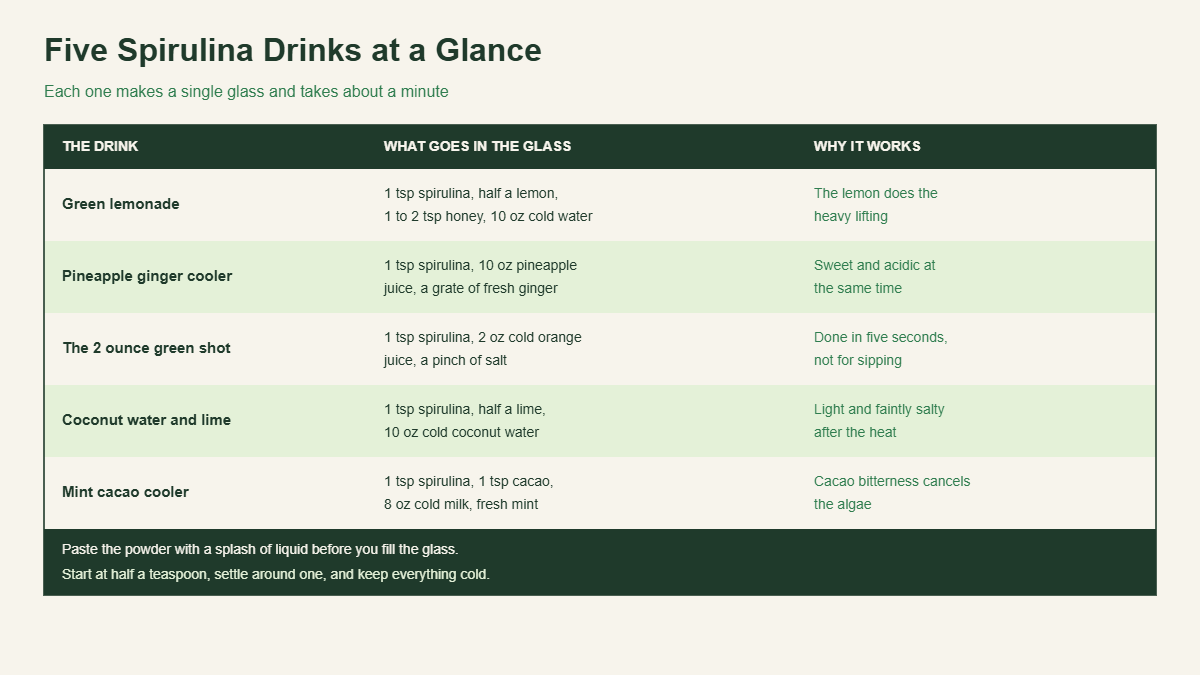
Each spirulina drink below makes a single glass and takes about a minute. Paste the powder first every time.
1. Green lemonade
1 teaspoon spirulina, the juice of half a lemon, 1 to 2 teaspoons honey or maple syrup, and 10 ounces of cold water over ice. Paste the powder with the lemon juice, then top with water.
This is the one most people keep coming back to. The lemon does the heavy lifting and the honey covers the last of the mineral edge.
2. Pineapple ginger cooler
1 teaspoon spirulina pasted into 2 tablespoons of pineapple juice, then 8 more ounces of pineapple juice, a small grate of fresh ginger, and plenty of ice. Pineapple is sweet and acidic at the same time, which is exactly the combination spirulina needs.
3. The 2 ounce green shot
1 teaspoon spirulina, 2 ounces of cold orange juice, a pinch of salt. Stir to a paste and drink it in one go. This isn’t a sipping drink. It’s for mornings when you want it handled in five seconds.
4. Coconut water and lime
1 teaspoon spirulina pasted with the juice of half a lime, then 10 ounces of cold coconut water. Light, faintly salty, barely sweet. This is the one to make after a long walk in the heat.
5. Mint cacao cooler
1 teaspoon spirulina, 1 teaspoon raw cacao powder, 8 ounces of cold milk of your choice, a few bruised mint leaves, and a little maple syrup. Cacao is bitter in a completely different direction than spirulina, and the two cancel each other out.
If you’d rather blend than stir, our simple spirulina recipes and spirulina bowl recipes cover the thicker end of the same idea.
The pitcher that changed everything
The version that sticks for most people isn’t a recipe at all. It’s a pitcher.
Sunday evening, juice four lemons into a 2 quart pitcher, stir in 3 tablespoons of honey until it dissolves, then fill the rest with cold water. Put it on the second shelf of the fridge where you’ll see it.
Every afternoon after that is one step. Pour a splash of the lemonade over a teaspoon of powder, stir it smooth, top up the glass. Fifteen seconds, nothing to measure, nothing to decide.
That’s the difference between a tub you finish and a tub you shove behind the baking soda. The powder was never the problem. The friction was.
What you actually get from a glass
One teaspoon is about 3 grams, which is a small serving of a food, not a multivitamin. It brings roughly 2 grams of protein, a useful contribution of iron, some B vitamins, and phycocyanin, the blue pigment that gives spirulina its color.
The honest framing: a daily glass adds something worth having. It doesn’t replace vegetables, and it won’t fix anything on its own. Our Spirulina 101 guide walks through the nutrition properly if you want the numbers.
The iron is the part worth noticing if you don’t eat much meat. Pairing the glass with citrus helps, since vitamin C improves how well your body absorbs plant iron. If you’re already making the lemonade, you’re doing that by accident.
Who should skip spirulina
Most healthy adults do fine with it. A few people shouldn’t drink it at all.
Anyone with phenylketonuria, usually written PKU, should avoid spirulina entirely, because it’s high in phenylalanine. If you have an autoimmune condition, talk to your doctor first. Spirulina appears to nudge the immune system, and that isn’t always the direction you want.
Quality matters more here than with most foods. Algae grown in open, uncontrolled water can pick up heavy metals or contamination from other species, so buy from a brand that publishes third party test results. The US National Institutes of Health notes that liver injury tied to spirulina itself appears very rare, and where problems have turned up, contamination or other ingredients were usually involved (NIH LiverTox).
Common mistakes to avoid
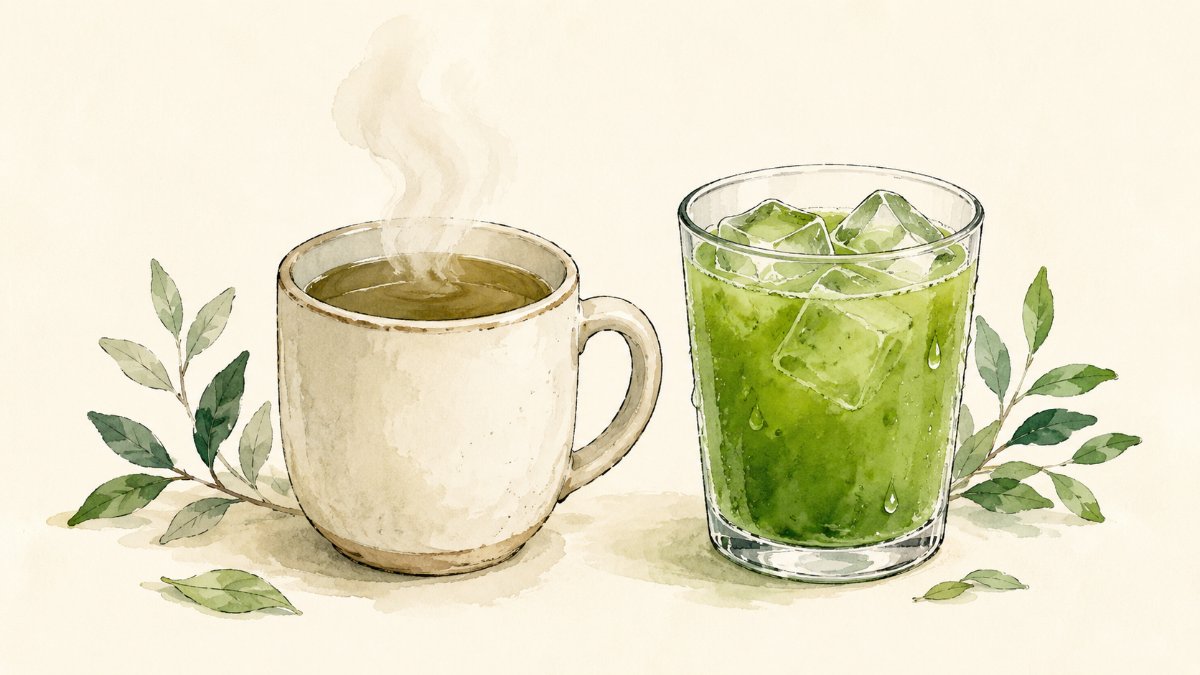
- Using hot liquid. Coffee and hot tea are the two usual offenders. Heat strengthens the flavor and kills the color.
- Tipping powder into a full glass. Clumps every time. Make the paste first.
- Starting at a tablespoon. Too much, too fast, and you’ll never drink it again. Half a teaspoon is a fine place to begin.
- Letting it stand. Spirulina settles within minutes. Drink it soon or give it another stir.
- Storing the tub badly. Keep it sealed, cool, dry, and out of the light. A wet spoon in the tub will ruin the whole thing.
- Expecting it to taste like nothing. It won’t. The goal is a glass you enjoy, not one where you can’t tell it’s in there.
Key takeaways
- Cold, tart, and a little sweet is the whole formula.
- Start at half a teaspoon and settle around one, about 3 grams.
- Paste the powder with a splash of liquid before you fill the glass.
- Lemon, pineapple, coconut water, and cacao are the partners that work.
- Make a base pitcher ahead so your daily spirulina drink takes fifteen seconds.
- Buy third party tested powder, skip it entirely with PKU, and ask your doctor first if you have an autoimmune condition or take medication.
Questions people ask about spirulina drinks
Can you mix spirulina with just water?
You can, and plenty of people do it as a quick shot. In a full glass of plain water the flavor has nowhere to hide, so add a squeeze of lemon and a little sweetness if you plan to sip rather than gulp.
Is it better in the morning or at night?
Either works. Morning is more common because some people find it mildly energizing, and an afternoon glass tends to stand in for a snack. Timing doesn’t appear to change much, so pick whichever one you’ll remember.
Can you put spirulina in hot tea or coffee?
You can, but it’s the worst version of this. Heat pushes the flavor forward and turns the bright green muddy. Cold wins on taste and on looks.
How long does it keep in the fridge?
Drink it the same day. It separates within minutes and fades over a few hours. Make the base ahead and add the powder glass by glass.
Is blue spirulina easier to drink?
Yes. Blue spirulina is the extracted pigment rather than the whole algae, so it’s far milder and much brighter in a glass. If flavor is your main obstacle, our guide to blue spirulina powder is a good next stop.
This article is general information, not medical advice. If you have a health condition, take medication, or are pregnant or nursing, please check with a qualified healthcare professional before making changes to your diet or your supplements.