
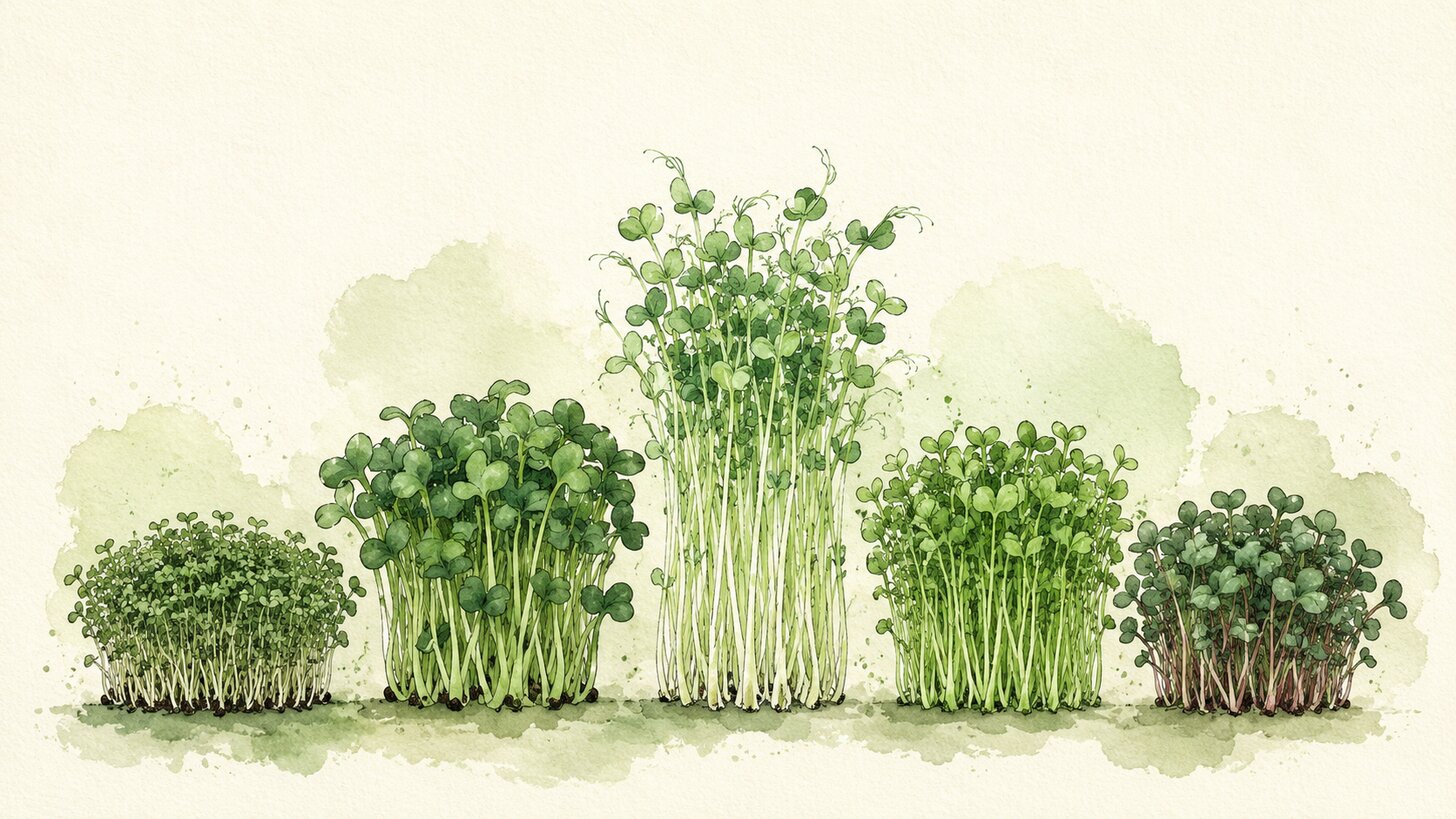
If you want a quick microgreens nutrition chart to compare the most popular varieties, you’re in the right place. Below you’ll find a simple, at a glance chart of 15 microgreens, the nutrients each one is known for, and how they taste, plus how to read it and which ones tend to pack the biggest punch. Microgreens are famously nutrient dense, so this microgreens nutrition chart is really a guide to getting the most out of every tiny handful.
New to these greens? Start with our primer on what microgreens are, or see the best microgreens to grow if you want to grow your own.
Why microgreens are so nutrient dense
A microgreen is a young seedling, harvested a week or two after sprouting. At that stage the plant is loaded with everything it needs to grow, so its leaves can carry high concentrations of vitamins, minerals, and antioxidants. Research has found many microgreens hold several times more of certain nutrients than the full grown vegetable, though the exact amounts vary by variety, growing conditions, and study.
The practical takeaway is that a small handful counts. You don’t need a giant salad to get real nutrition from these greens, which is a big part of why we grow so many at Etum.
Microgreens nutrition chart: 15 varieties
Here’s the chart. It lists common microgreens by the nutrients and plant compounds they’re most known for. Treat it as a general guide rather than a lab report, since precise levels shift from tray to tray.
| Microgreen | Known for | Standout compounds | Flavor |
|---|---|---|---|
| Broccoli | Vitamin C, vitamin K, folate | Sulforaphane | Mild, green |
| Red cabbage | Vitamin C, vitamin K, vitamin E | Anthocyanins, glucosinolates | Mild, slightly sweet |
| Radish | Vitamin C, vitamin E, folate | Glucosinolates | Peppery |
| Kale | Vitamin C, vitamin K, vitamin A | Carotenoids, glucosinolates | Mild, earthy |
| Arugula | Vitamin K, vitamin C, calcium | Glucosinolates | Peppery, nutty |
| Mustard | Vitamin A, vitamin C, vitamin K | Glucosinolates | Hot, spicy |
| Sunflower | Vitamin E, B vitamins, protein | Healthy fats | Nutty, crunchy |
| Pea | Vitamin C, vitamin K, folate | Fiber, plant protein | Sweet, fresh |
| Beet | Folate, vitamin C, potassium | Betalains | Earthy, sweet |
| Kohlrabi | Vitamin C, vitamin K | Glucosinolates | Mild, sweet |
| Cilantro | Vitamin K, vitamin A, vitamin C | Antioxidants | Bright, citrusy |
| Basil | Vitamin K, vitamin A | Aromatic oils, antioxidants | Sweet, aromatic |
| Amaranth | Vitamin K, iron, magnesium | Betalains | Mild, earthy |
| Swiss chard | Vitamin K, vitamin A, vitamin C | Betalains, carotenoids | Mild, colorful stems |
| Cress | Vitamin C, vitamin K, vitamin A | Glucosinolates | Peppery, tangy |
How to read the chart
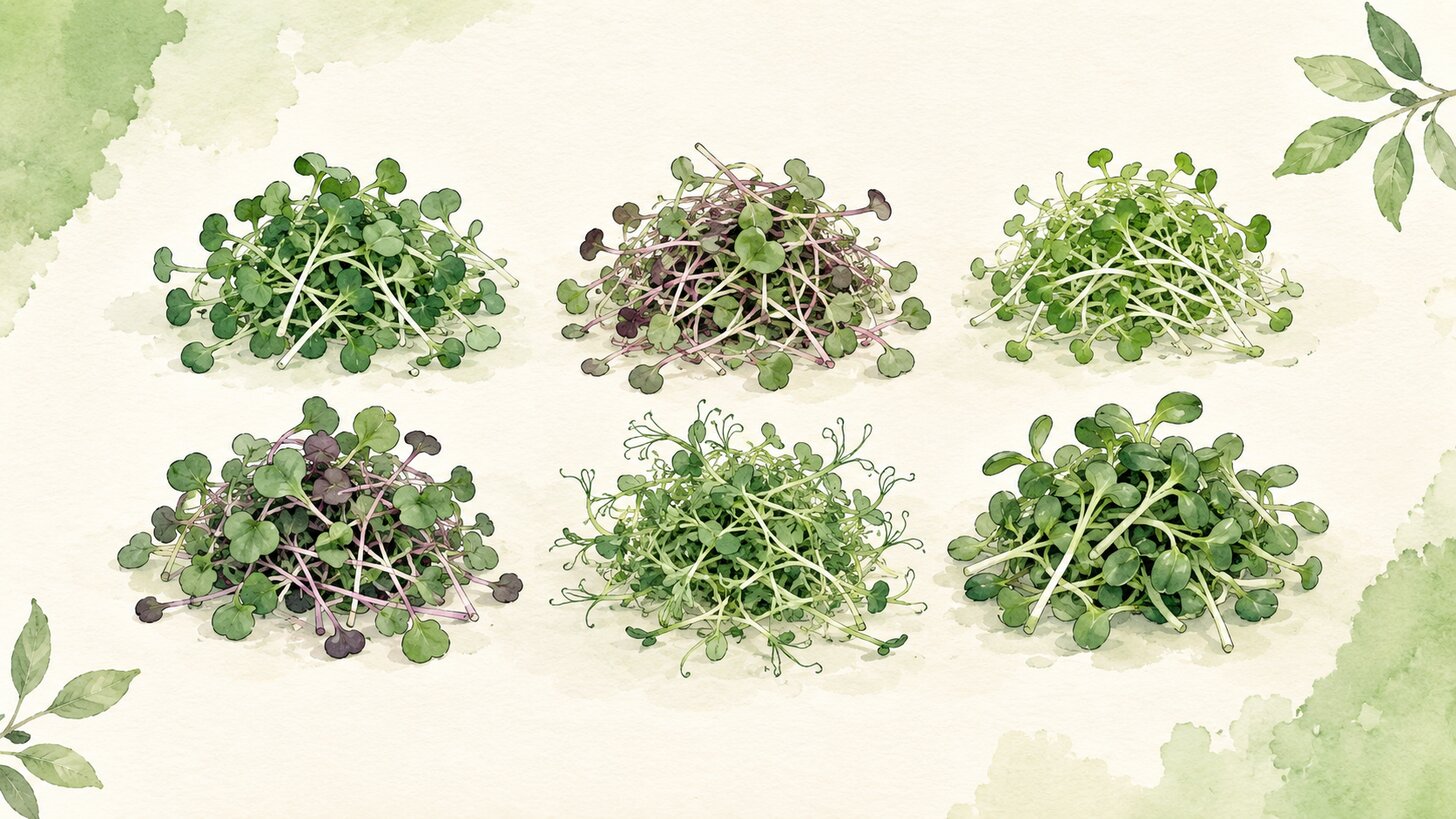
Each microgreen is listed with the nutrients it’s most often recognized for, plus the plant compounds that make it interesting. Glucosinolates, for example, are the compounds in the cabbage family (broccoli, radish, kale, mustard) that the body can turn into other beneficial substances. Betalains are the antioxidant pigments that give beet and amaranth their color, and carotenoids are the ones behind the deep greens and golds.
You don’t need to memorize any of this. The point is that different microgreens bring different strengths, so variety is your friend. Eating a mix over the week gives you a broader range of nutrients than leaning on any single tray.
The most nutrient dense microgreens
If you want the short list, the cabbage family tends to top most rankings. Broccoli, red cabbage, and radish microgreens are consistently singled out for their vitamin content and their glucosinolates. Sunflower and pea shoots stand out too, since they bring healthy fats and a little plant protein along with their vitamins.
That said, the best microgreen is really the one you’ll actually eat. A slightly less ranked variety that ends up on your plate every day beats a nutritional champion that sits forgotten in the fridge. Pick two or three you enjoy and rotate them.
How to get the most nutrition from your microgreens
A few simple habits help you keep more of what’s in the chart. Eat them raw, since heat wilts the leaves and breaks down some nutrients. Add them at the end of cooking, right before you serve. And eat them fresh, because like any green they lose a little nutrition the longer they sit in the fridge.
A daily handful across two or three varieties gives you a nice spread of vitamins and antioxidants without any effort. Growing your own is the freshest option of all. Our guide to growing microgreens at home walks through it, and most varieties are ready to cut in 7 to 14 days.
Common mistakes to avoid
The biggest one is treating microgreens like a supplement and expecting a single food to do all the work. They’re a booster, not a cure. The second is cooking them down, which wastes both the texture and some of the nutrition. And the third is buying more than you’ll use, then watching them wilt. Cut or buy small amounts often, and you’ll always have them at their best.
Where these nutrient claims come from
Most of what we know about microgreen nutrition comes from lab studies that measured vitamins and antioxidants across different varieties. The often quoted finding is that many microgreens contain higher concentrations of certain nutrients than the mature vegetable, sometimes by a wide margin. What those studies don’t give you is a single fixed number per variety, because results depend on the seed, the growing method, and how the greens were handled. That’s why this chart focuses on what each microgreen is known for rather than exact figures you can’t reliably reproduce at home.
How growing conditions change the numbers
Two trays of the same microgreen can differ in nutrition. Light, water, the growing medium, and how soon you eat them after cutting all play a role. Microgreens grown in good light and eaten fresh tend to hold the most nutrients, while ones that sit for a week in the fridge slowly lose some. This is good news if you grow your own, since homegrown greens can go from tray to plate in minutes.
Simple ways to eat more of them
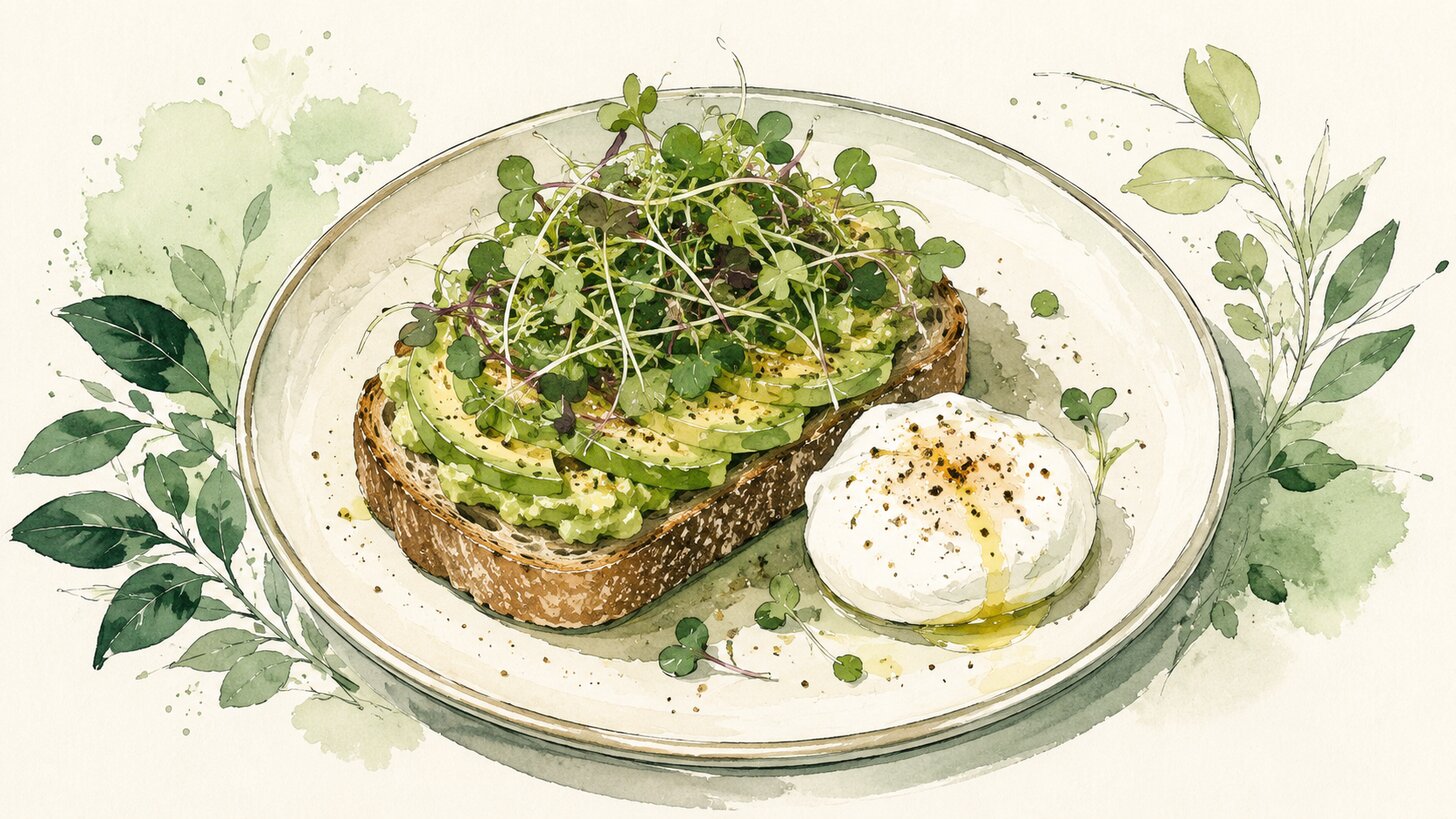
The chart is only useful if the greens actually make it into your meals, so keep it easy. Add a handful to eggs, avocado toast, or a sandwich, stir some into a finished soup or grain bowl, blend the milder ones into a smoothie, or use the peppery types like radish and mustard where you’d want a little bite. A small pinch on almost any savory dish works, and it looks great too.
Pair microgreens with the rest of your plate
Microgreens shine as a finishing touch, not the whole meal. Think of them alongside a balanced plate of vegetables, whole grains, and a good protein, the way you might use fresh herbs. A handful of broccoli or radish microgreens on top adds nutrition, color, and a little texture, and it turns an ordinary dish into something that looks and feels a bit more cared for.
Key takeaways
- Microgreens are nutrient dense, so a small handful adds real value to a meal.
- Broccoli, red cabbage, and radish microgreens are usually near the top of any nutrition ranking.
- Different varieties bring different nutrients, so rotate them.
- Eat them raw and fresh to keep the most nutrition.
Microgreens nutrition FAQ
What is the most nutritious microgreen? There’s no single winner, but broccoli, red cabbage, and radish microgreens are consistently ranked among the most nutrient dense.
Are microgreens more nutritious than regular vegetables? Research suggests many microgreens carry higher concentrations of certain nutrients than the mature plant, though the exact amounts vary. Either way, both belong in a healthy diet.
How many microgreens should I eat? There’s no strict rule. A small daily handful is a great, easy habit for most people.
This article is for general information and isn’t medical advice. Nutrient levels vary by variety and growing conditions. If you have a health condition, take medication, or are pregnant or nursing, check with a qualified professional before making big changes to your diet.