
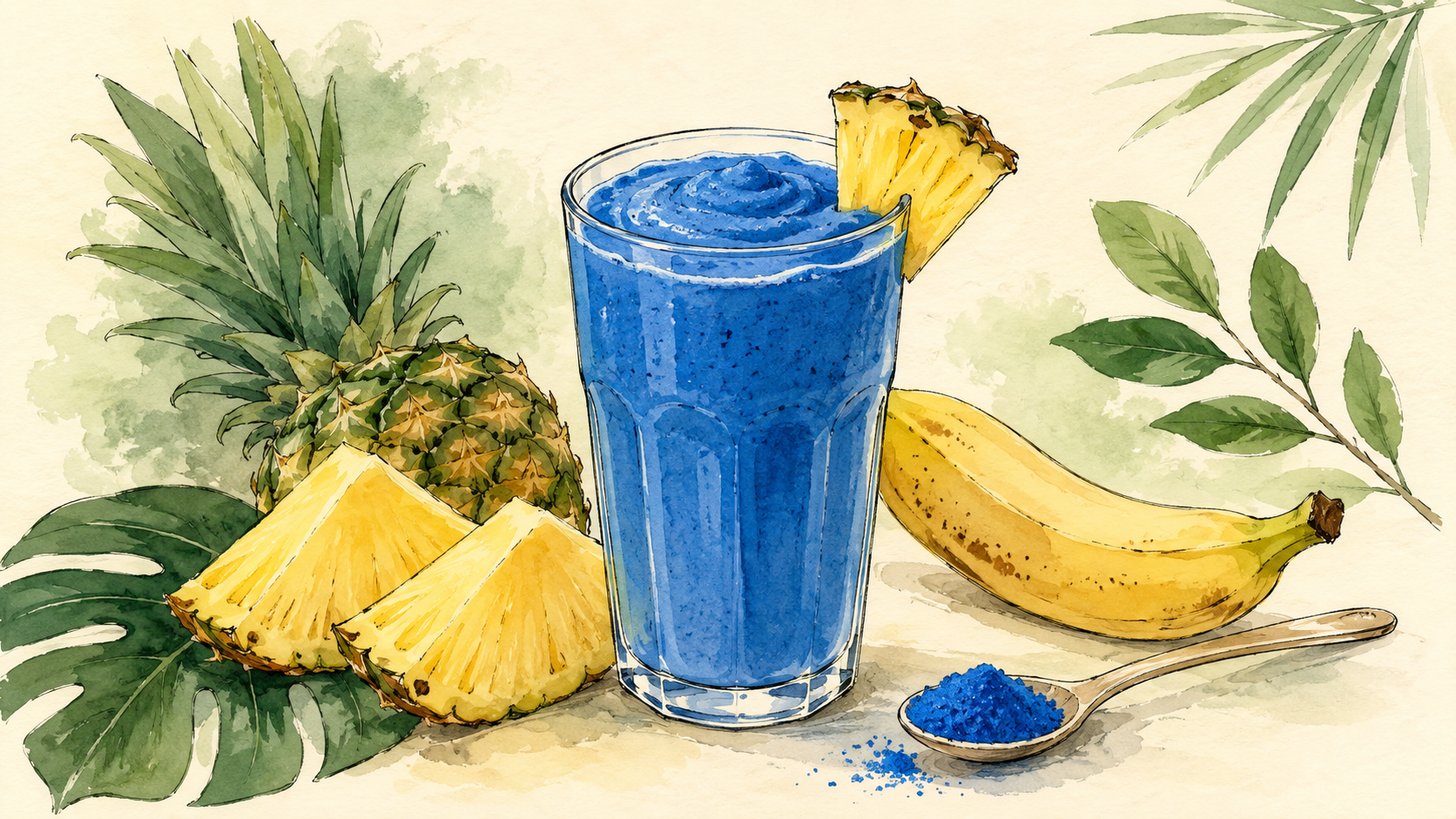
The first blue smoothie you make almost never looks like the one that talked you into buying the powder.
You add a spoonful, blend, pour, and what lands in the glass is a murky grey purple that looks more like a bruise than a tropical drink. The powder isn’t defective. The problem is almost always what else went into the blender, and how much you scooped.
Blue spirulina is a pigment first and a supplement second, so it behaves nothing like the green powder you may already keep in the cupboard. Once that clicks, a clean vivid blue takes about ten seconds of thought and no special ingredients.
Most people get there with roughly a teaspoon, a pale base, and nothing dark in the jar. The rest of this is the detail behind those three things, plus the mistakes worth skipping.
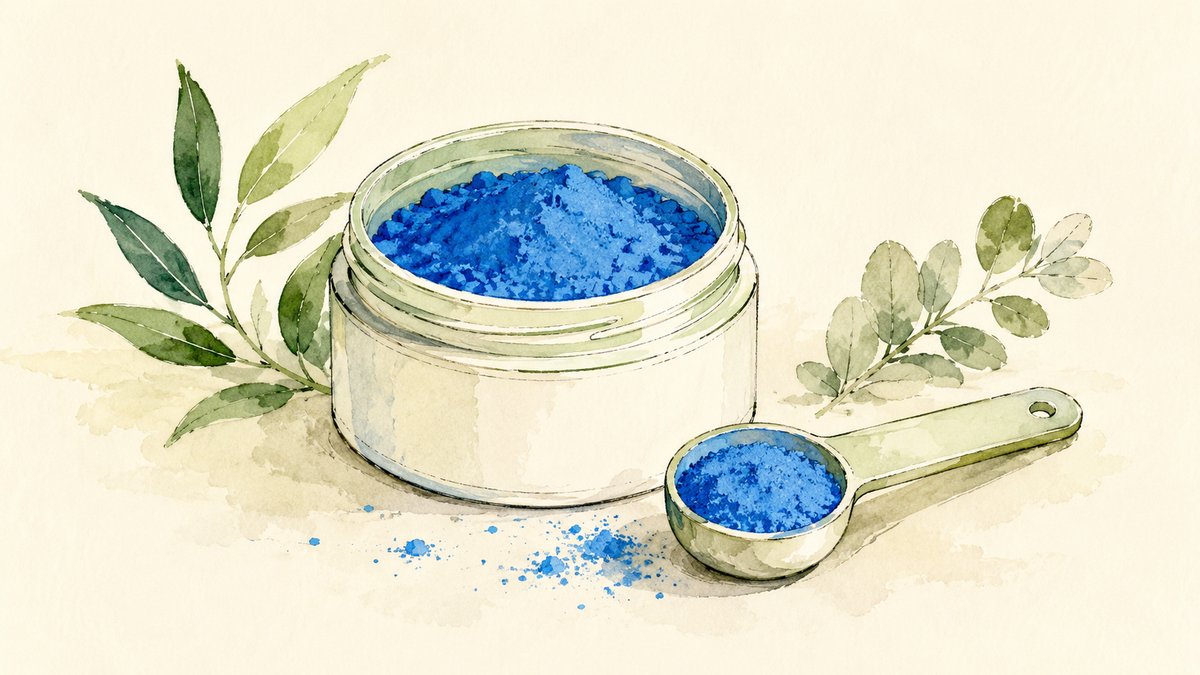
What blue spirulina powder actually is
Green spirulina is the whole algae, dried and ground up. Blue spirulina is one piece pulled out of it: a pigment protein called phycocyanin, separated through an extra filtering step.
That extra step removes the chlorophyll, and it takes most of the protein, vitamins, and minerals with it. What’s left is a concentrated blue pigment valued mainly for its antioxidant activity.
Two things follow from that. Blue spirulina barely tastes like anything, which is exactly why it works in a smoothie where green spirulina would announce itself with every sip. And you’re buying color and phycocyanin, not a nutrition upgrade. If you want the protein and the minerals, keep the green tub around too.
If you want the fuller background on where it comes from and who should be careful with it, we covered that in What Is Blue Spirulina? and in Spirulina 101.
How much blue spirulina powder for smoothies
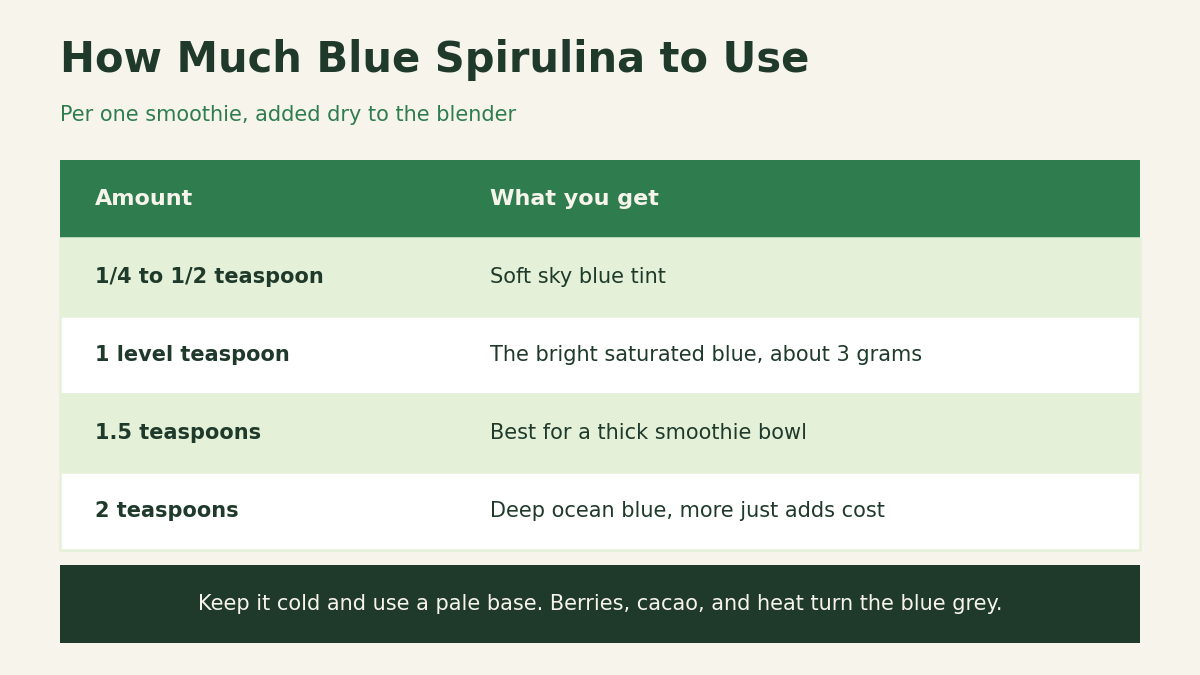
Start smaller than instinct tells you. A quarter to a half teaspoon tints one smoothie a soft sky blue. A full teaspoon gets you the saturated blue you see in photos. A second teaspoon pushes it toward deep ocean, which looks striking in a bowl and slightly alarming in a glass.
A level teaspoon of powder runs about 3 grams, and a teaspoon a day is the serving most brands land on. That’s a useful ceiling to keep in mind, because once you’re past a couple of teaspoons you’re adding cost and not much color.
Add it dry, straight into the blender with everything else. It dissolves fine and doesn’t need to be stirred into liquid first the way some powders do. If you’re chasing an exact shade, blend the smoothie plain, taste and look at it, then add the powder in quarter teaspoon bumps and pulse for a few seconds between each.
Your base decides whether the blue survives
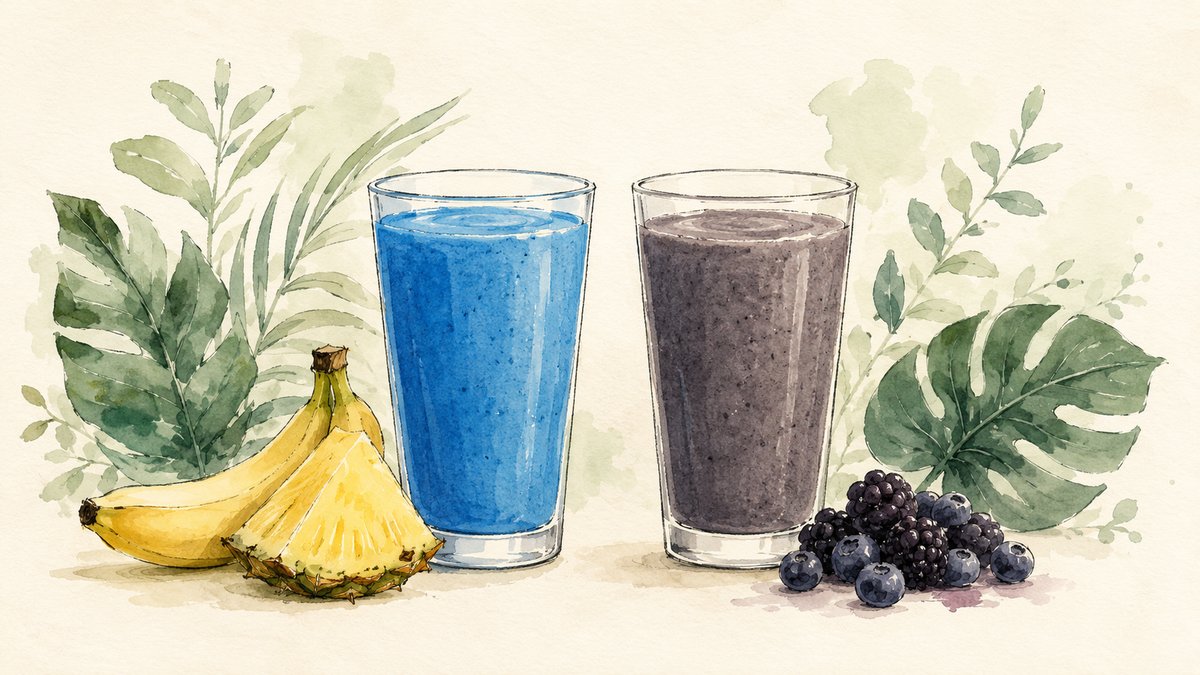
Pigment can’t win a fight with other pigment. This is the part almost everyone gets wrong on the first try, and it has nothing to do with the powder itself. When people give up on blue spirulina powder for smoothies, it’s usually the fruit that beat them, not the algae.
Pale ingredients let the blue read clean: banana, frozen pineapple, mango, white dragon fruit, coconut milk, cashew milk, plain yogurt, a scoop of unflavored protein. Anything in that family gives you a canvas.
Dark ingredients will drag it toward grey no matter how much powder you add. Blueberries, blackberries, cherries, cacao, coffee, beets, and a big handful of spinach or kale all do it. Green plus blue reads as swamp, and red plus blue reads as bruise.
Keep it cold
Phycocyanin is heat sensitive. Lab work on the isolated pigment shows it starts degrading at temperatures well below boiling, losing a meaningful share of its color after even short holds at moderate heat.
In practice that means cold drinks only. Frozen fruit, cold milk, and a short blend. Stirring it into hot tea or warm oatmeal will cost you the color, and a long grind in an underpowered blender warms the mixture more than you’d expect.
Go easy on the acid
The pigment is most stable in a mildly acidic range, around pH 5.5 to 6. A squeeze of lemon or lime won’t hurt anything. A full cup of citrus juice as your only liquid is a different story, and you may watch the blue fade while you drink it.
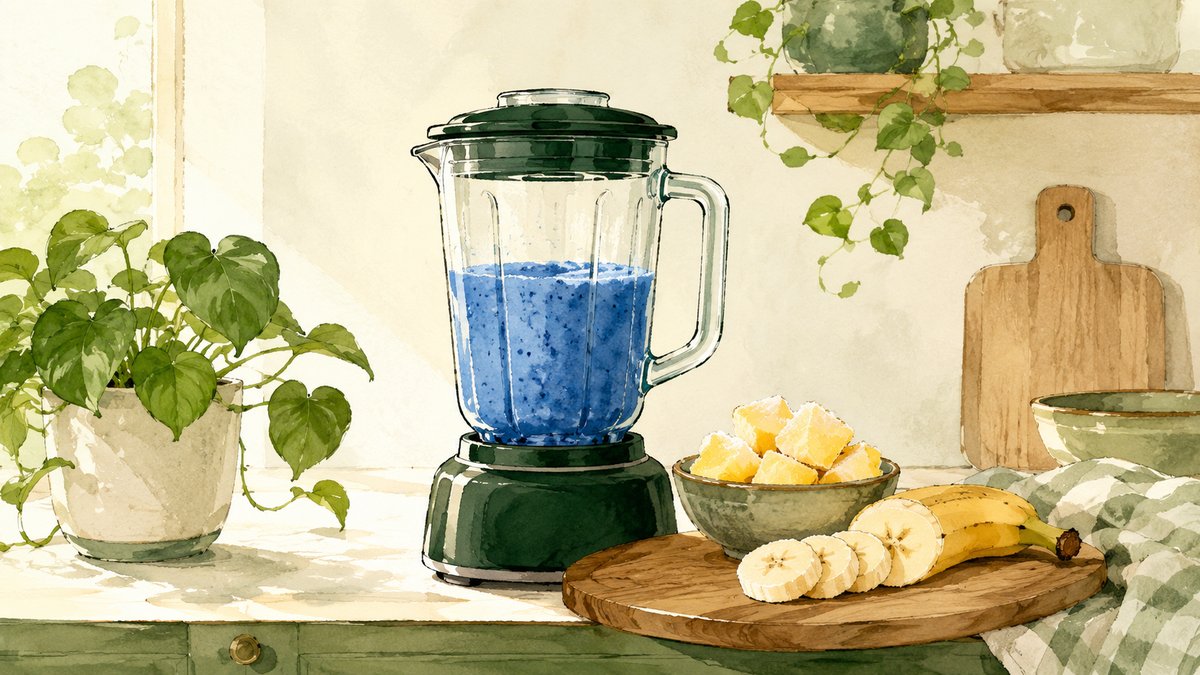
Three blends that hold their color
These are built around pale bases, so the powder does its job without a fight. Each makes one generous serving.
The tropical one
One cup frozen pineapple, half a frozen banana, three quarters of a cup of coconut milk, and 1 teaspoon of blue spirulina powder. Blend about 45 seconds. The pineapple keeps it bright and slightly tart, and the coconut milk gives it body.
The creamy vanilla one
One frozen banana, half a cup of plain yogurt, half a cup of milk of your choice, a splash of vanilla, a small drizzle of honey, and half a teaspoon of powder. This one lands pastel rather than electric, which is the point. It tastes like a milkshake and drinks like breakfast.
The thick bowl
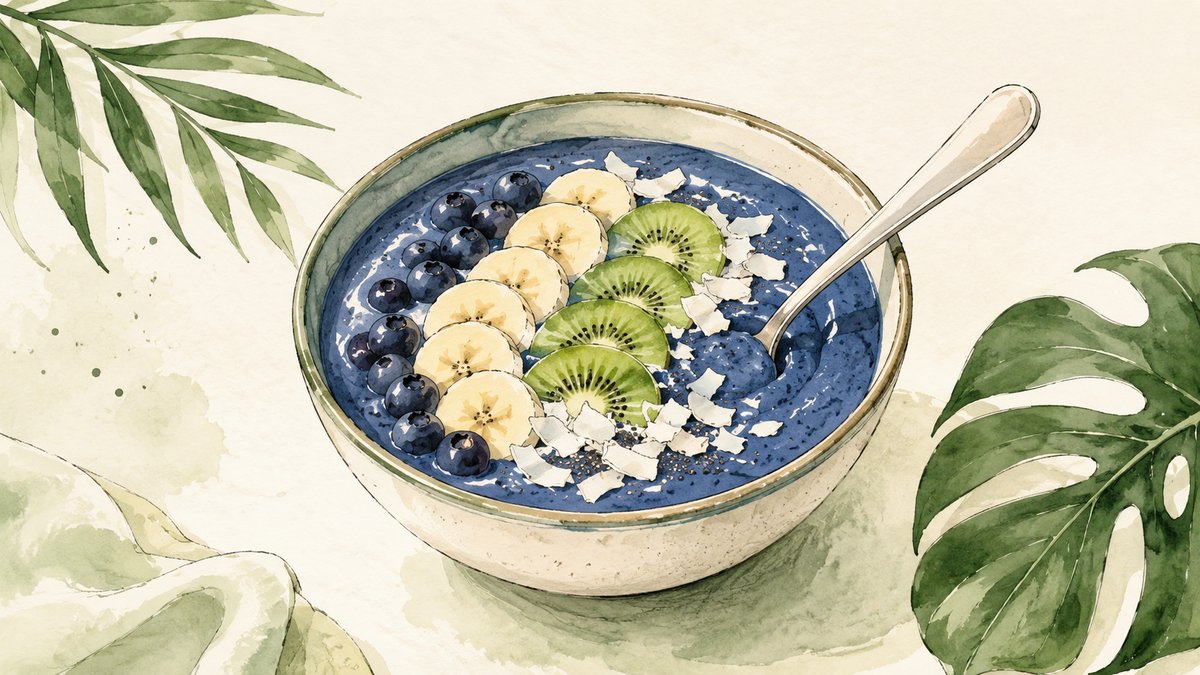
One cup frozen mango, one frozen banana, a splash of milk (start with two tablespoons and add more only if the blender stalls), and 1.5 teaspoons of powder. Scrape it into a bowl and top it with sliced fruit, coconut flakes, or a spoon of granola. Bowls take more powder because you see more surface.
For more ways to work spirulina into food that isn’t a smoothie, our 10 easy spirulina recipes covers the green powder side of the cupboard.
A real morning, start to finish
Here’s how this usually goes wrong and then goes right in an actual kitchen.
Say it’s a Tuesday and you’re making the tropical blend, but you’re also trying to use up a bag of frozen mixed berries. In they go with the pineapple. One heaped teaspoon of powder, because more must be better. Forty five seconds later you pour out something the color of wet slate, and you assume you bought a bad batch.
The next morning you leave the berries out, level the teaspoon instead of heaping it, and use frozen pineapple straight from the freezer so the mixture stays properly cold. Same powder, same blender, and this time it comes out the color you were expecting. Nothing about the spirulina changed. The berries were doing all the damage.
If you want the berries, make them a separate smoothie. The blue and the purple simply can’t share a glass.
Common mistakes to avoid
- Blending it with dark fruit. Berries, cherries, and cacao will beat the pigment every time. Pick one look and commit to it.
- Putting it anywhere warm. Hot tea, warm oatmeal, or a long grind in a struggling blender all fade the color.
- Heaping the spoon. A heaped teaspoon can be close to double a level one. It won’t look twice as good and it’ll empty the tub twice as fast.
- Dipping a wet spoon into the tub. Moisture clumps the powder and shortens its life. Use a dry spoon, always.
- Treating it as a swap for green spirulina. The filtering that makes it blue also takes out most of what makes green spirulina worth eating.
- Letting it sit. A blue smoothie is at its best in the first few minutes. Blend it when you’re ready to drink it.
Storing the powder so it lasts
Light, heat, and moisture are the three things that dull the pigment over time, which is why most tubs are opaque rather than clear.
Keep it sealed, in a cupboard rather than on the counter next to the stove, and away from the window. Don’t store it above the toaster or beside the kettle. Use a dry spoon every time and close the lid properly, and a tub will comfortably outlast the enthusiasm that made you buy it.
Key takeaways
- Blue spirulina is phycocyanin pulled out of green spirulina, so it’s mild in flavor and mainly there for color and antioxidants.
- Half a teaspoon tints, a full teaspoon gives you the photo blue, and about 3 grams a day is a typical serving.
- Pale bases like banana, pineapple, mango, and coconut milk protect the color. Berries and cacao destroy it.
- Keep everything cold and only mildly acidic, then drink it soon after blending.
- Store the tub sealed, cool, and dark, and never dip a wet spoon into it. Handled that way, blue spirulina powder for smoothies stays vivid for months.
Frequently asked questions
Does blue spirulina taste like anything?
Barely. Most people notice nothing at all at a teaspoon, and at most a faint clean mineral note if they go heavier. That’s the main reason it caught on where green spirulina never did. If you’ve struggled with the green version, our guide to what spirulina tastes like has more on taming that flavor.
Why did my blue smoothie turn green?
Something yellow got in. Mango, pineapple, and orange juice all lean yellow, and yellow plus blue makes green. A small amount of pineapple is usually fine, but a mango heavy blend will tip toward teal. Swap in banana or white dragon fruit if you want true blue.
Can I use blue spirulina powder for smoothies every day?
A teaspoon a day is a common routine and generally well tolerated by healthy adults. Because it’s an algae product, quality and testing matter, so buy from a brand that publishes third party results. Anyone with an autoimmune condition, a thyroid issue, or a phenylketonuria diagnosis should talk to a professional first.
Is blue spirulina healthier than green?
Not in the broad sense. Green spirulina carries the protein, the B vitamins, the minerals, and the chlorophyll. Blue is a concentrated dose of one antioxidant pigment. They’re different tools, and plenty of people keep both.
Will it stain my blender or my teeth?
It’s a strong pigment, so rinse the jar right after you pour rather than letting it dry. Your teeth may take on a faint tint for a few minutes, which brushing or a glass of water clears easily.
This article is general information, not medical advice. If you have a health condition, take medication, or are pregnant or nursing, please check with a qualified healthcare professional before adding a new supplement to your routine.