
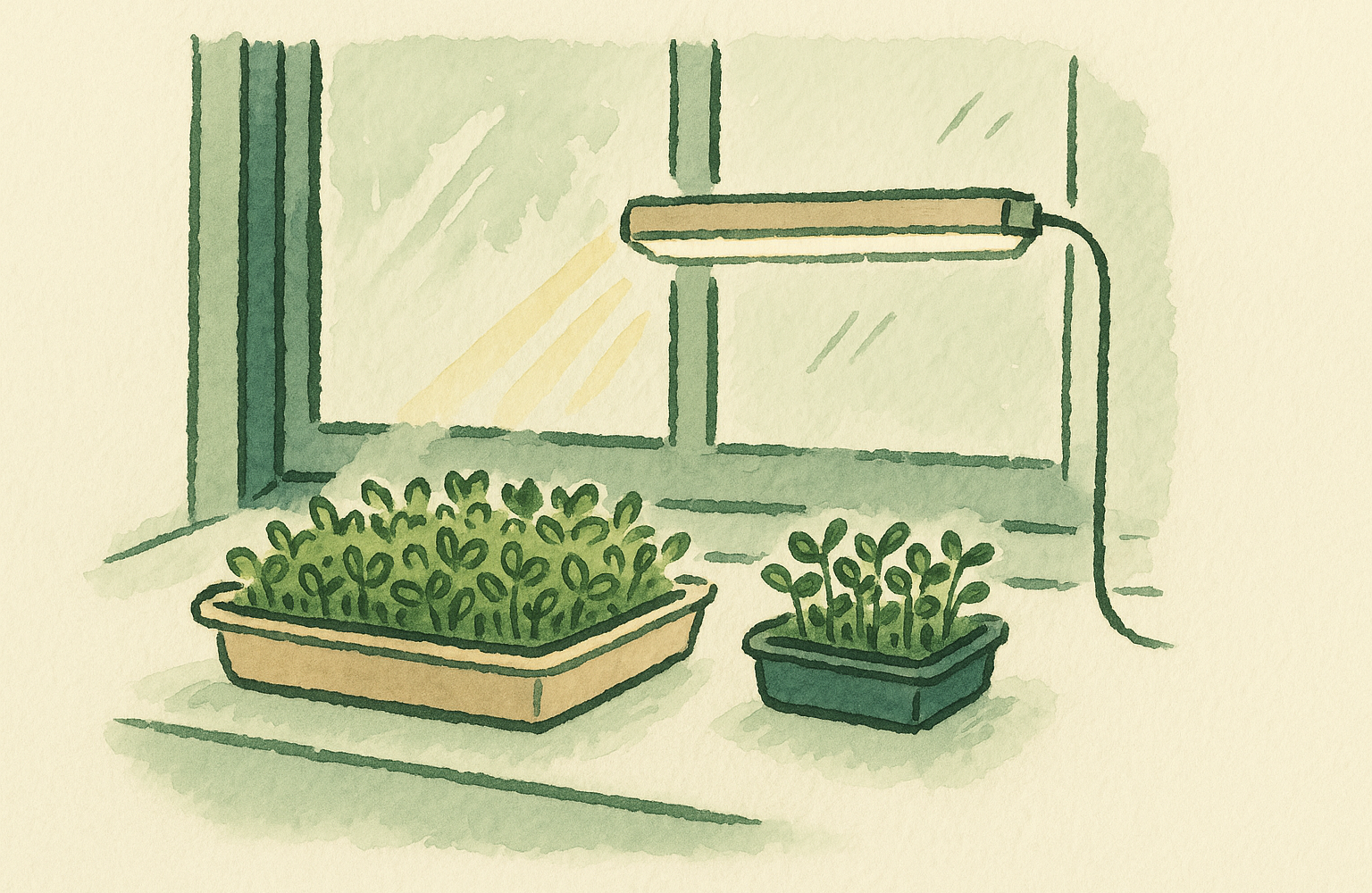
You set a tray of microgreens on the kitchen windowsill, feeling pretty good about it. A week later the shoots are tall, pale, and flopping over like they’re straining toward something just out of reach. If that sounds familiar, light is almost always the culprit, and it leads straight to the question nearly every new grower runs into: is the window enough, or do you need to buy a lamp?
Here’s the reassuring part. Microgreens are one of the most forgiving things you can grow, and plenty of people raise healthy trays with nothing but a bright window. Whether a lamp earns its place on your counter comes down to your window, your space, and the time of year. Let’s walk through what these tiny greens actually need so you can make the call without guessing.
So do microgreens need a grow light?
For most people, a grow light for microgreens is helpful but not required. If you have a window that gets a few hours of direct sun and stays bright the rest of the day, you can grow good trays right there. A lamp becomes worth it when your natural light is weak, when winter cuts your daylight short, or when you want to grow in a closet, a basement, or any spot the sun never reaches.
There’s one more thing worth knowing up front. Microgreens don’t need any light at all for the first stretch of their life, which changes how you should think about the whole setup.
How much light microgreens actually need
Microgreens go through two very different phases, and they want opposite things in each one.
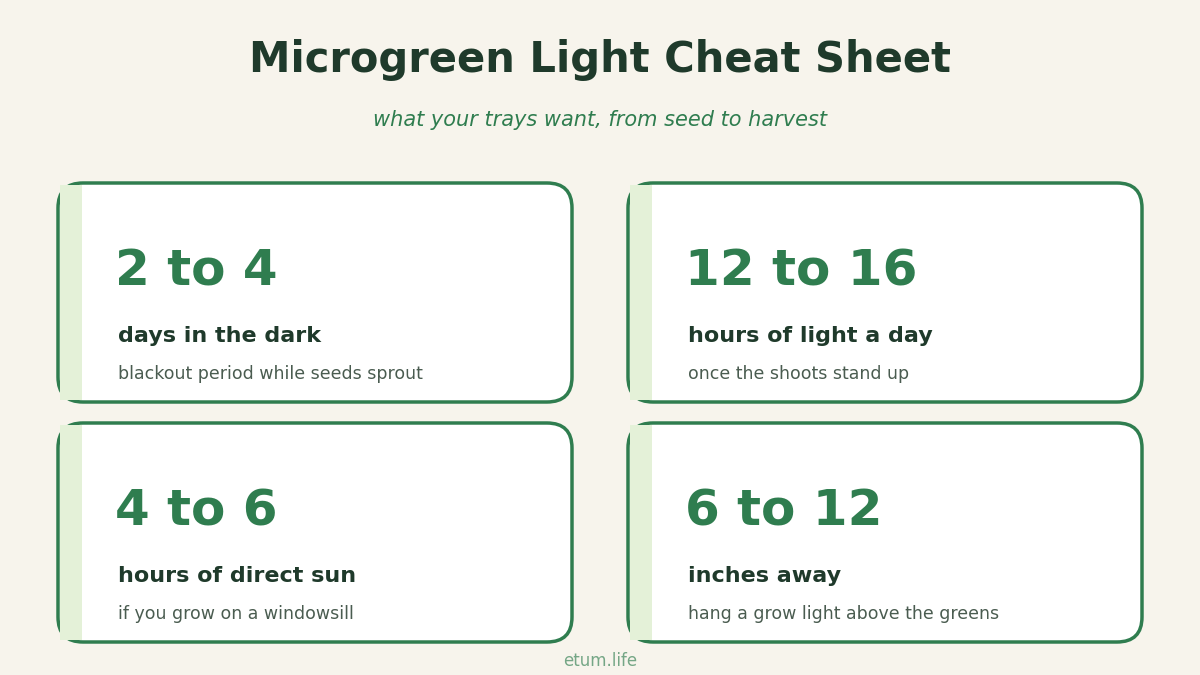
The first is the blackout period. Right after you sow the seeds, you cover the tray or keep it in the dark for roughly 2 to 4 days while the seeds sprout and push out roots. Darkness during this window is completely normal and even helpful. It nudges the stems to reach and the roots to dig in before the leaves ever open.
Once the shoots stand about an inch tall and most of the seeds have sprouted, you uncover them and the light phase begins. From here they want a lot of light, ideally 12 to 16 hours a day. That number surprises people, but it’s the single biggest factor in whether you get sturdy green shoots or thin, floppy ones.
The good news is that it doesn’t have to be blazing, direct sun the whole time. Bright light for most of the day, with some direct sun mixed in, does the job for the great majority of varieties. If you want a sense of how these phases fit into the full cycle, our variety timeline chart breaks it down day by day.
Growing microgreens on a windowsill
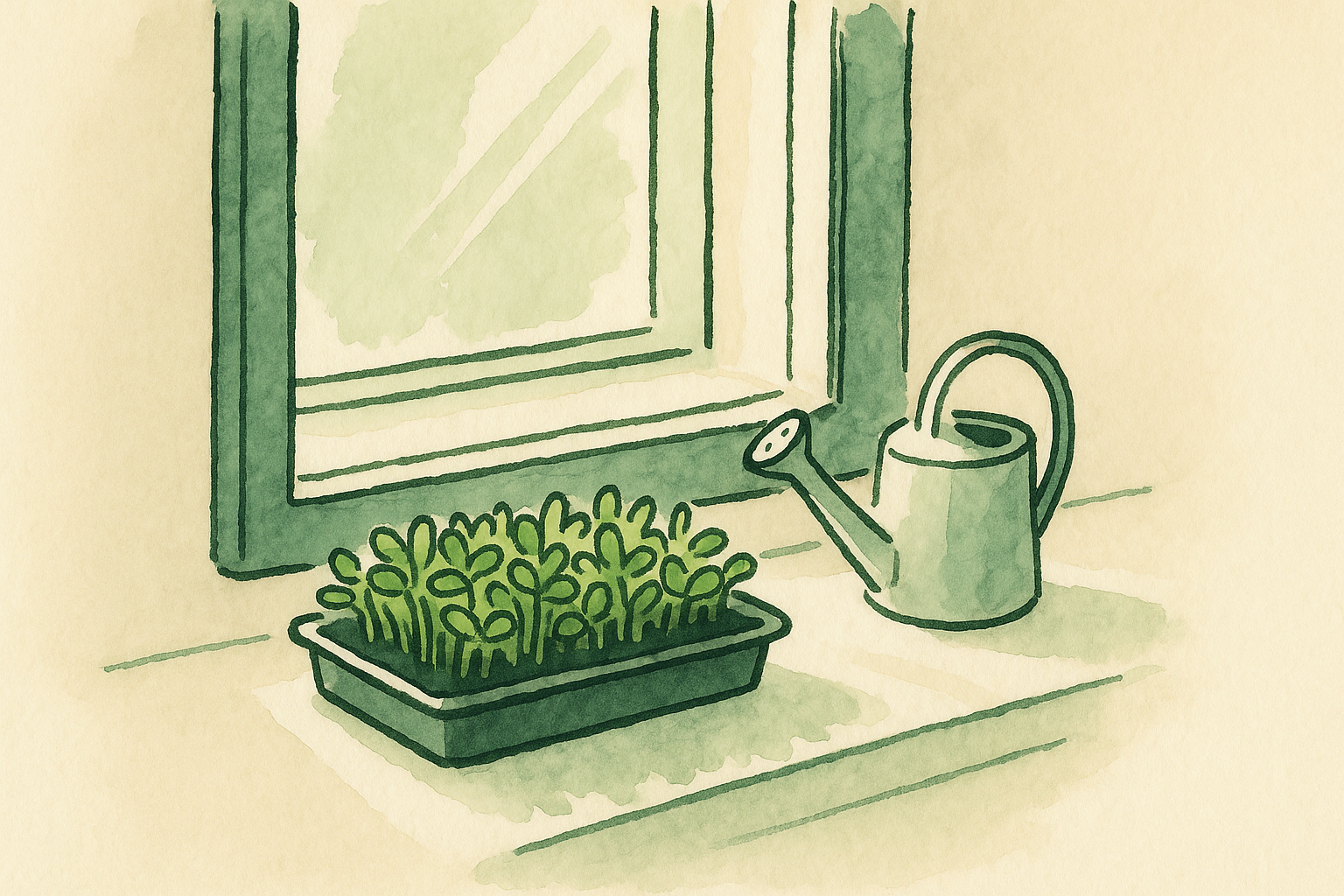
A sunny window is where most home growers start, and honestly it’s where many of them happily stay. It costs nothing and it works.
Aim for a spot that gets at least 4 to 6 hours of direct sun, usually a south or east facing window. For the rest of the day, bright indirect light keeps the trays humming along.
There are two catches with windows, and both are easy to handle. First, window light gets weaker in winter and on long gray stretches of weather, so a tray that thrived in July might sulk in January. Second, light from a window only comes from one direction, so your shoots will lean toward the glass. Rotate the tray half a turn once a day and they’ll grow much straighter.
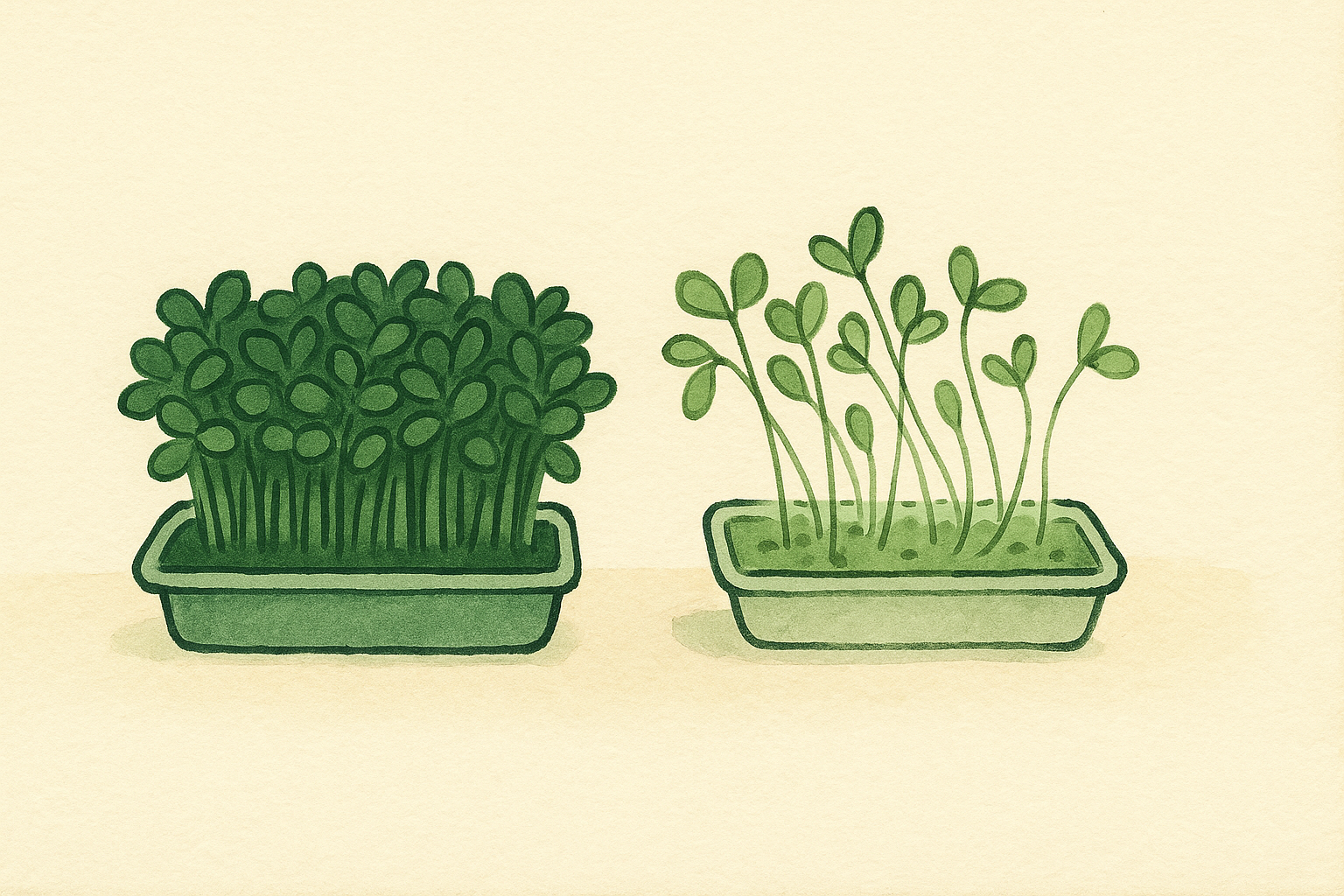
Here’s a quick real world example. A tray of radish microgreens on a bright south facing sill in spring usually comes out thick and upright in about a week, no lamp needed. Move that same tray to a dim north window in December and you’ll likely get thin, stretched shoots instead. Same seeds, same water, different light. That’s the whole story in one tray.
When a grow light is worth it
So when does a grow light for microgreens actually pay for itself? A few situations make it an easy yes:
- You don’t have a window that gets a few hours of real sun.
- You want to grow year round and your winters are dark.
- You’re growing more than a tray or two and want even, predictable results.
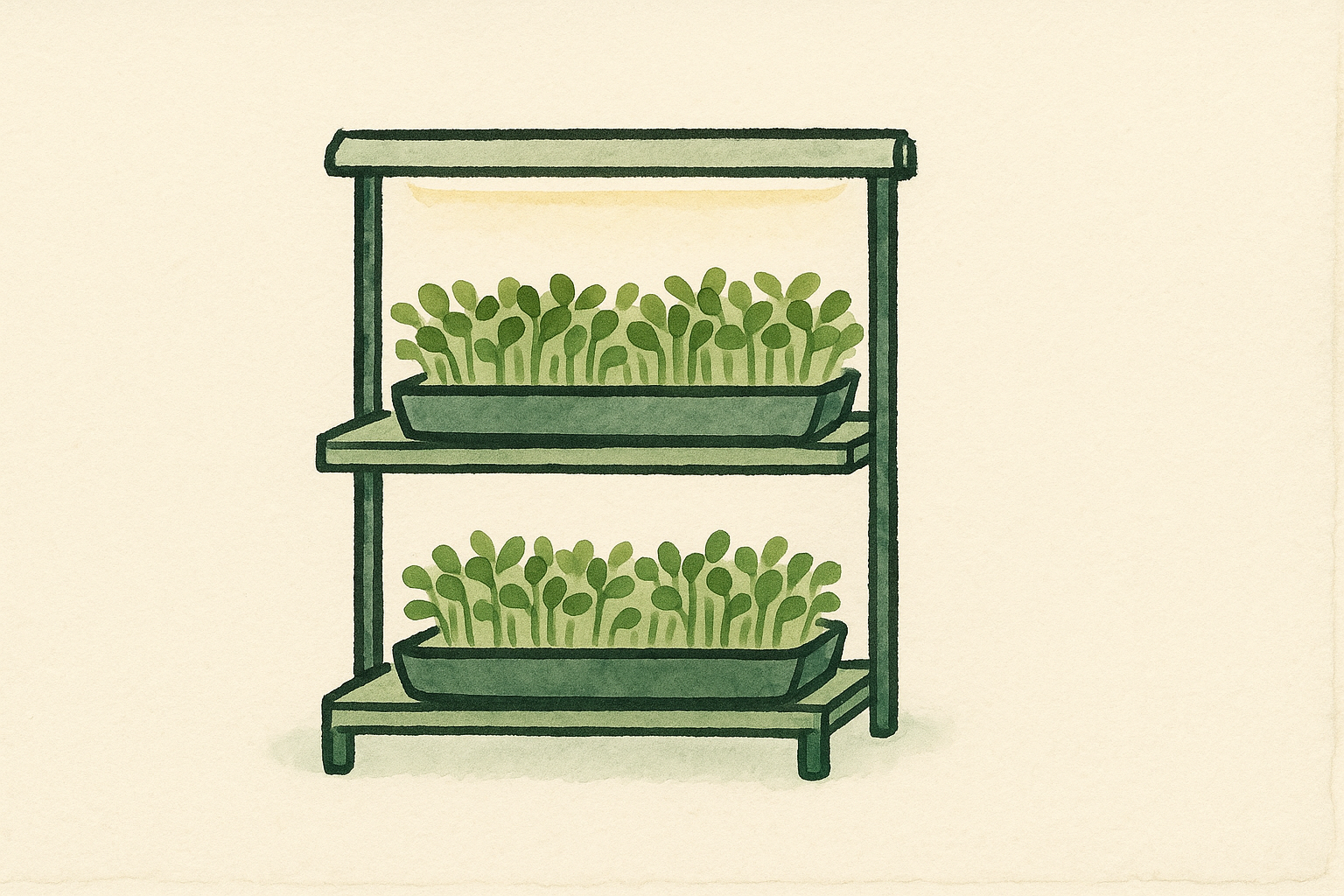
- Your only space is a shelf, a closet, a cabinet, or a basement.
A lamp takes the guesswork out of it. You control exactly how much light the trays get every single day, no matter what the weather is doing outside. For anyone growing on a rack or stacking trays on shelves, a light isn’t really a luxury, it’s the thing that makes the whole setup work at all.
What kind of grow light to get
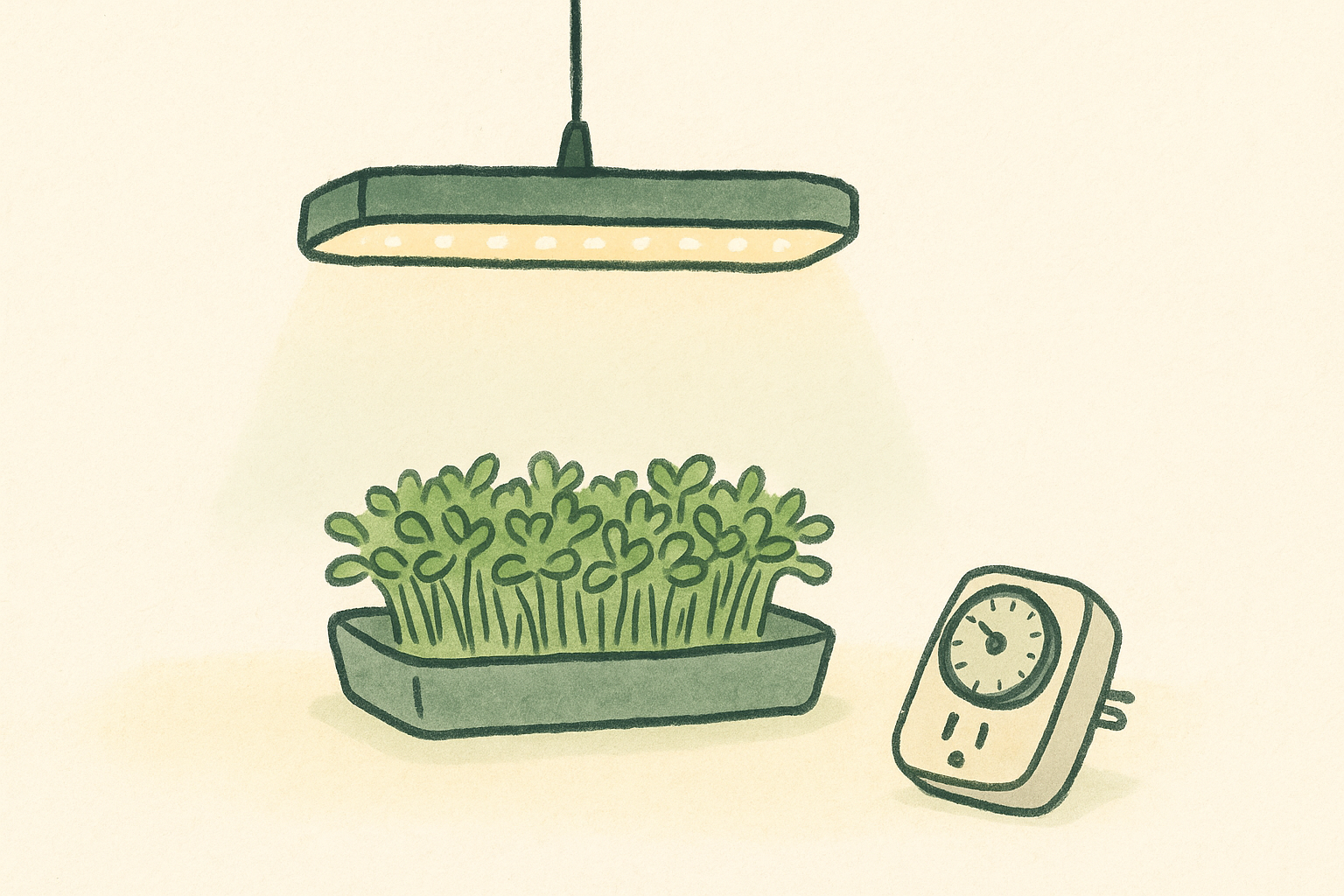
You don’t need anything fancy or expensive. A simple LED shop light or a small LED grow light panel handles microgreens with ease, and plain fluorescent shop lights work well too.
A few numbers help you set it up right:
- Hang the light 6 to 12 inches above the tops of the greens.
- Run it 12 to 16 hours a day. A cheap outlet timer makes this automatic.
- Full spectrum or plain daylight white LEDs are perfect. You don’t need the pink and purple lights you might be picturing.
Microgreens get harvested so young that they never need the intense light a fruiting tomato plant would. That’s part of why they’re so cheap to start growing. If you’re still putting your first setup together, our complete guide to growing microgreens at home covers the trays, seeds, and watering that go with the light.
Common mistakes to avoid
Most light problems show up the same way: leggy, pale shoots that are tall and thin and a little yellow instead of short and green. There’s a name for it, etiolation, which is just a plant stretching to find light it isn’t getting. A handful of fixes cover almost every case.
- Don’t leave the tray in the dark too long. Once the shoots are up and reaching, get them into the light.
- If they’re leaning hard, they need more light, a daily rotation, or both.
- Using a lamp? Move it closer, inside that 6 to 12 inch range. A light that’s too far away is nearly as useless as no light.
- Give them enough hours. A couple of hours on a dim sill just won’t cut it.
One thing to let go of: don’t try to rescue leggy microgreens after they’ve stretched. Once they’ve stretched, they’ve stretched. Fix the light, and the next tray comes out better. Pick a hardy variety from our list of the best microgreens to grow for beginners and you’ll stack the odds in your favor.
Key takeaways
- Microgreens spend their first 2 to 4 days in the dark, then want 12 to 16 hours of light a day.
- A bright window with a few hours of direct sun can absolutely be enough.
- A grow light is worth it for dark spaces, winter growing, and larger setups.
- A simple LED, hung 6 to 12 inches away on a timer, is all you need.
- Pale, leggy shoots almost always mean not enough light.
Frequently asked questions
Can microgreens grow without any direct sunlight?
Yes, as long as the light is bright enough for enough hours. Bright indirect light or a grow light both work fine. What microgreens can’t handle is dim light for only a couple of hours a day.
How many hours of light do microgreens need?
After the blackout period, aim for 12 to 16 hours a day. A little more is generally fine. Much less than that and they tend to stretch and turn pale.
What color grow light is best for microgreens?
A plain daylight white or full spectrum LED is ideal. You don’t need special pink or purple grow lights for greens that get harvested this young.
Do microgreens need light while germinating?
No. The first 2 to 4 days happen in the dark or under a cover. Light comes after the seeds sprout and the shoots stand up on their own.
A quick note: this is general growing and wellness information, not medical advice. Microgreens are a lovely addition to most plates, but if you have a health condition, take medication, or are pregnant or nursing, check with a qualified professional before making big changes to your diet.