

Every January, gyms fill up. By March, they empty out again. It isn’t because people are lazy. It’s because they tried to change everything at once: a new diet, a new workout, an early alarm, a meditation app, all starting Monday. That kind of overhaul runs on a burst of willpower nobody can keep up for long.
A simple wellness routine works the other way around. Instead of ten big changes you white knuckle for two weeks, you build a handful of habits so small you barely notice them, then let them stack up over months. It’s less exciting and far more likely to still be around next year.
This guide walks through what a routine like that actually looks like, the four areas worth building around, and the one trick that makes a new habit stick.
What a simple wellness routine actually is
A wellness routine is just a set of small, repeatable actions you do often enough that they run on autopilot. That’s it. No app, no perfect morning, no fancy planner required.
The word “simple” is doing real work here. The more elaborate a habit is, the harder it is to keep. Research on how habits form found that easy actions, like drinking a glass of water, became automatic much faster than involved ones like a long set of exercises. So the goal isn’t an impressive routine. It’s one small enough that you’ll still do it on a bad day.
A good routine also spreads across a few parts of your life instead of maxing out one. A little better eating, a little more movement, a little more sleep, and one habit that helps you feel calm will carry you further than an intense focus on any single thing.
Why small beats big every time
When you try to overhaul your whole life at once, you’re leaning on motivation. And motivation is a shaky thing to depend on, because it comes and goes. It’s high the first week and gone by the third, right when the newness wears off.
Small habits sidestep that problem. A two minute habit doesn’t need motivation, it just needs a moment. You can drink one glass of water, take one short walk, or eat one extra handful of greens even on the day everything else falls apart.
There’s a quiet payoff to starting this small. One tiny habit tends to pull others along with it. The short walk turns into a longer one. The morning glass of water turns into drinking more all day. You’re not forcing five changes. You’re planting one and letting it grow.
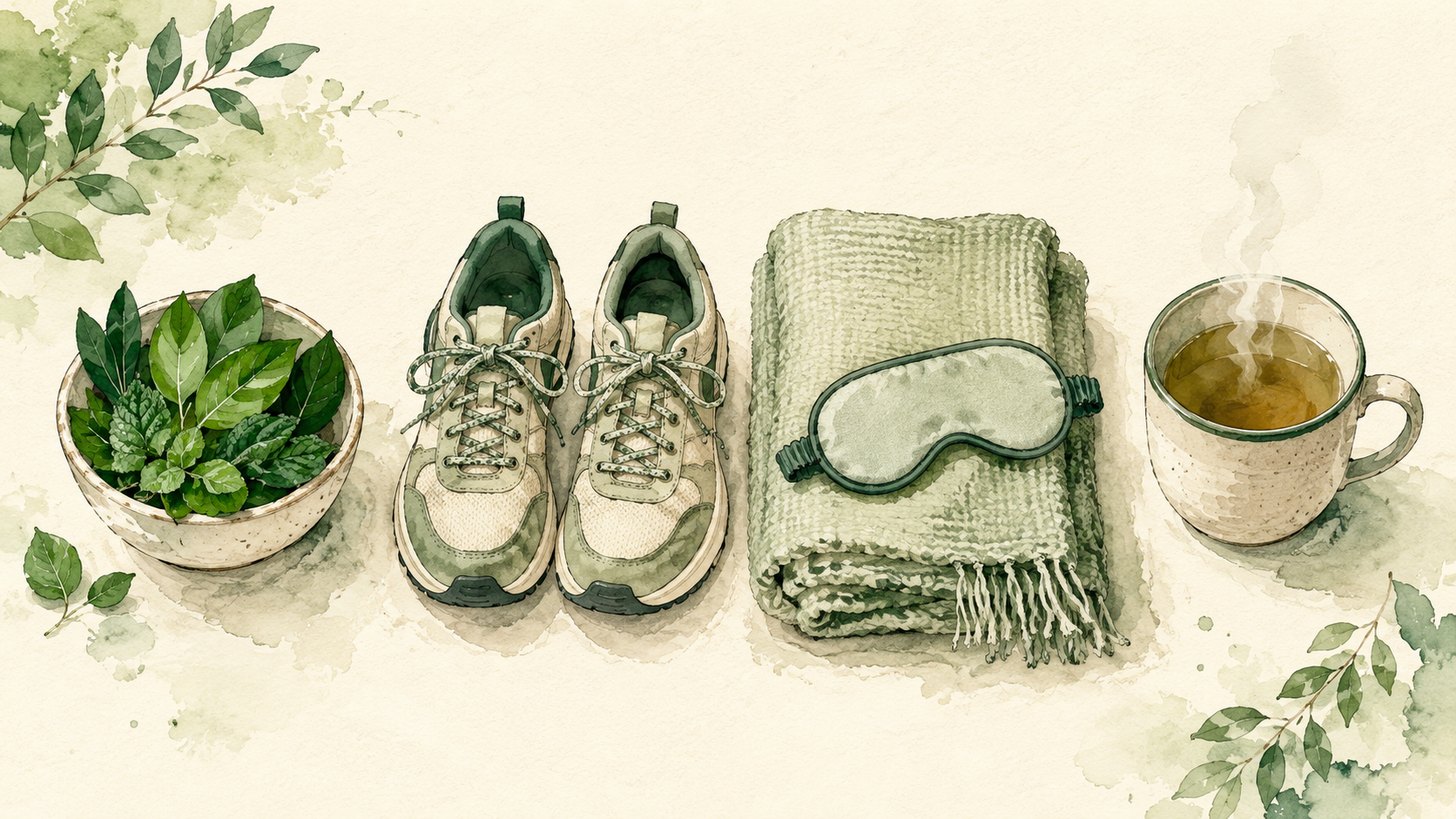
The four habits worth building a routine around
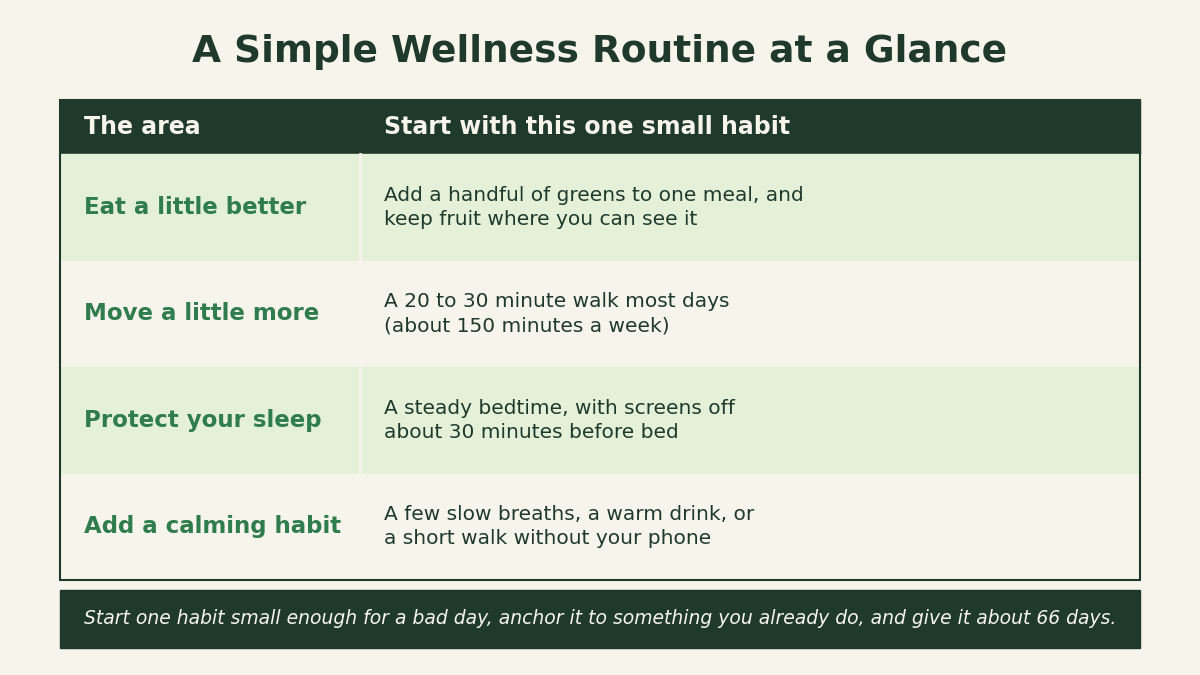
You don’t need a long checklist. A good routine really only has to touch four areas, and you can start each one with a single small habit.
Eat a little better
Pick one food habit and keep it almost too easy. Add a handful of vegetables or microgreens to one meal. Keep fruit where you can see it. Swap one soda for water. You don’t have to redo your whole diet to feel a difference, and a pattern built on more plants, like an anti inflammatory way of eating, makes a steady backbone for the rest of the routine. If mornings are your weak spot, a quick anti inflammatory smoothie folds a few of these habits into one glass.
Move a little more
Movement is about the closest thing we have to a wonder drug, and you need less of it to start than you think. The CDC suggests adults aim for about 150 minutes of moderate activity a week, which sounds like a lot until you break it into a 20 to 30 minute walk most days. Here’s the part worth holding onto: any movement counts, and a little is far better than none. A short daily walk beats a punishing workout you quit in a week.
Protect your sleep
Sleep is the habit that makes every other habit easier. When you’re rested, you eat better, move more, and handle stress without unraveling. Start with one small anchor: a steady bedtime, or a screens off wind down about 30 minutes before bed. You’re not chasing flawless sleep, just a little more of it, a little more regularly.
Add one calming habit
The last piece is something that settles your nervous system. It can be a few slow breaths before you get out of the car, five quiet minutes with a warm drink, a short stretch, or a walk without your phone. Pick the one that sounds least like a chore, because the calming habit only helps if you’ll actually reach for it.
How to make a wellness habit actually stick
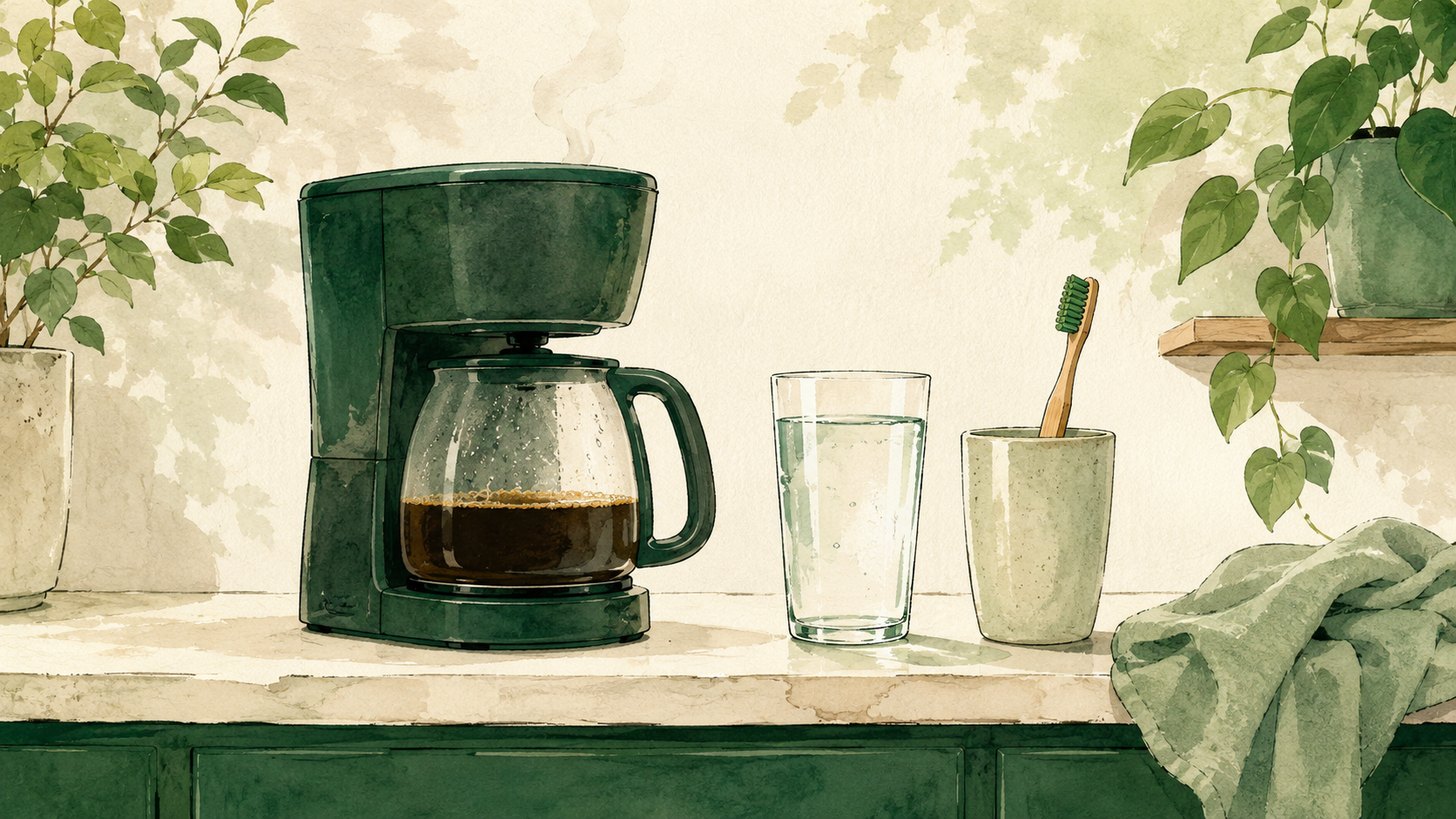
Here’s the trick that does most of the heavy lifting: anchor each new habit to something you already do. People often call this habit stacking, and it works because a routine you already have becomes the reminder for the new one.
The formula is simple. After [something you already do], I’ll [new tiny habit]. After I start the coffee, I’ll drink a glass of water. After I brush my teeth, I’ll stretch for one minute. The old habit is the cue, so you’re not leaning on memory or a buzzing phone to remind you.
Give it time, too. The popular idea that a habit forms in 21 days is a myth. One well known study found it took people an average of about 66 days for a behavior to feel automatic, and anywhere from 18 to 254 days depending on the person and the habit. So if week three feels like a slog, that’s normal, not failure. Keep the habit small and let the calendar do its work.
A real week: one small change at a time
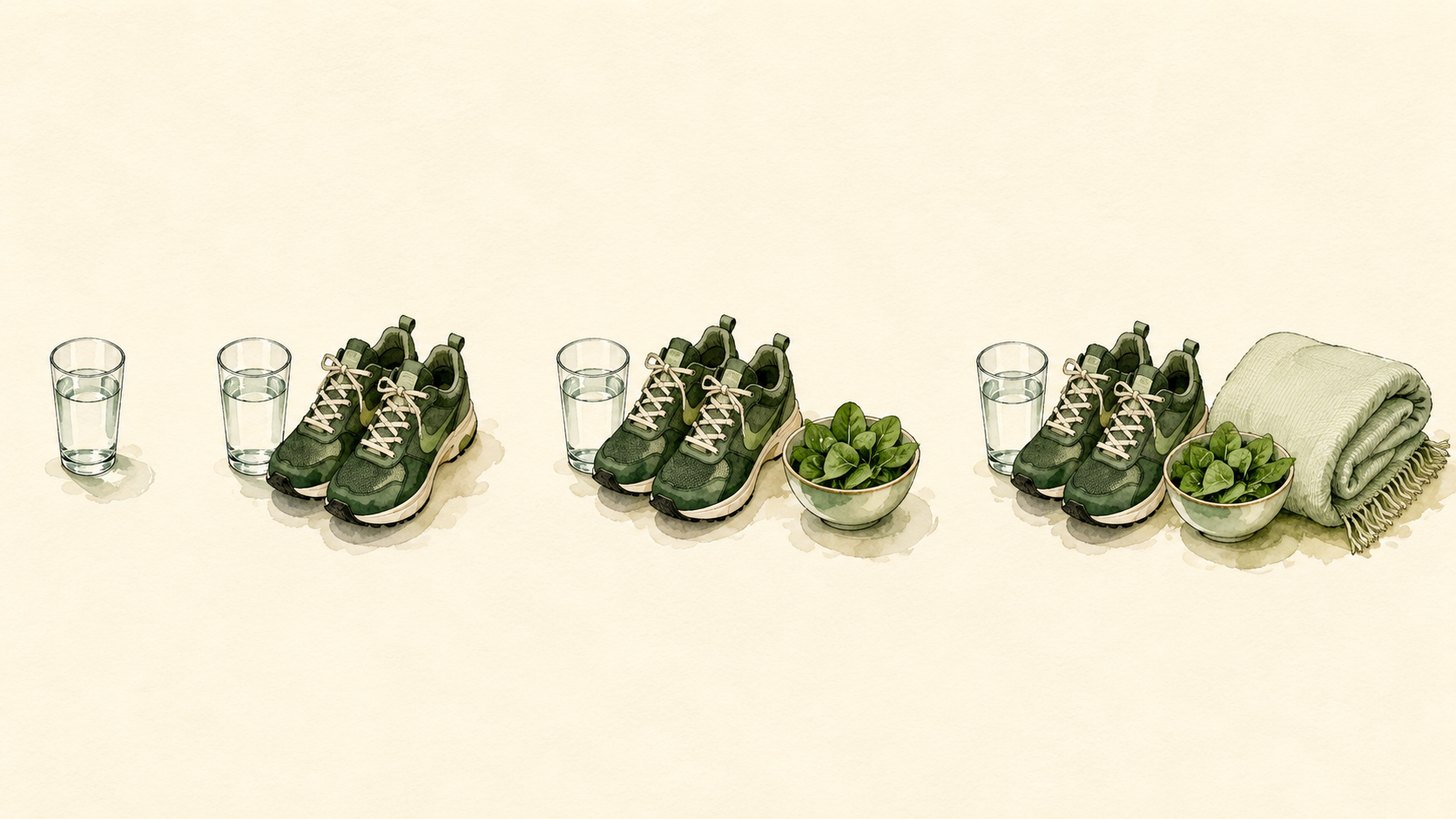
Say you want more energy but you’re starting from zero. Here’s how a simple wellness routine might actually roll out, one small change at a time.
Week one, you add a single habit: a glass of water and a five minute walk after lunch. That’s all. Week two, once that feels normal, you keep it and add one more, maybe a handful of greens at dinner. Week three, you nudge your bedtime 15 minutes earlier. By week four you’re doing four small things that each take a couple of minutes, and not one of them felt like a fight.
Notice what didn’t happen. You didn’t join a gym, buy a program, or gut your whole kitchen. You stacked small wins until they turned into a routine you don’t have to think about anymore.

Common mistakes to avoid
The fastest way to lose a new routine is to start too big. If you can’t picture doing the habit on your worst day, it’s too big. Shrink it until you can.
Changing everything at once is the next trap. Add one habit at a time and let it settle before you stack the next. Trying to fix food, sleep, movement, and stress all in the same week almost always ends with none of them sticking.
Perfectionism is the quiet killer. Missing one day doesn’t undo your progress, but quitting because you missed one day will. Miss it, shrug, and pick it back up the next day.
And don’t wait to feel motivated. Motivation is a nice bonus when it shows up, but a routine that depends on it won’t last. Build the habit so small that you don’t need to feel inspired to do it.
Key takeaways
- A simple wellness routine is a few small habits repeated often, not a dramatic life overhaul.
- Build around four areas: eat a little better, move a little more, protect your sleep, and add one calming habit.
- Start each habit small enough to do on a bad day, and anchor it to something you already do.
- Habits take time. Expect around two months before one feels automatic, and don’t quit over a single missed day.
Frequently asked questions
What is a simple wellness routine?
It’s a small set of healthy habits, usually spread across food, movement, sleep, and stress, that you repeat often enough that they become automatic. The point is that it’s easy to keep, not impressive to describe. A good habit like feeding your gut with more fiber and fermented foods fits right in.
How do I start a wellness routine when I have no time?
Start with one habit that takes two minutes, like a glass of water in the morning or a short walk after a meal. Anchor it to something you already do so it costs no extra memory. Add the next habit only once the first feels normal.
How long does it take for a routine to become a habit?
Longer than the 21 days you’ve probably heard. Research puts the average closer to 66 days, with a wide range depending on the habit and the person. Consistency matters far more than speed.
What should a daily wellness routine include?
At its simplest: something green or whole on your plate, some movement, decent sleep, and one habit that helps you unwind. You don’t need all four to be perfect, just present in small doses.
A quick note: this is general information, not medical advice. If you have a health condition, take medication, or are pregnant or nursing, check with a qualified professional before making changes to your diet, exercise, or sleep.
Start with one small thing today. That’s the whole secret. A simple wellness routine isn’t built in a weekend, it’s built one easy habit at a time, and the fact that it’s small is exactly why it’ll still be here a year from now.