
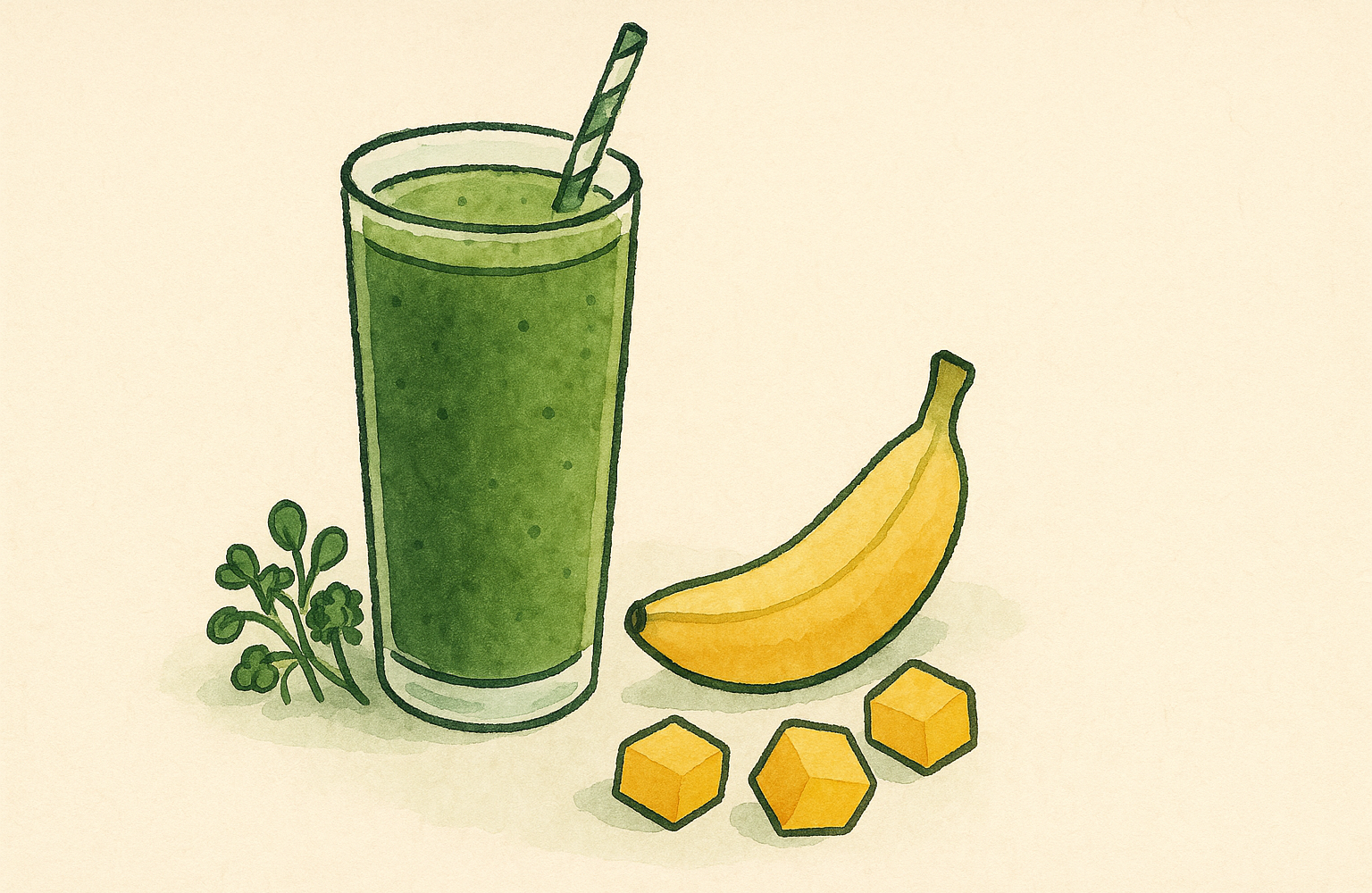
You bought a tray of microgreens with good intentions, and now half of it is quietly wilting in the back of the fridge. You put a pinch on your eggs a couple of times, forgot about the rest, and here you are. If that sounds familiar, a blender is your friend. Tossing a handful of tiny greens into your morning drink is the easiest way to eat them before they turn, and you barely taste them once the fruit takes over.
A microgreen smoothie is exactly what it sounds like. You take the same greens you would sprinkle on a salad and blend them straight into a fruit drink. The greens vanish into the color and flavor, and you get a real nutrition boost without chewing your way through a bowl of salad at 7 in the morning. Below you’ll find four recipes that actually taste good, plus the small handling tricks that keep your drink smooth instead of slimy.
Why blend microgreens into a smoothie at all
Microgreens are the seedling stage of vegetables and herbs, harvested about a week or two after sprouting. That tiny leaf holds a surprising amount of the plant’s nutrition. Research on microgreens has found they can carry several times more vitamins and minerals than the full grown version of the same vegetable, though the exact number swings a lot depending on the variety and how it was grown. The point is not a magic multiplier. The point is that a small handful gives you a lot for very little effort.
A smoothie solves the two problems people run into with microgreens. First, they are delicate and spoil fast, so a tray can go bad before you finish it. Second, a lot of people just are not going to eat greens plain. Blending fixes both. You use them up quickly, and the sweetness of fruit hides any grassy taste. If you already keep a tray on the counter, this is the lowest effort way to get it into your body.
If you’re brand new to these tiny greens, our guide on what microgreens are covers the basics before you start blending.
The best microgreens for smoothies
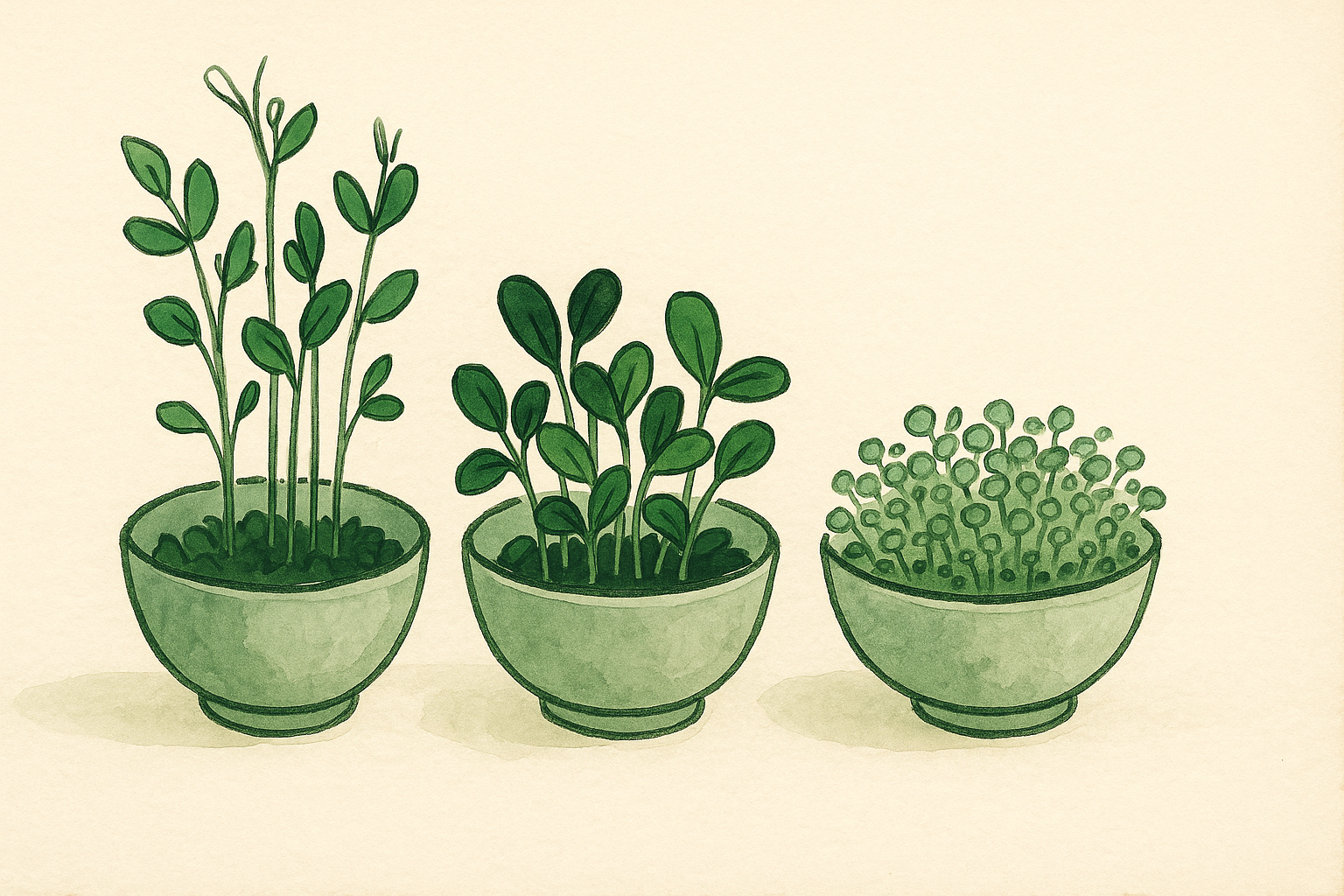
Not every microgreen belongs in a sweet drink. Some are peppery enough to fight the fruit. For a smoothie you want the mild, tender ones that more or less disappear. Here’s how the common varieties stack up.
Pea shoots are the friendliest place to start. They taste faintly sweet, almost like fresh peas, and they blend down without any bitterness. Because they carry their own sweetness, you can get away with less added fruit.
Sunflower shoots are nutty and a little crunchy, with more heft than most microgreens. They play well with nut butter and banana, so they shine in a thicker, breakfast style smoothie.
Broccoli microgreens are the stealth pick. Their flavor is mild enough that fruit hides it completely, and they bring sulforaphane, a compound broccoli is known for. We go deep on that in our piece on broccoli microgreens and sulforaphane. Radish and arugula microgreens work too, but they carry real heat, so use a smaller pinch and expect a peppery kick.
If you want to compare flavors across the whole range before you buy, our roundup of the best microgreens to eat breaks down which ones are mild and which ones bite.
How to blend them so your drink stays smooth
A few small habits are the difference between a fresh green drink and a slimy one. None of this is hard, but skipping it is how people end up disappointed.
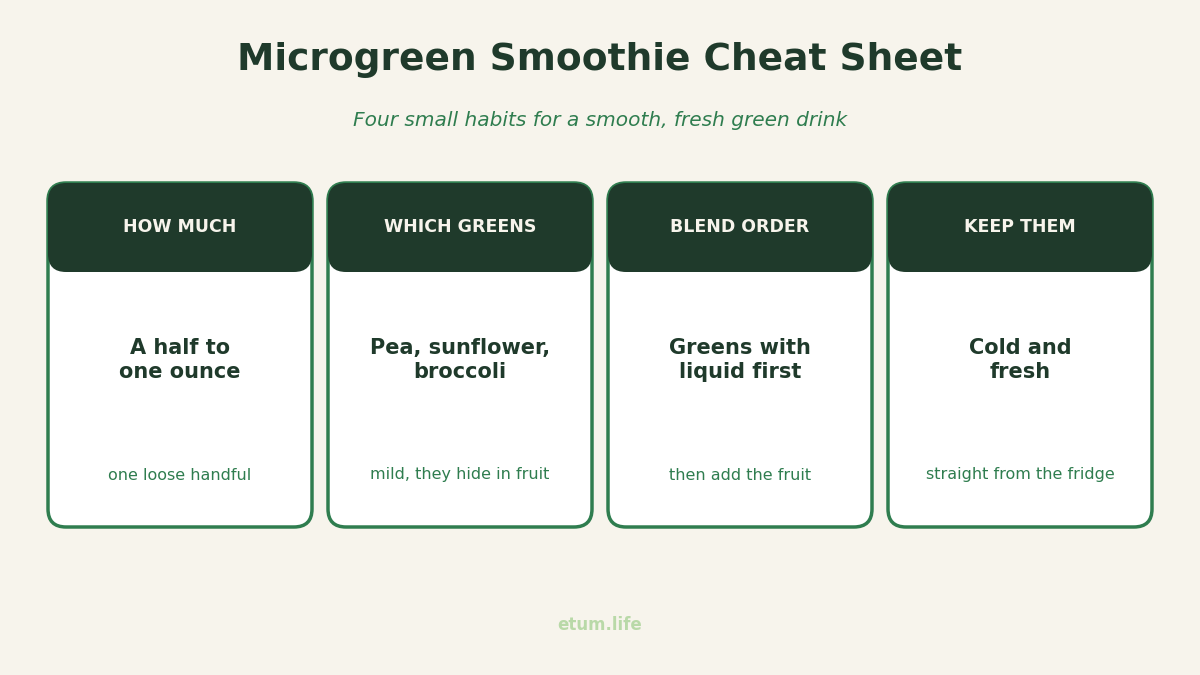
Start with about a half to one ounce per smoothie, which is a loose handful. That is plenty of nutrition without turning the color muddy or the flavor grassy. You can always add more next time once you know how your blender handles them.
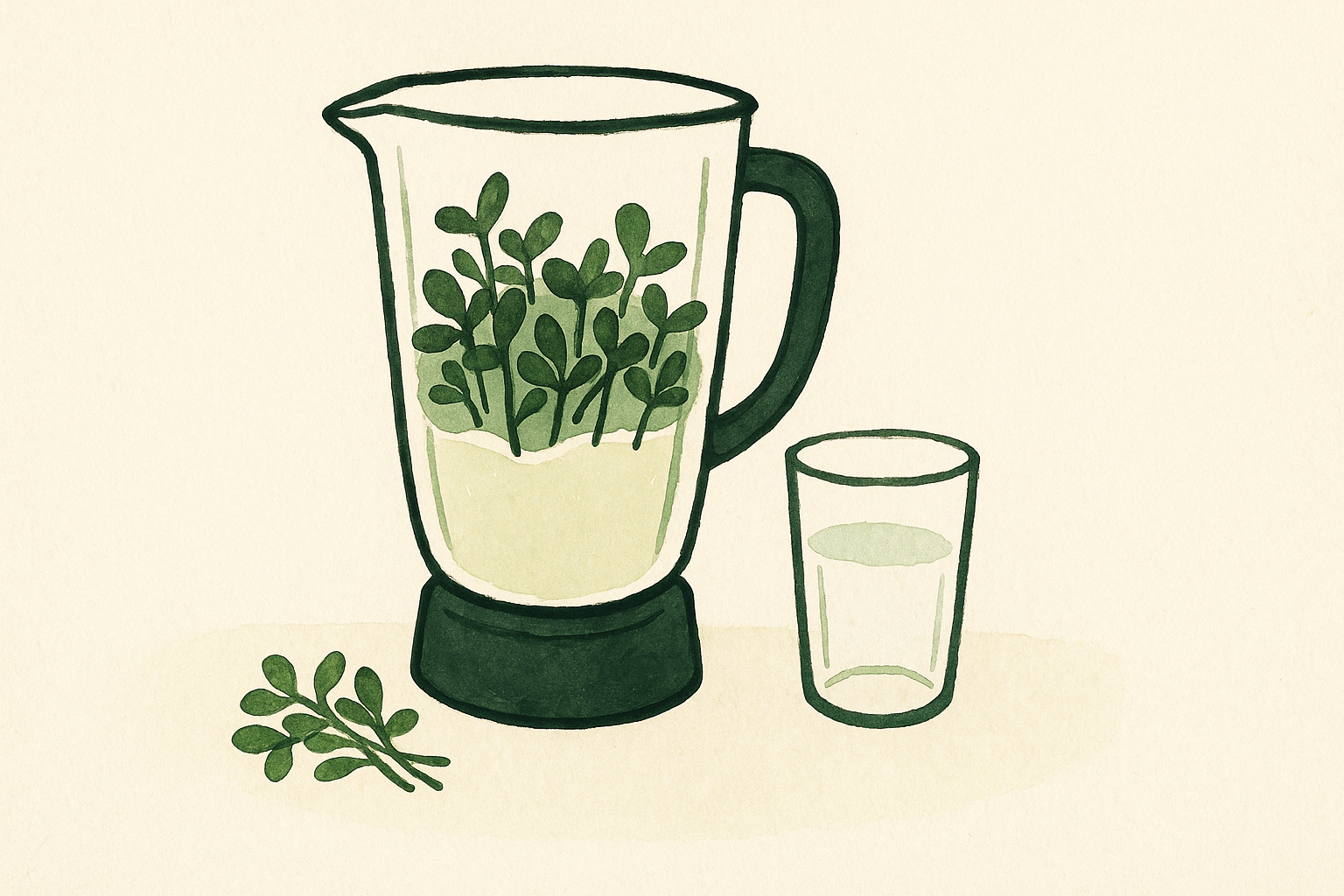
Blend the greens with your liquid first, before the frozen fruit or ice goes in. Giving the microgreens a head start in just the liquid breaks them down fully, so you don’t get little stringy bits in the finished drink. Then add fruit and blend again.
Keep the greens cold until the second they hit the blender. Microgreens that sit out at room temperature go limp and can make the texture slimier, so pull them straight from the fridge. And use them while they’re fresh. If your tray is a few days old, our tips on storing microgreens will help you keep the next batch crisp.
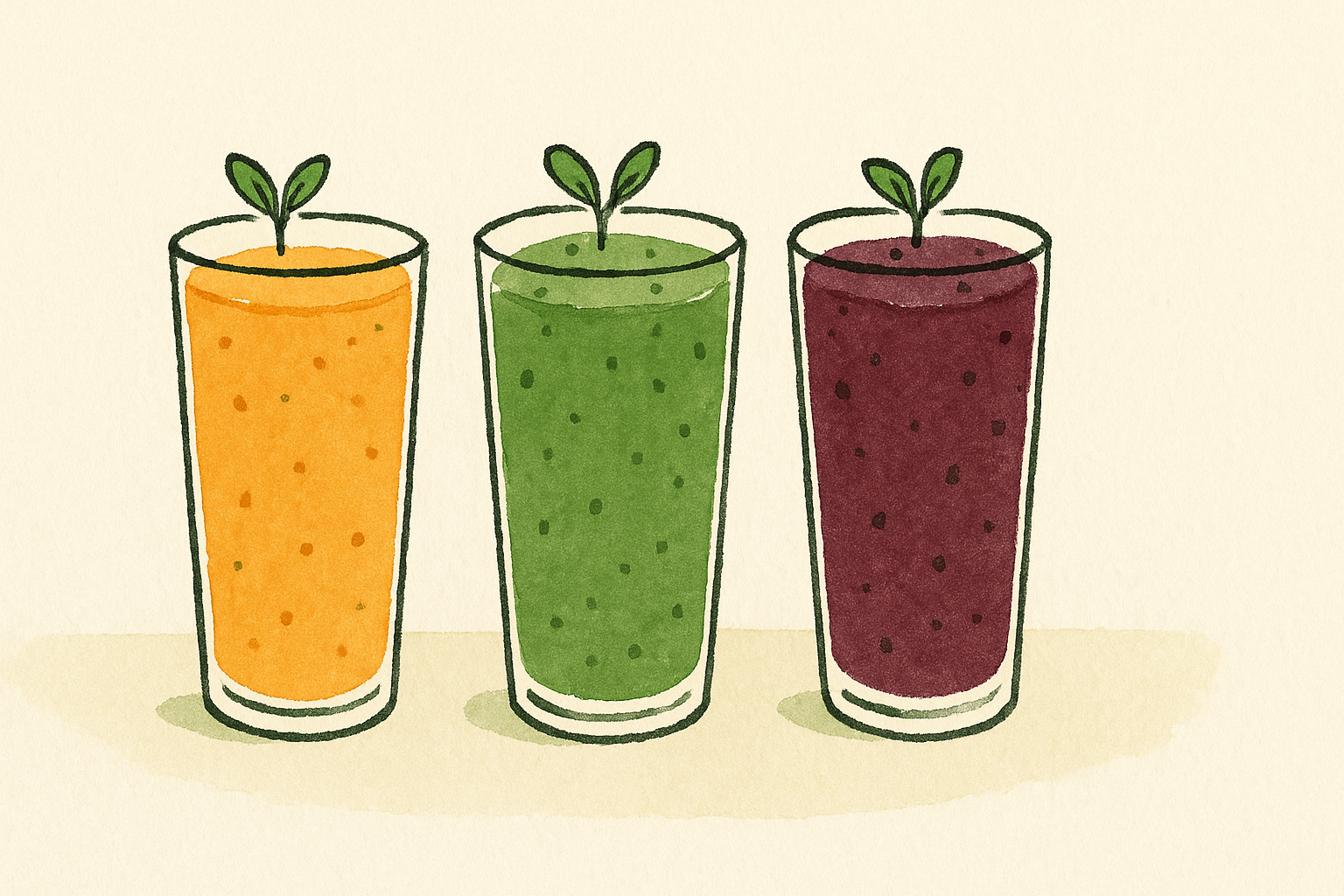
4 microgreen smoothie recipes to try
Each of these makes one large or two small servings. Treat the measurements as a starting point and adjust to your taste. Blend the greens with the liquid first, then add everything else.
The one that hides the greens
This is the smoothie to make if the whole idea of drinking greens makes you nervous. The mango and banana carry the whole thing, and the broccoli microgreens simply vanish. Blend a handful of broccoli microgreens with a cup of orange juice or water, then add one frozen banana, a cup of frozen mango, and a splash more liquid if it’s too thick. It comes out sunny orange, not green, which is half the reason it works on skeptics.
Nutty sunflower breakfast smoothie
This one eats like a meal. Blend a handful of sunflower shoots with a cup of oat milk, then add a banana, a big spoonful of peanut butter, and a few ice cubes. The sunflower shoots lean into the nutty peanut flavor instead of fighting it, and the whole thing is thick enough to keep you full through a busy morning. A spoonful of oats makes it even heartier.
Sweet pea green smoothie
Bright, light, and genuinely refreshing. Blend a generous handful of pea shoots with a cup of water or coconut water, then add half a green apple, a few slices of cucumber, a squeeze of lemon, and a small knob of fresh ginger. The pea shoots bring their own sweetness so you need very little fruit. This is the closest a microgreen smoothie gets to tasting like a green juice.
Berry broccoli smoothie
Deep purple and packed with antioxidants from the berries. Blend a handful of broccoli microgreens with a cup of milk or a dairy free version, then add a cup of frozen mixed berries and half a banana for sweetness. The dark berry color swallows the green completely, and you’d never guess there was a vegetable in there. A spoonful of plain yogurt makes it creamier if you like.
Once you’re comfortable, microgreens are just as easy to fold into food. Our microgreen recipes that use the whole tray give you a few more ways to finish one off before it wilts.
Common mistakes to avoid
The biggest one is using too much. A microgreen smoothie is not supposed to taste like a lawn. When people dump in three or four handfuls, the drink turns bitter and grassy, and they decide they hate the whole idea. Start small and work up.
Reaching for the spicy varieties by mistake is another. Radish and arugula microgreens are wonderful on tacos and sandwiches, but a big handful in a fruit smoothie brings a peppery bite most people don’t want first thing in the morning. Save those for savory food and keep pea, sunflower, and broccoli for your drinks.
Adding fruit and greens at the same time is the third. If everything goes in at once, the greens don’t always break down fully and you get thin green threads in your drink. The liquid first step takes ten extra seconds and fixes it. And do not let a blended smoothie sit for hours before you drink it, since the fresh green flavor fades and the color dulls. Blend it, drink it, move on with your day.
Key takeaways
A microgreen smoothie is the easiest way to use up a tray of greens and get their nutrition without tasting them. Reach for mild varieties like pea shoots, sunflower, and broccoli, and keep the peppery ones for savory food. Use about a half to one ounce, blend the greens with your liquid before the fruit, and keep them cold and fresh. Start with the recipe that hides the greens, and build from there.
Frequently asked questions
Can you put microgreens in a smoothie?
Yes, and it’s one of the best ways to eat them. A handful of mild microgreens blends right into a fruit smoothie, adds a nutrition boost, and mostly disappears into the flavor and color of the fruit.
How many microgreens should I add?
Start with a half to one ounce, which is a loose handful, per smoothie. That gives you real nutrition without making the drink taste grassy. Add more over time once you know how mild your greens are.
Do microgreens change the taste of a smoothie?
Mild ones barely register. Pea shoots add a touch of sweetness, and broccoli and sunflower shoots mostly hide behind the fruit. Spicy types like radish and arugula do add a peppery kick, so use those sparingly or skip them for sweet drinks.
Are microgreen smoothies healthy?
They can be a simple way to add vegetables to your day. Microgreens bring vitamins, minerals, and plant compounds, and blending them with whole fruit keeps the fiber. As always, the rest of what goes in the glass matters too, so go easy on added sugar.
This article is general information, not medical advice. If you have a health condition, take medication, or are pregnant or nursing, check with a qualified professional before making changes to your diet.