
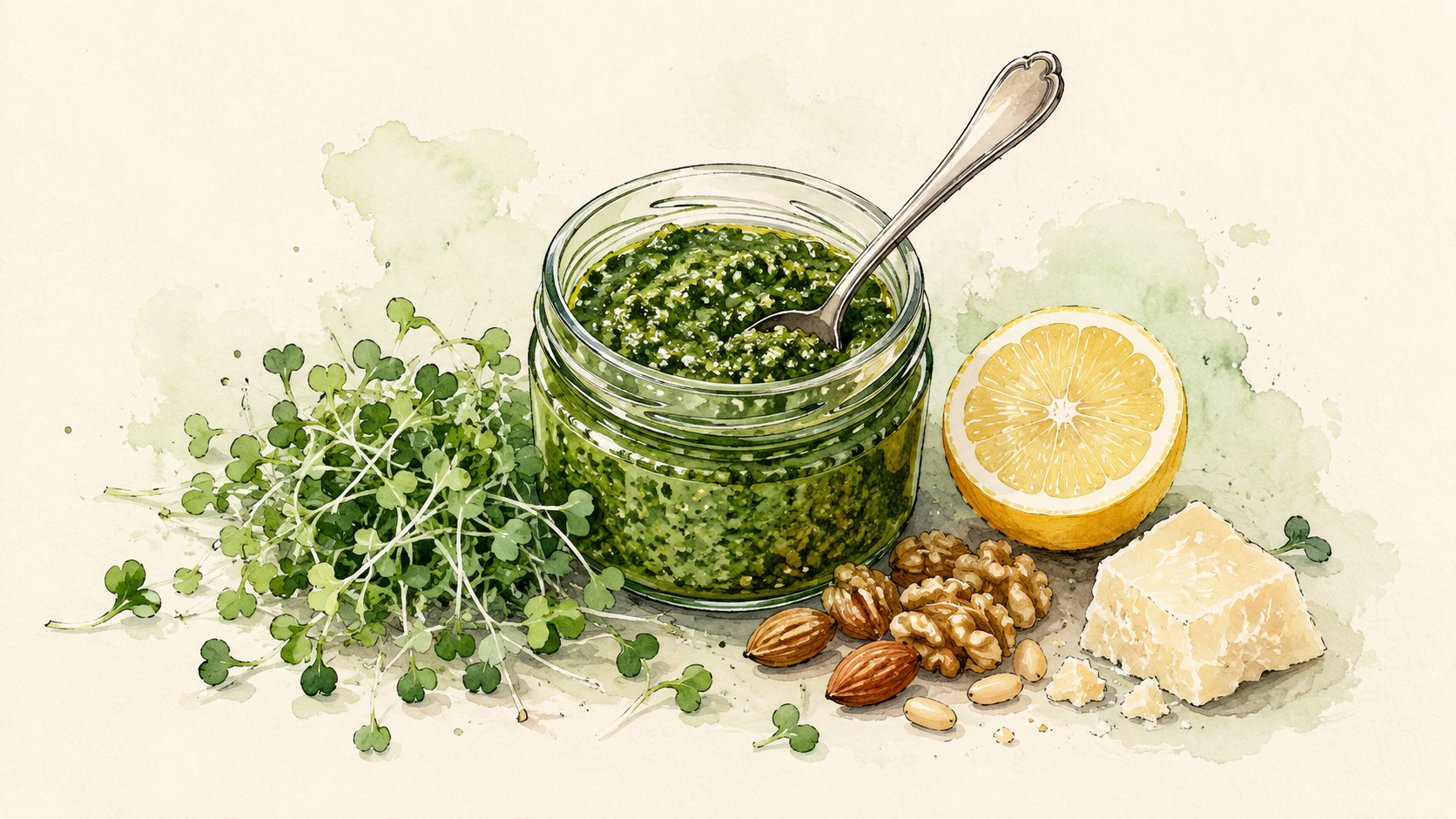
The first time you grow a full tray of microgreens, you run into a happy little problem. You’ve got far more than a sandwich or two can use, and tender greens don’t sit around for long. That’s usually the moment a home grower discovers pesto.
Blending a big handful of soft greens with olive oil, cheese, garlic, and nuts turns a whole tray into a jar of bright green sauce you’ll actually finish. A good microgreen pesto recipe is fast, forgiving, and one of the smartest ways to use the greens before they wilt. You don’t need basil, you don’t need a fancy machine, and you can’t really get it wrong.
Here’s how to make it, which greens taste best, four easy ways to eat it, and how to keep it from turning brown in the fridge.
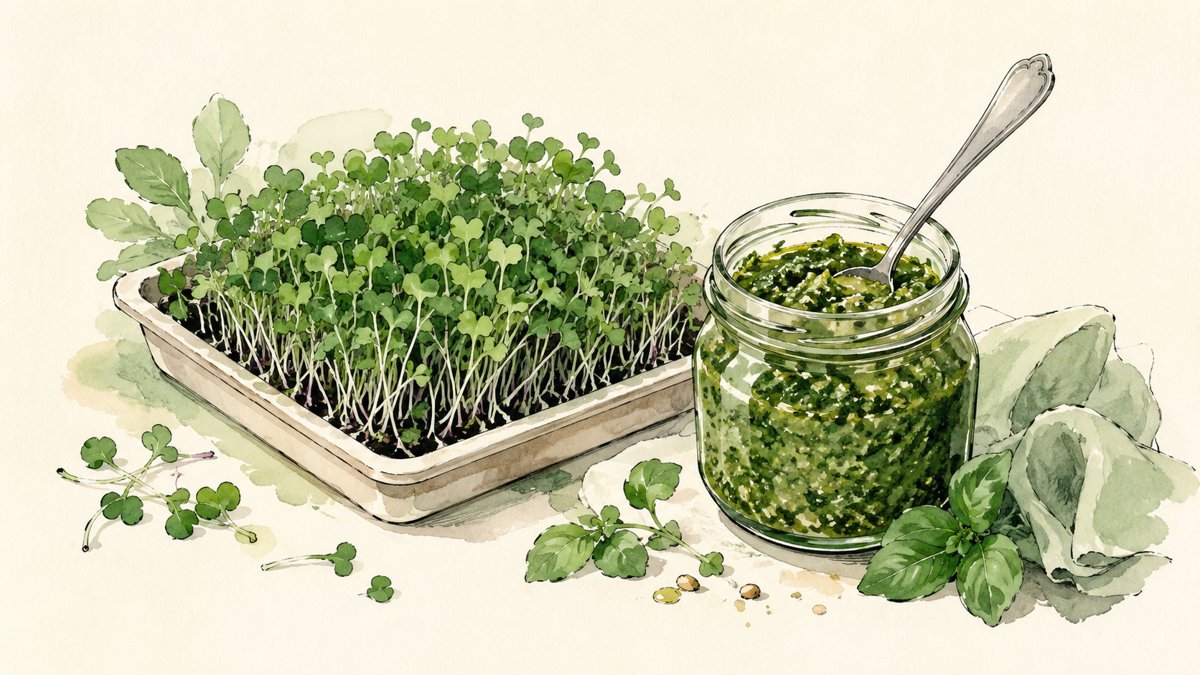
Why microgreens make a great pesto
Classic pesto is really just a formula: something green, a fat, a cheese, a nut, a little garlic, and salt. Basil is traditional, but it’s not required. Any tender green with good flavor can take its place, and microgreens are about as tender and flavorful as greens get.
The swap has a few real advantages. Microgreens carry a lot of taste in a small handful, so a little goes a long way. They also blend down smooth without the stringy bits you sometimes get from mature kale or chard. And because you snip them young, they never turn tough or bitter the way older leaves can.
There’s a practical reason too. A tray of microgreens gives you a burst of harvest all at once, and they keep for only about a week in the fridge. Turning them into pesto stretches that window and saves greens that would otherwise go soft. If you grow your own, this is one of the best uses for a full tray. For more ideas along those lines, our guide to 5 microgreen recipes that use the whole tray is a good next stop.
The best microgreens for pesto
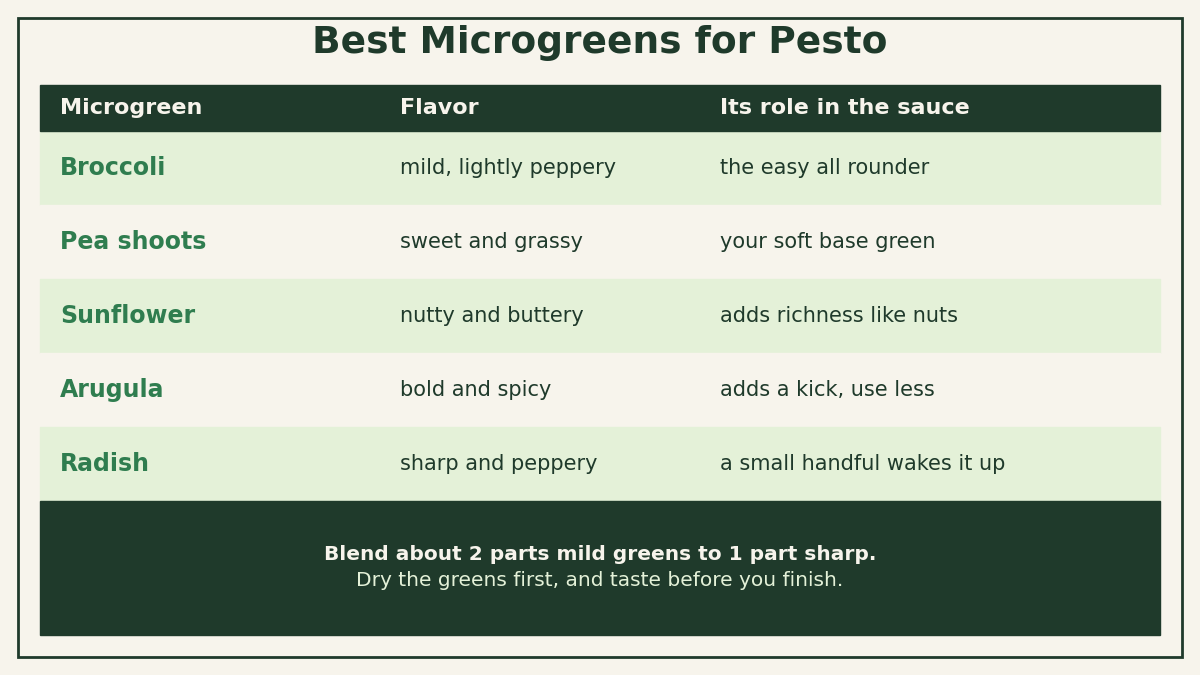
You can make pesto from almost any microgreen, but a few stand out. The trick is balancing a bold green with a milder one so the sauce tastes lively without turning sharp.
- Broccoli microgreens are mild and just a touch peppery, which makes them the easiest all around choice. They’re also rich in a compound called sulforaphane, which you can read more about in our piece on broccoli microgreens benefits.
- Pea shoots are sweet and grassy. They soften a sauce and add body, so they’re great as your base green.
- Sunflower shoots bring a nutty, almost buttery flavor that plays the same role nuts do, so they make the pesto feel rich.
- Arugula microgreens add a bold, spicy kick. Use them when you want the sauce to have some heat.
- Radish microgreens are sharp and peppery. A small handful wakes everything up, but they can take over, so go light.
A blend usually beats a single green. A common mix is roughly two parts mild greens, like pea shoots or broccoli, to one part something with an edge, like arugula or radish. If you buy a rainbow or salad blend, it’s often already balanced for you. Not sure what you’ve got? Our rundown of the best microgreens to eat breaks down the flavors variety by variety.
How to make microgreen pesto, step by step
This is the whole recipe. It makes about one cup, enough to sauce a pound of pasta or fill a small jar. Treat the amounts as a starting point and taste as you go.
What you’ll need
- 2 packed cups of microgreens (about one small tray, or a 2 ounce clamshell)
- 1/3 cup nuts or seeds (pine nuts, walnuts, almonds, or sunflower seeds all work)
- 1/2 cup grated Parmesan, or nutritional yeast for a dairy free version
- 1 small garlic clove
- Juice of half a lemon
- 1/3 to 1/2 cup olive oil
- Salt and pepper to taste
The steps
- Rinse the microgreens and shake or pat them dry. Extra water thins the sauce and dulls the flavor.
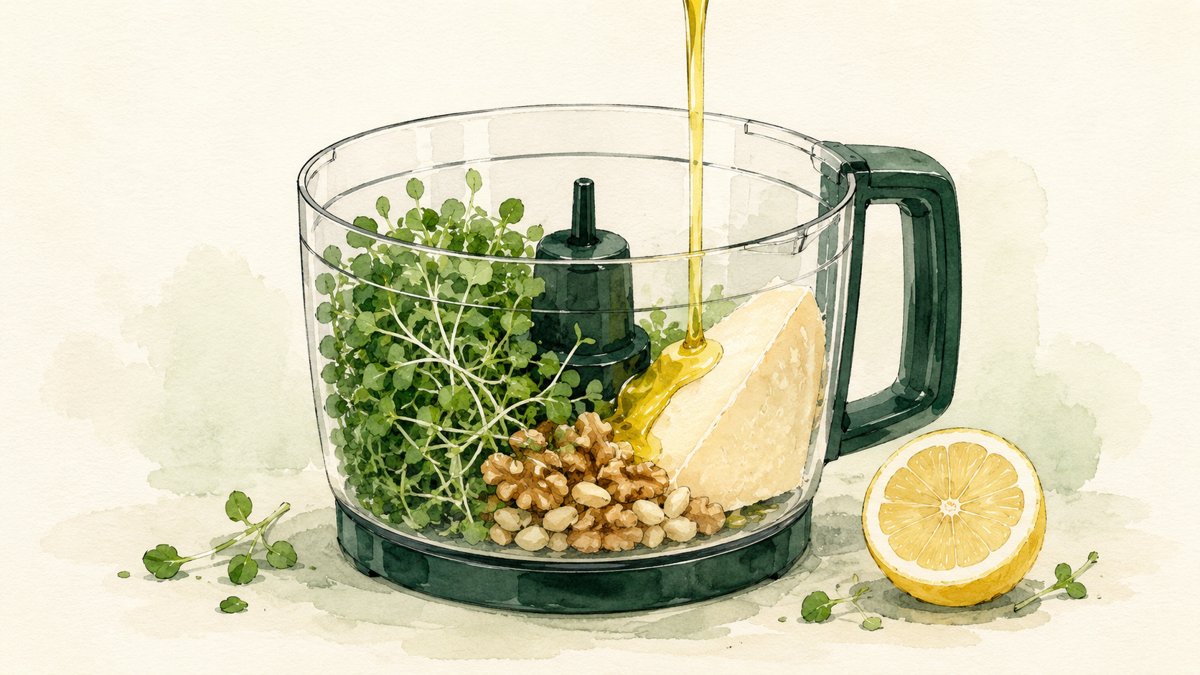
- Add the greens, nuts, cheese, garlic, and lemon juice to a food processor or blender. Pulse a few times to break everything down.
- With the machine running, pour in the olive oil in a slow stream until the pesto comes together into a loose paste. Stop and scrape the sides once or twice.
- Taste it. Add salt, pepper, more lemon, or a little more oil until it’s bright and balanced. Season a bit harder than seems right, since pesto tastes milder once it coats pasta or bread.
That’s it. Start to finish, this microgreen pesto recipe takes about ten minutes, and most of that is measuring. If you don’t have a food processor, a blender works, though you may need to stop and stir more often. A mortar and pestle works too if you’re feeling old school and have some patience.
4 ways to use your microgreen pesto
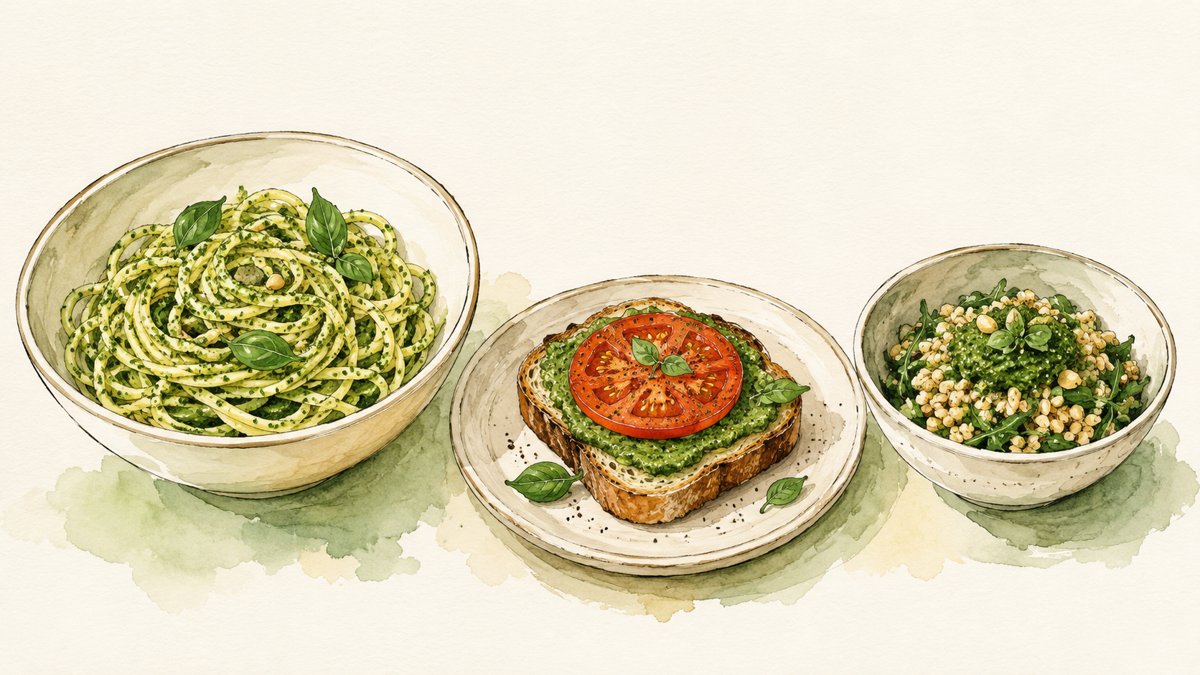
One batch goes further than you’d think. Four easy ways to put it to work:
- Toss it with pasta. Stir a few spoonfuls into hot noodles with a splash of the starchy cooking water. The water loosens the pesto and helps it cling. This is the fastest dinner in the lineup.
- Spread it on toast or a sandwich. A thin layer on good bread, maybe with a sliced tomato or a soft egg on top, turns a plain slice into something worth sitting down for.
- Swirl it into eggs or grain bowls. A spoonful stirred through scrambled eggs, or dolloped over a bowl of rice, quinoa, or roasted vegetables, adds color and a fresh green lift.
- Thin it into a dressing or dip. Whisk in a little more olive oil and lemon and you’ve got a salad dressing. Stir it into plain yogurt and you’ve got a dip for crackers and raw veggies.
Here’s a real example. Say you grew a tray of pea shoots and used what you needed for salads, but half the tray is still sitting there getting leggy. Blend it into pesto on a Sunday, toss half with pasta that night, and keep the rest in a jar. By Wednesday you’ve spread it on toast twice and stirred a spoonful into your eggs. Nothing went to waste, and you barely cooked.
How to store microgreen pesto so it stays green
Pesto browns when the cut greens meet air. The fix is simple: keep the air out.
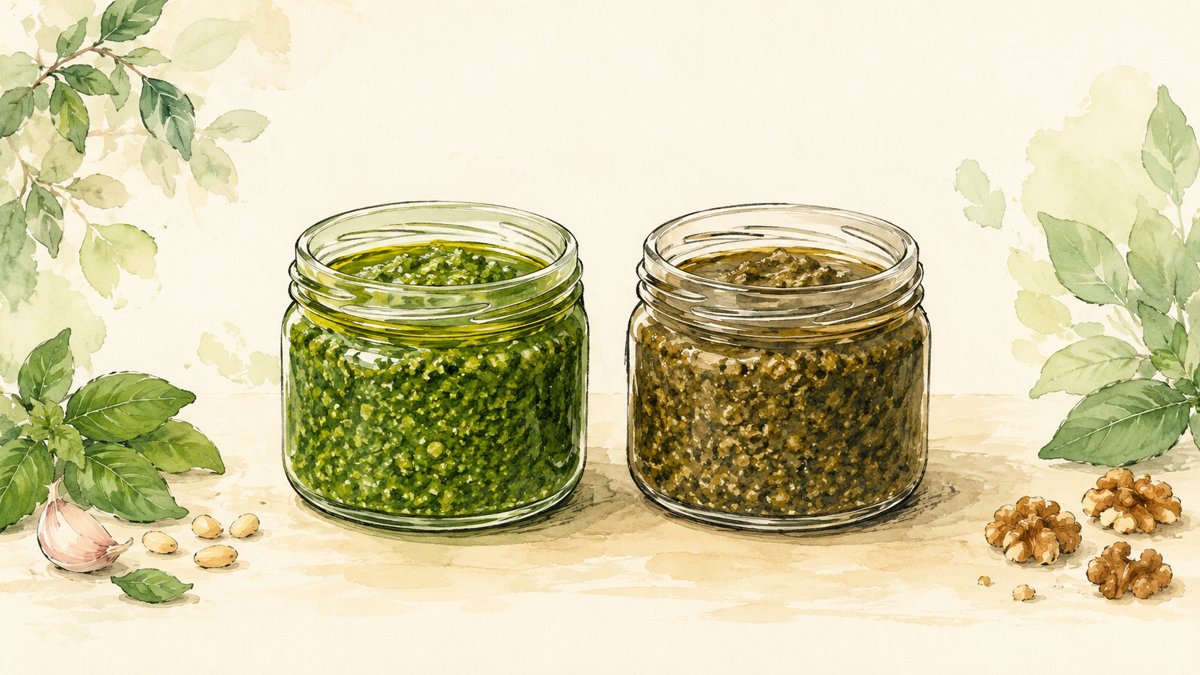
In the fridge, spoon the pesto into a small airtight jar, press it down flat, and pour a thin layer of olive oil over the top to seal it. Pressing a piece of plastic wrap right onto the surface works too. Stored this way it stays fresh and bright for about 5 days.
For longer storage, freeze it. Spoon the pesto into an ice cube tray, drizzle a little oil on top of each cube, and freeze until solid. Pop the cubes into a freezer bag and they’ll keep for up to 6 months. A frozen cube or two dropped straight into a hot pan of pasta melts in seconds, so you get fresh tasting pesto long after the tray is gone.
Common mistakes to avoid
A few small things separate a microgreen pesto recipe you’ll make again from one you only tolerate.
- Skipping the taste test. Microgreens vary a lot in strength. A radish heavy batch needs more cheese and lemon to soften it, while a mild pea shoot batch may need extra salt and garlic. Always taste before you call it done.
- Wet greens. Water left on the leaves makes a runny, flat sauce. Dry them well first.
- Too much garlic. Raw garlic grows stronger as the pesto sits. One small clove is plenty for a batch this size.
- Over blending. A little texture is nice, and running the machine too long can heat the greens and mute their color. Pulse, don’t puree into soup.
- Going all bold greens. A pesto made entirely of arugula or radish can be harsh. Balance the sharp greens with something mild.
Key takeaways
- Microgreens make a great stand in for basil in pesto, and they’re a smart way to use a whole tray before it wilts.
- Balance a mild green like pea shoots or broccoli with a small amount of something sharp like arugula or radish.
- The method is simple: blend greens, nuts, cheese, garlic, and lemon, then stream in olive oil and taste as you go.
- Use it on pasta, toast, eggs, grain bowls, or thinned into a dressing.
- Keep air out to keep it green: an oil layer in the fridge for about 5 days, or frozen cubes for up to 6 months.
Frequently asked questions
Can you make pesto without basil?
Yes. Pesto is a formula, not a single recipe. Any tender green can carry it, and microgreens like broccoli, pea shoots, and arugula work beautifully. You can even blend in a little fresh parsley or spinach if you want to stretch the batch.
Do microgreens lose their nutrition when blended?
Blending breaks the cells but doesn’t erase the nutrients, so you still get the fiber, vitamins, and plant compounds the greens carry. Eating them raw in pesto, rather than cooked, keeps more of the heat sensitive nutrients intact.
What nuts work best in microgreen pesto?
Pine nuts are classic, but they’re pricey. Walnuts, almonds, cashews, and even sunflower seeds all make a fine, rich pesto. Toasting them first deepens the flavor if you have a couple of extra minutes.
How long does microgreen pesto last?
About 5 days in the fridge in a sealed jar with a layer of oil on top, or up to 6 months in the freezer. Frozen in cubes, it’s easy to use a little at a time.
This article is general information, not medical advice. If you have a health condition, take medication, or are pregnant or nursing, check with a qualified professional before making changes to how you eat.