
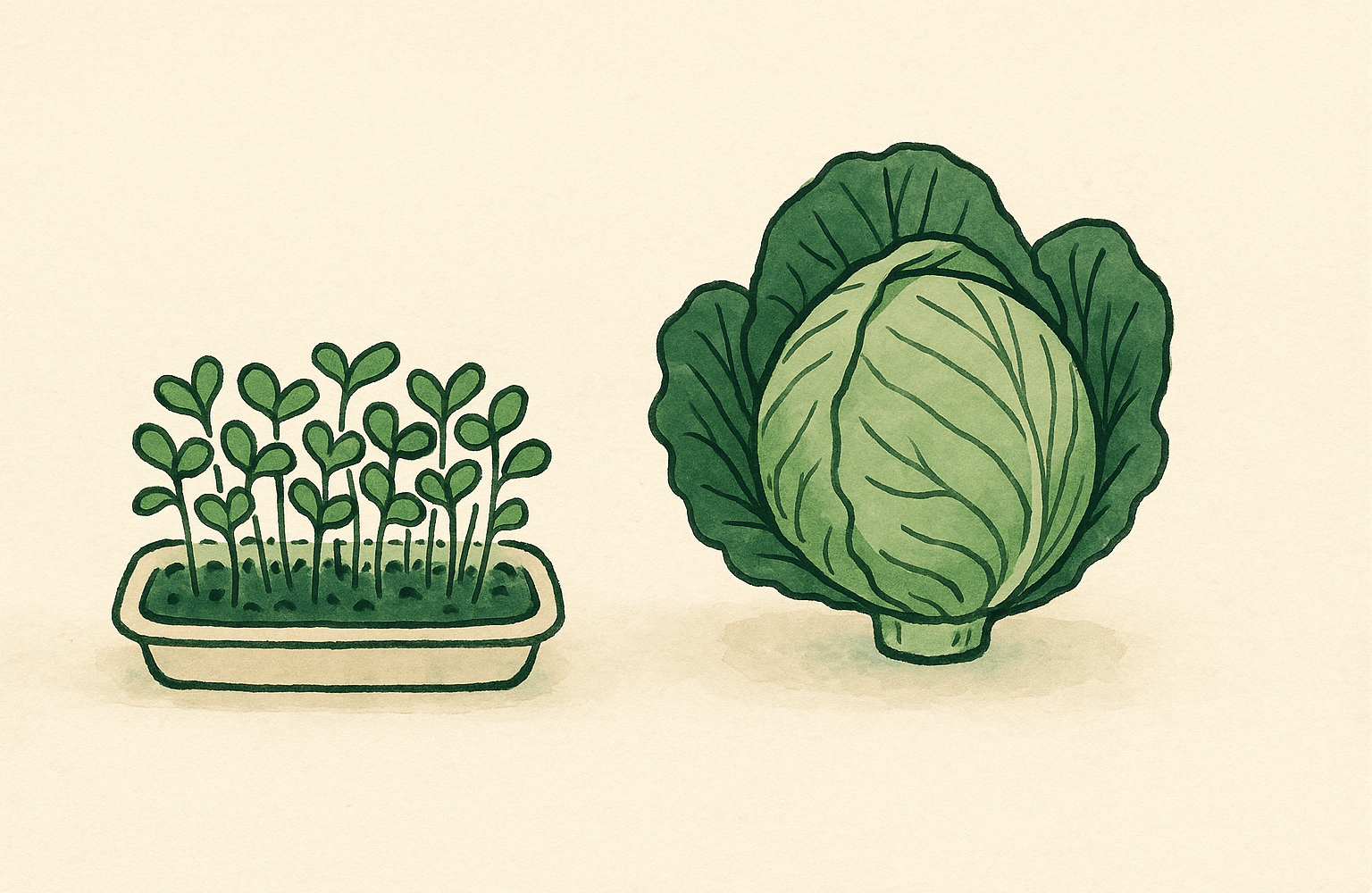
Snip a tray of red cabbage microgreens and taste one. It’s peppery, a little sweet, and unmistakably cabbage, all packed into a shoot barely two inches tall. Now picture the softball sized head that same seed could have become weeks later. Same plant, wildly different size. Here’s the part that surprises most people: by weight, that tiny shoot can carry far more of certain vitamins than the full grown head ever will.
That’s the whole reason microgreens have earned their reputation. So are microgreens healthy, or is that just clever marketing from people selling seed trays? The short version is that the science is real, but the way it gets repeated online usually leaves out the one detail that actually matters.
Let’s walk through what the research really says, why a seedling can out punch a mature vegetable gram for gram, and how to eat them so you actually get the benefit instead of just the idea of it.
What are microgreens, exactly? They’re the young seedlings of everyday vegetables and herbs, harvested about 7 to 14 days after sprouting, once the first true leaves appear. If you’re new to them, our beginner’s guide to microgreens covers the basics.
What “nutrient dense” actually means
Nutrient dense is one of those phrases that gets tossed around until it stops meaning anything. Strip it back and it’s simple. A food is nutrient dense when it delivers a lot of vitamins, minerals, and beneficial plant compounds relative to its weight or its calories.
Microgreens score high on that measure because the good stuff is concentrated into a very small, very light package. A single ounce of microgreens weighs almost nothing, yet it can carry a real dose of vitamins and antioxidants.
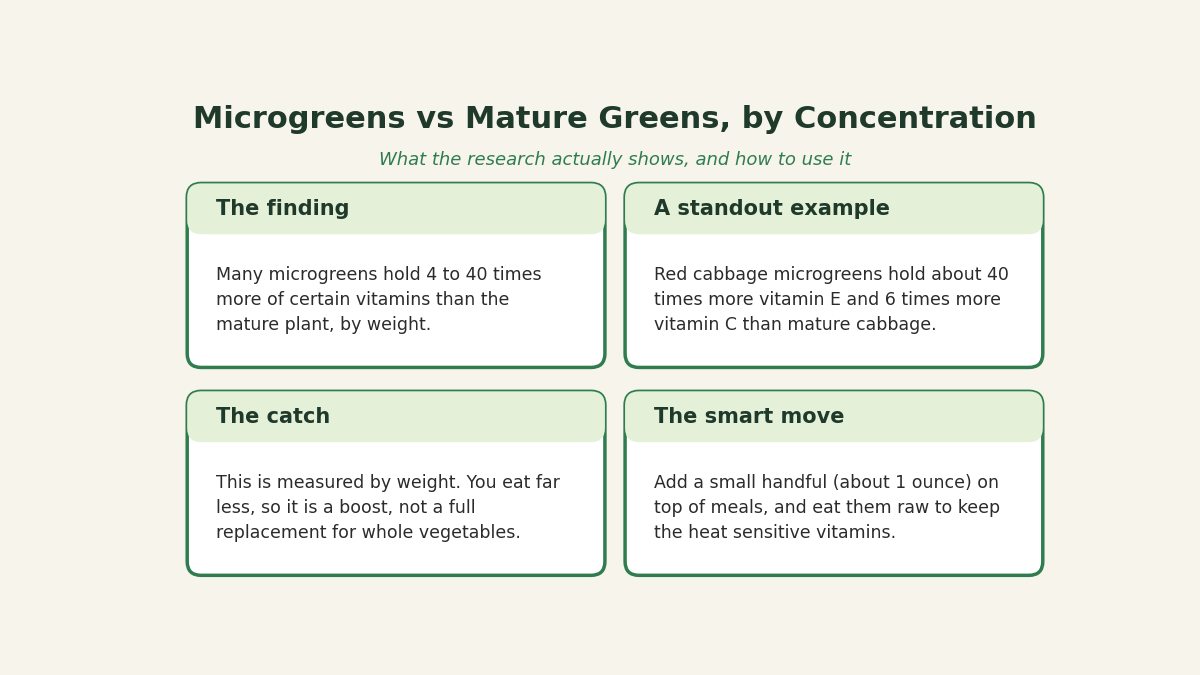
Here’s the catch that most articles skip. Nutrient density is measured by weight, not by the plateful. A handful of microgreens is light, so even a high concentration adds up to a smaller total than a big bowl of mature greens. That doesn’t cancel the benefit. It just means microgreens work best as a booster you add on top of your normal vegetables, not as a swap that replaces them.
Why the tiny stage packs so much nutrition
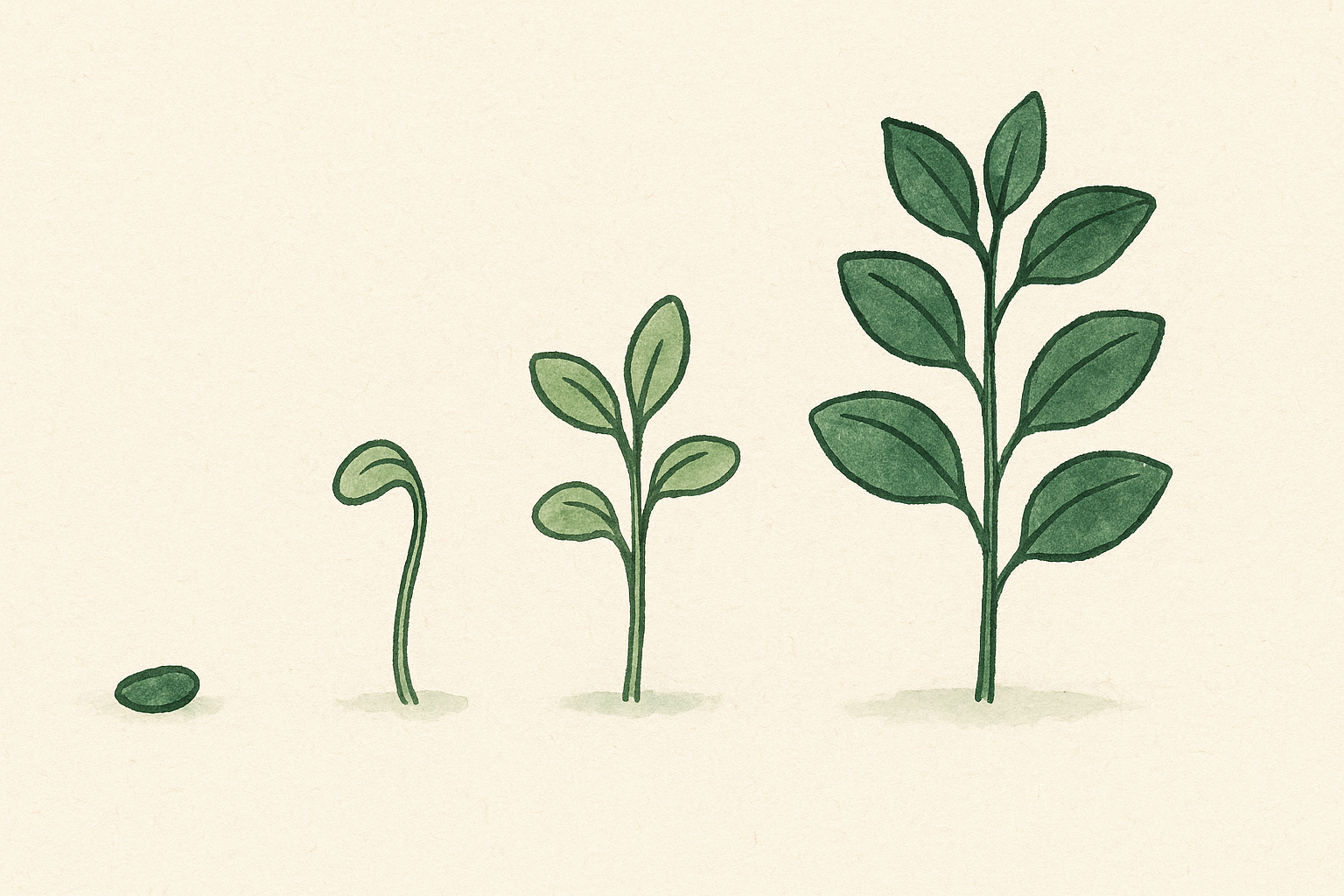
A seed is a survival kit. Tucked inside is everything a young plant needs to burst out of the shell and start growing before it can make its own food from sunlight. That early window is when the plant is most densely loaded with the building blocks of life.
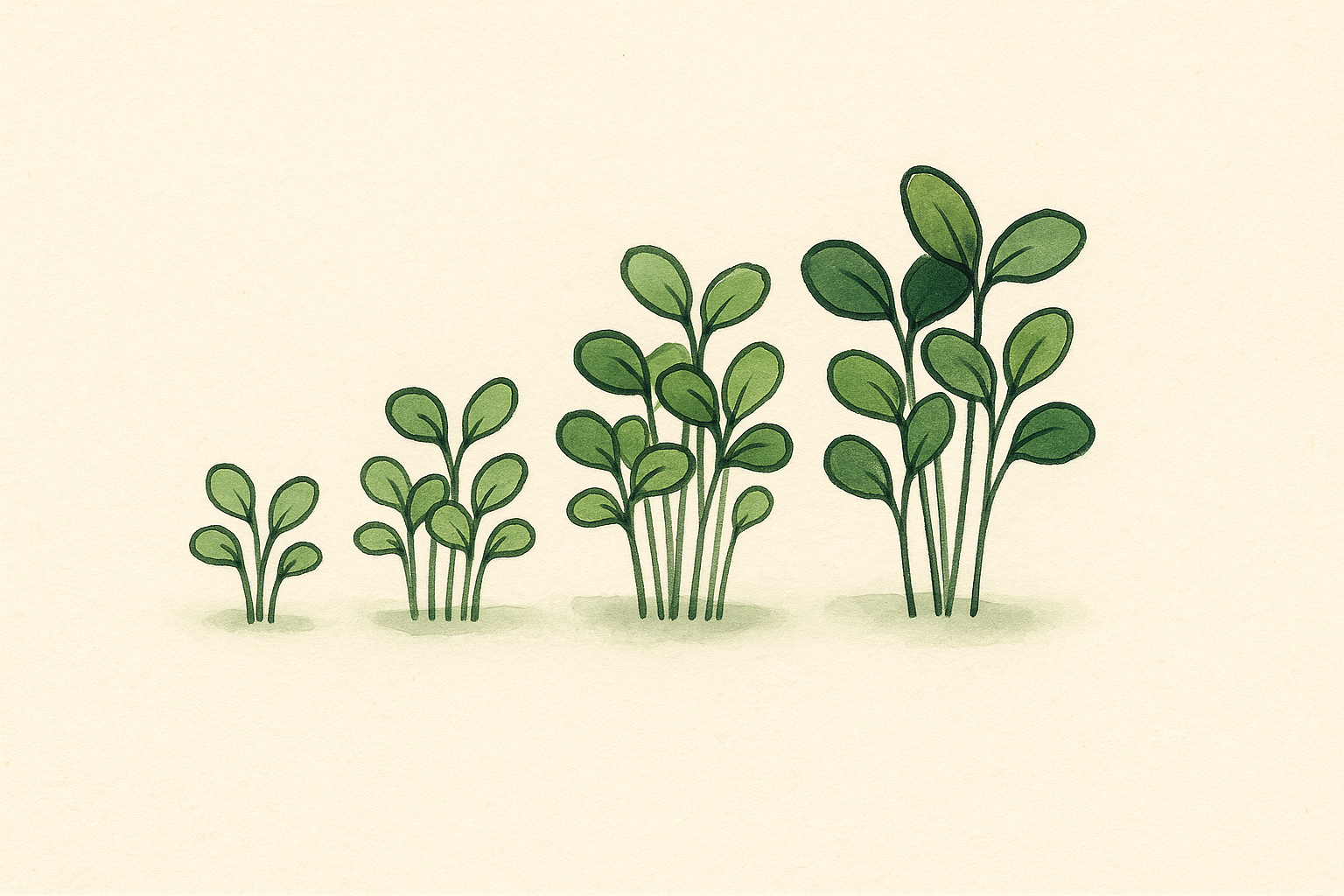
As the plant grows taller and heavier, those nutrients spread out across a much bigger body of stems, leaves, and water. The total amount of nutrition can climb, but the concentration per gram tends to drop as the plant bulks up. Catch a vegetable at the seedling stage and you catch it while everything is still packed tightly together.
This isn’t just a nice theory. Researchers at the University of Maryland and the USDA tested 25 kinds of commercially grown microgreens and compared them to the mature versions. They found that many microgreens held far higher concentrations of key vitamins, in some cases 4 to 40 times more, depending on the variety and the specific nutrient. You can read the summary on the University of Maryland’s own site.
Red cabbage was a standout. Its microgreens carried roughly 40 times more vitamin E and about 6 times more vitamin C than the mature cabbage, by weight. Vitamins C, E, K, and beta carotene all showed up in higher concentrations across the varieties tested. For a fuller variety by variety breakdown, see our microgreens nutrition chart.
So are microgreens healthy, or is it hype?
When people ask are microgreens healthy, they’re usually really asking whether the hype holds up. Both things can be true at once. The nutrient numbers are genuinely impressive, and the internet loves to stretch them into promises they can’t keep.
What’s fair to say is that microgreens are a simple, low effort way to raise the quality of what’s already on your plate. They bring vitamins, antioxidants, and plant compounds in a form that’s easy to add to almost any meal. That makes them a smart habit for most people who want to eat a little better without overhauling their kitchen.
What’s not fair is treating them like medicine. A tray of microgreens won’t undo a rough diet, cure a condition, or replace the fiber and volume you get from eating whole vegetables all week. The honest answer to whether microgreens are healthy is yes, as one useful piece of a varied diet, not as a magic shortcut.
Some varieties bring specific compounds worth knowing about. Broccoli microgreens, for example, are a rich source of sulforaphane, a plant compound that’s been widely studied. We go deeper on that in our guide to broccoli microgreens and sulforaphane.
How to actually get the benefit
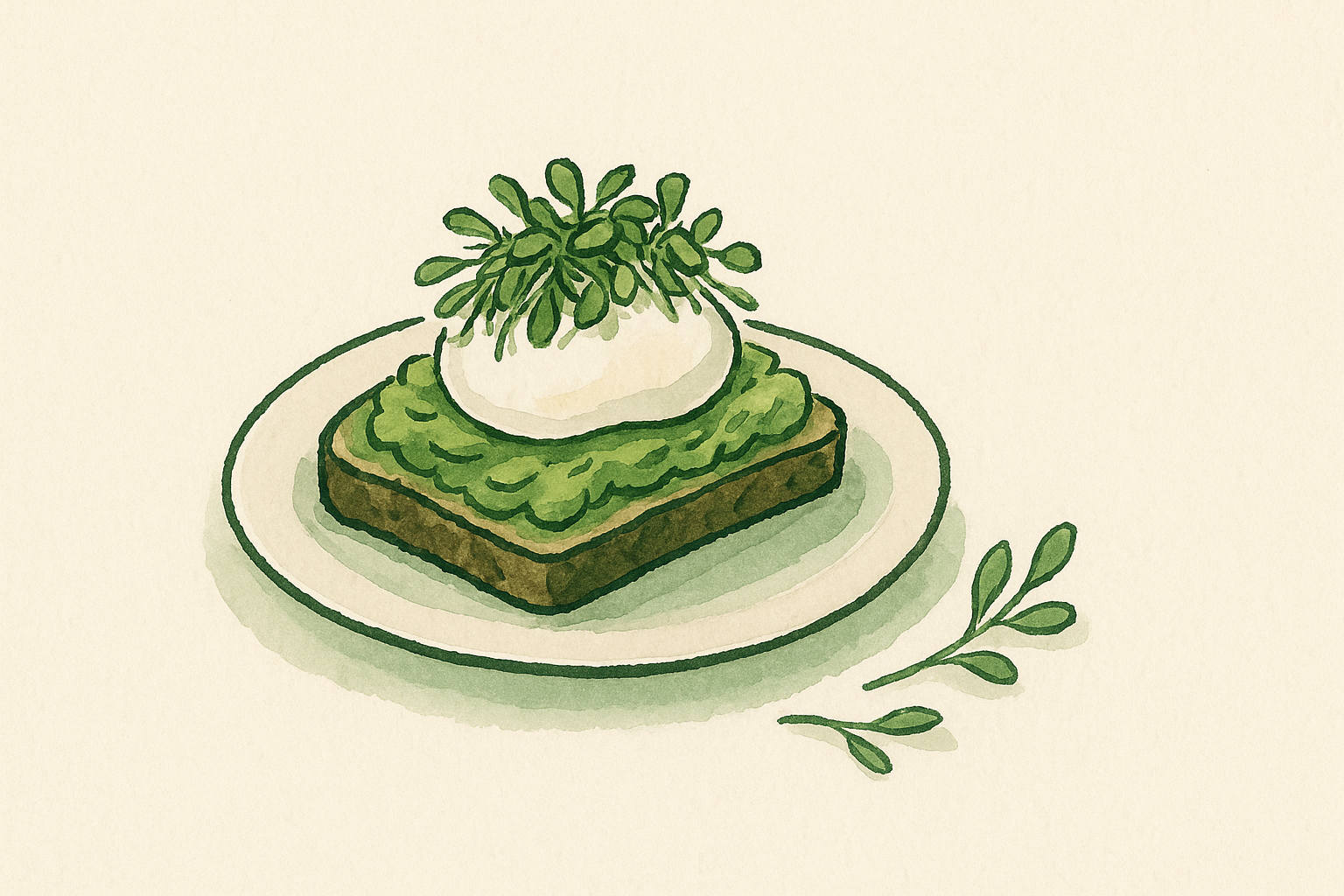
The nutrition only counts if the greens make it into your body, so the goal is to make them effortless to eat. Think of microgreens as a finishing touch you scatter on food you’re already making.
A few easy habits that stick:
- Pile a small handful onto avocado toast, eggs, or a sandwich right before you eat.
- Stir them into a grain bowl or soup after the heat is off, so they stay fresh and bright.
- Blend a light handful into a smoothie, where mild pea or sunflower shoots vanish completely.
- Toss them over a finished salad instead of mixing them in, so they don’t get crushed.
One important rule: eat them raw whenever you can. Many of the vitamins that make microgreens shine are sensitive to heat, so cooking them can shrink the very benefit you’re after. Add them at the end, not the beginning.
Freshness matters too. Microgreens are at their best within a few days of harvest, and they fade faster than sturdy grocery greens. A little care in the fridge goes a long way, and our guide on how to store microgreens walks through the simple steps.
A real example: one week of small add ins
Here’s how this plays out for someone who isn’t trying to overhaul anything. Say you keep one clamshell of pea shoots and one of broccoli microgreens in the fridge.
Monday, a handful goes on your morning eggs. Wednesday, you blend pea shoots into a banana smoothie and can’t taste them. Friday, broccoli microgreens land on top of a slice of pizza after it comes out of the oven. That’s three meals nudged upward with almost no effort and no new recipes to learn.
None of those meals became a health food. They just each got a little denser in vitamins and antioxidants than they would have been. Done across a month, those small add ins are the whole point of keeping microgreens around.
Common mistakes to avoid
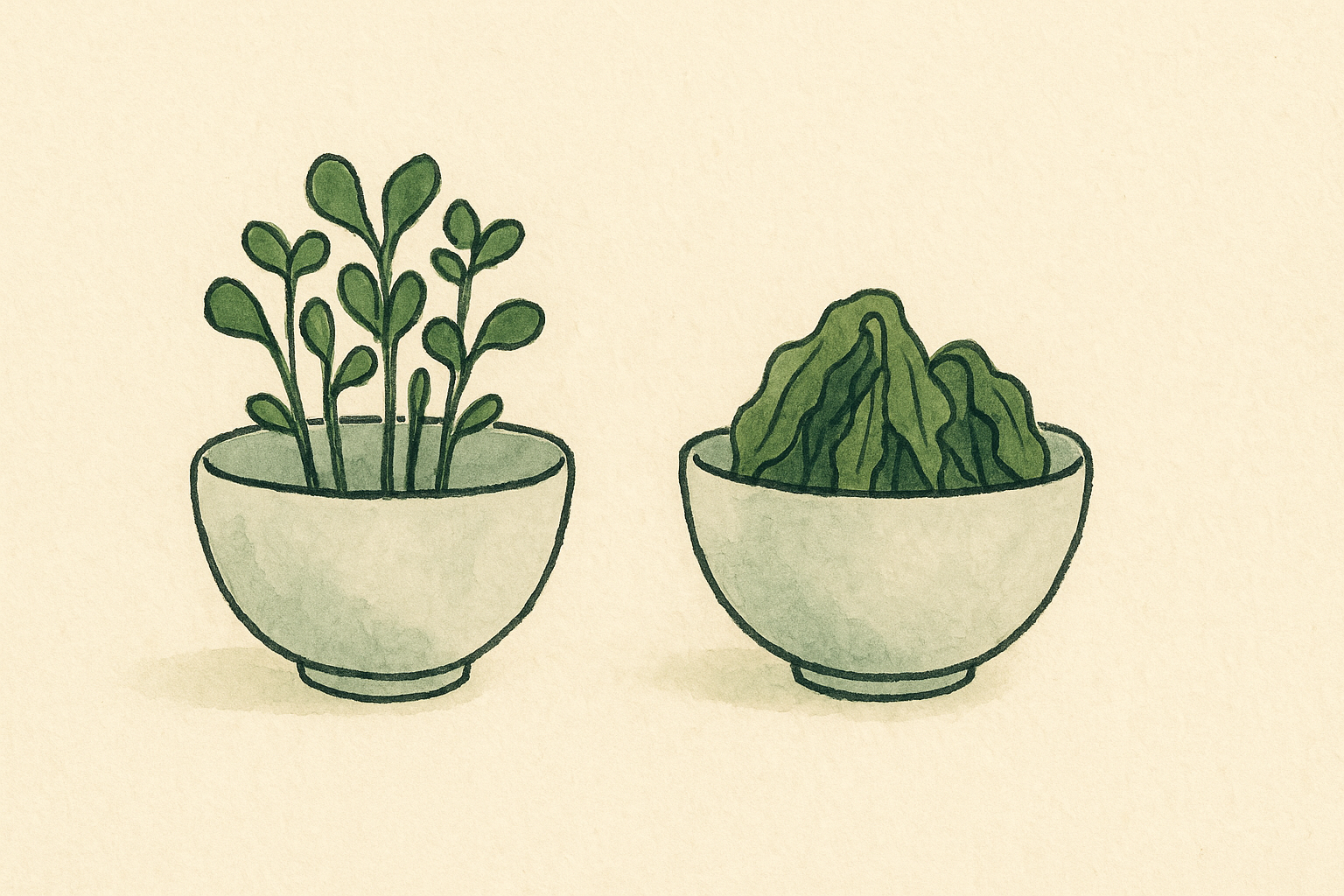
Most of the ways people lose the benefit are easy to fix once you know them.
- Treating them as a replacement. Microgreens boost a meal, they don’t stand in for a full serving of vegetables. Keep eating your regular greens.
- Cooking them hard. Sauteing or simmering microgreens can drive off the heat sensitive vitamins. Add them raw at the end instead.
- Letting them sit too long. A forgotten tub of slimy shoots helps no one. Buy or grow only what you’ll use in a few days.
- Chasing the biggest number. A “40 times more” headline is about concentration, not your total intake. Enjoy the boost without expecting miracles.
Key takeaways
- Microgreens are more nutrient dense than mature vegetables because nutrients are most concentrated at the seedling stage, then spread out as the plant grows.
- A University of Maryland and USDA study found many microgreens held 4 to 40 times higher concentrations of certain vitamins than their mature versions.
- That density is measured by weight, so microgreens work best as a booster on top of your meals, not as a swap for whole vegetables.
- Eat them raw and fresh to protect the heat sensitive vitamins that make them worth eating.
Frequently asked questions
Are microgreens actually healthier than regular vegetables?
Gram for gram, many microgreens hold higher concentrations of certain vitamins than the mature plant. But you eat far less of them, so they’re best seen as a nutrient rich addition to your vegetables, not a full replacement.
Do microgreens lose nutrients when cooked?
Several of their standout vitamins are sensitive to heat, so cooking can reduce them. For the most benefit, add microgreens raw at the very end of cooking or straight onto the finished plate.
How much microgreens should I eat in a day?
There’s no official amount, and you don’t need much. A small handful, roughly an ounce, added to a meal or two is a realistic and useful daily habit for most people.
Which microgreens are the most nutritious?
It varies by nutrient, but red cabbage, broccoli, radish, and sunflower shoots all rate well in testing. The smartest move is to rotate a few varieties so you get a range of vitamins and plant compounds.
This article is general information, not medical advice. If you have a health condition, take medication, or are pregnant or nursing, check with a qualified professional before making changes to your diet.